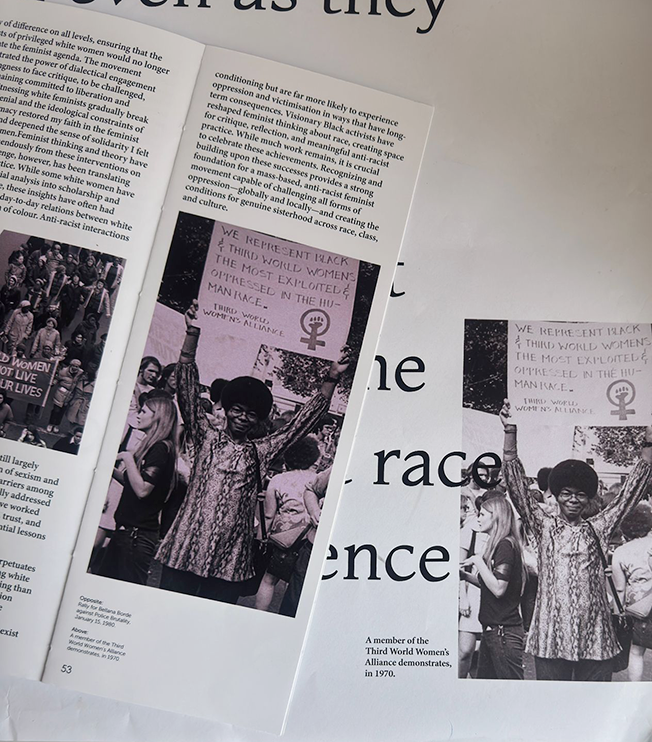
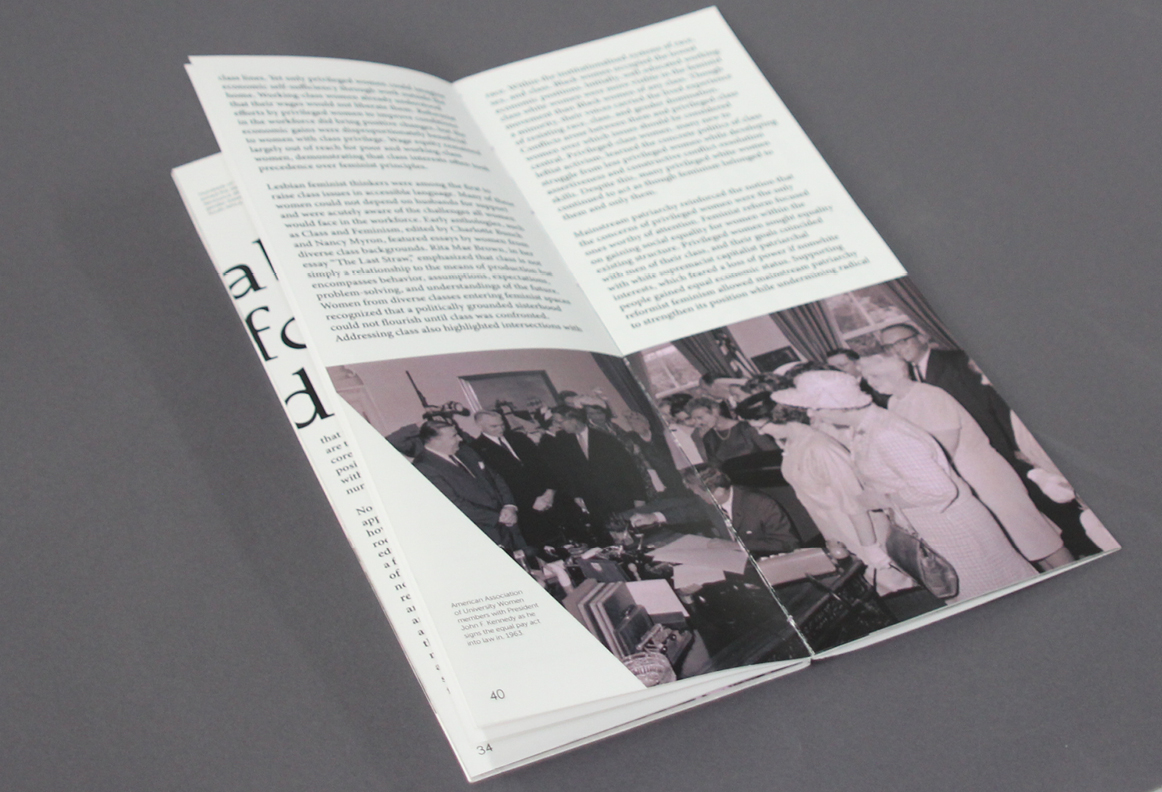
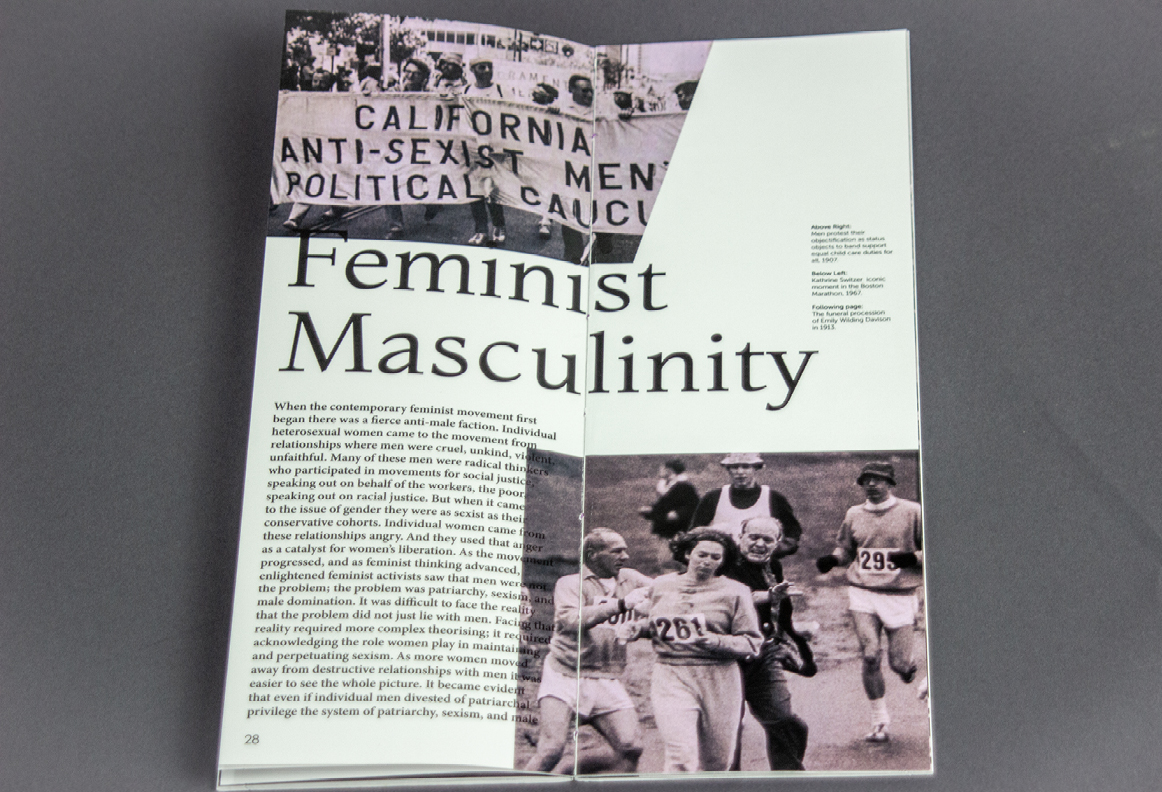
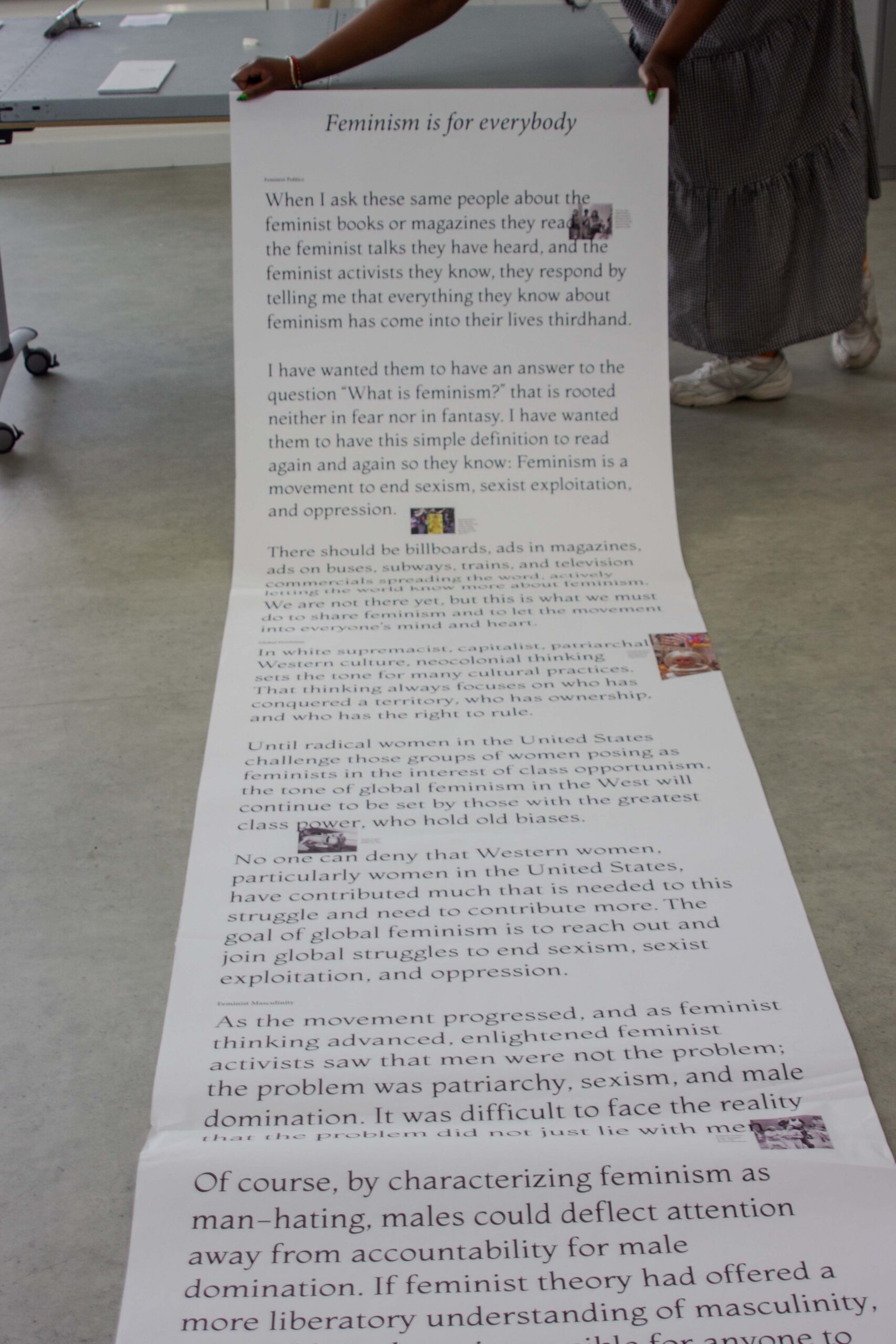
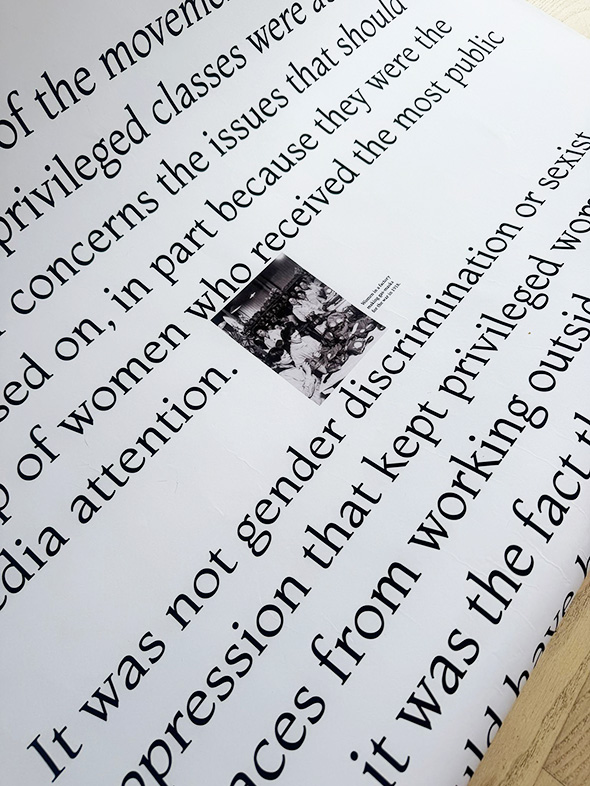
My practice explores how design can be used as a tool for communication, education, and social awareness. I am interested in using visual storytelling, research, and critical thinking to make overlooked experiences more visible and accessible. My work focuses on themes of race, feminism, mental health, and the everyday realities that are often ignored or misunderstood. For me, design begins with asking why: why certain voices are excluded, why dominant narratives persist, and how design can create space for more inclusive conversations. My project explores the idea of creating space within feminism for individuals to define feminism for themselves. I believe feminism is not a single, fixed concept but a personal and evolving experience shaped by history, identity, and lived experience. Through research into feminist theory and the historical exclusion of marginalised voices, I examine how dominant definitions of feminism can feel limiting and fail to reflect the diversity of feminist experiences. Using typography, moving image, and editorial design, I translate this research into visual outcomes that encourage dialogue, reflection, and participation. Rather than presenting a single definition of feminism, I invite audiences to question existing narratives and develop their own understanding of what feminism means to them. I believe design is most powerful when it makes invisible perspectives visible, creating opportunities for people to engage with complex social issues in more personal, inclusive, and meaningful ways.