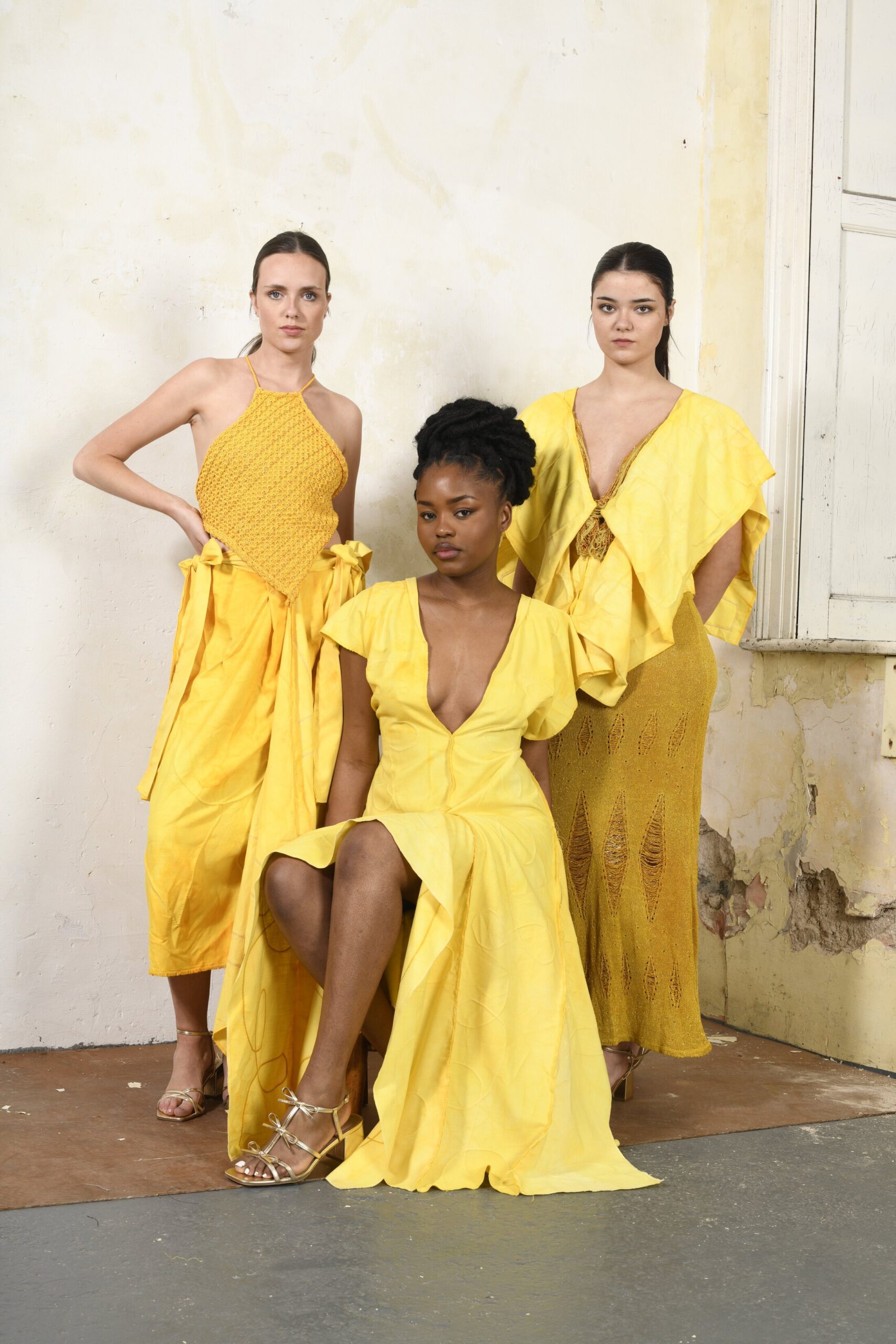
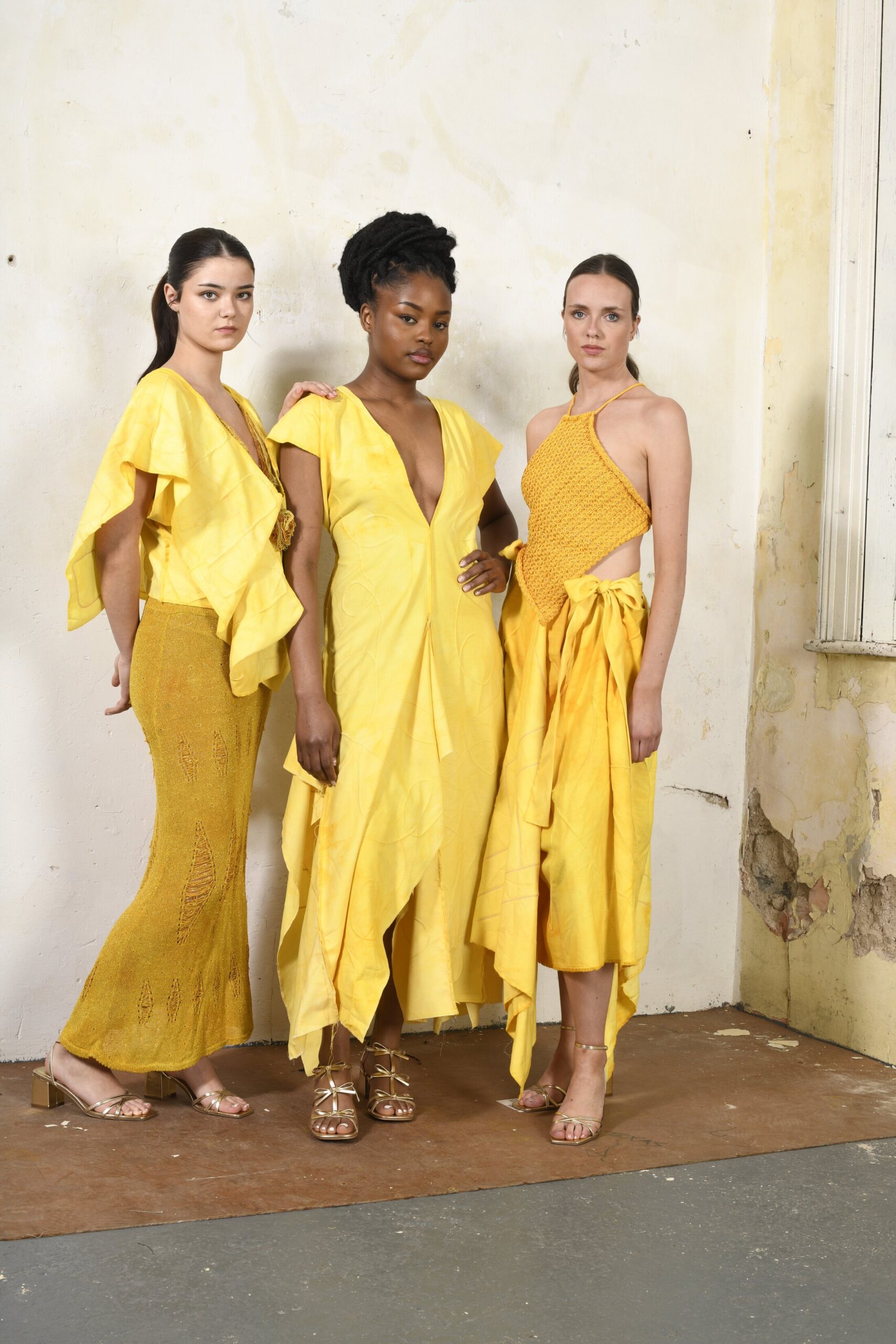
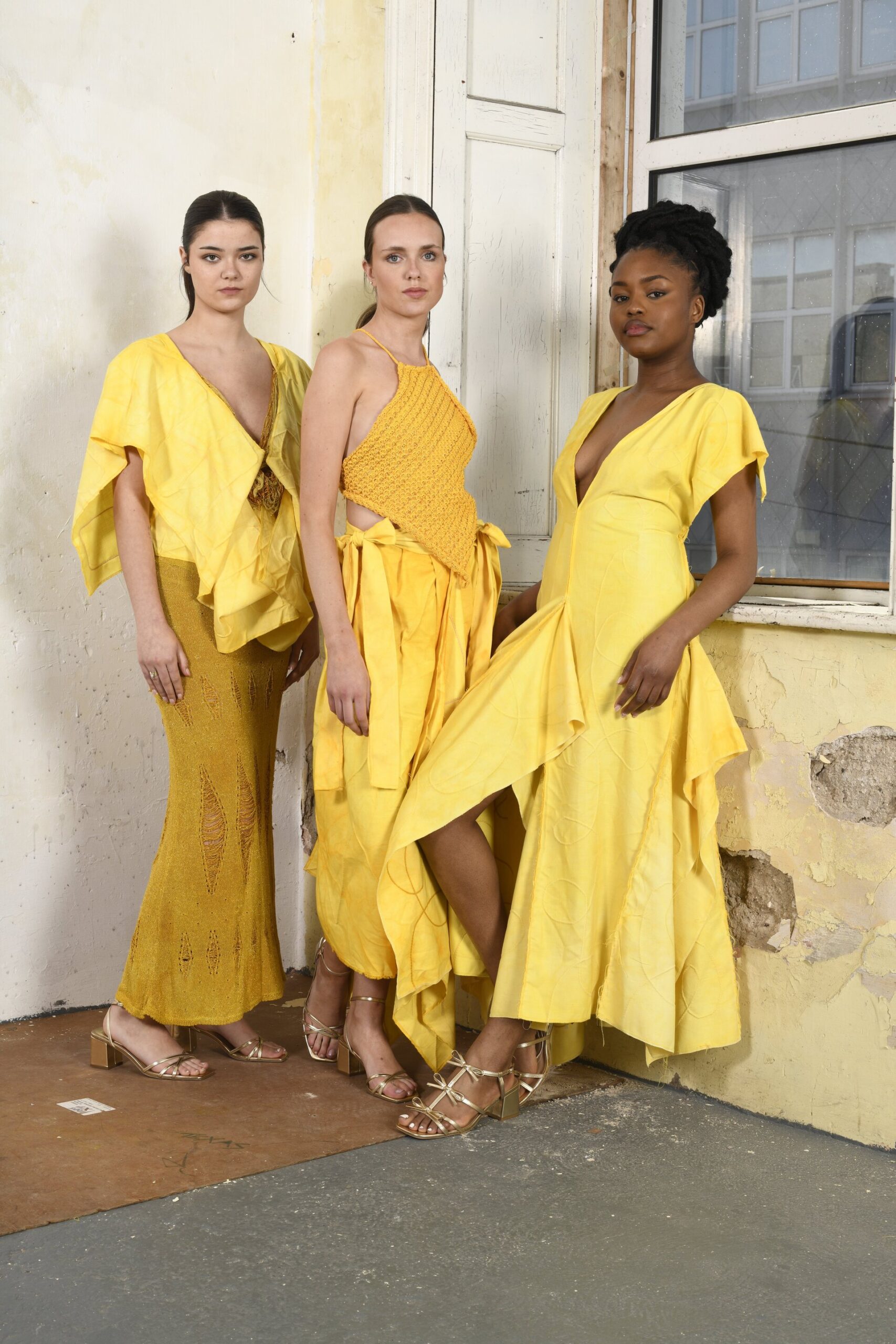
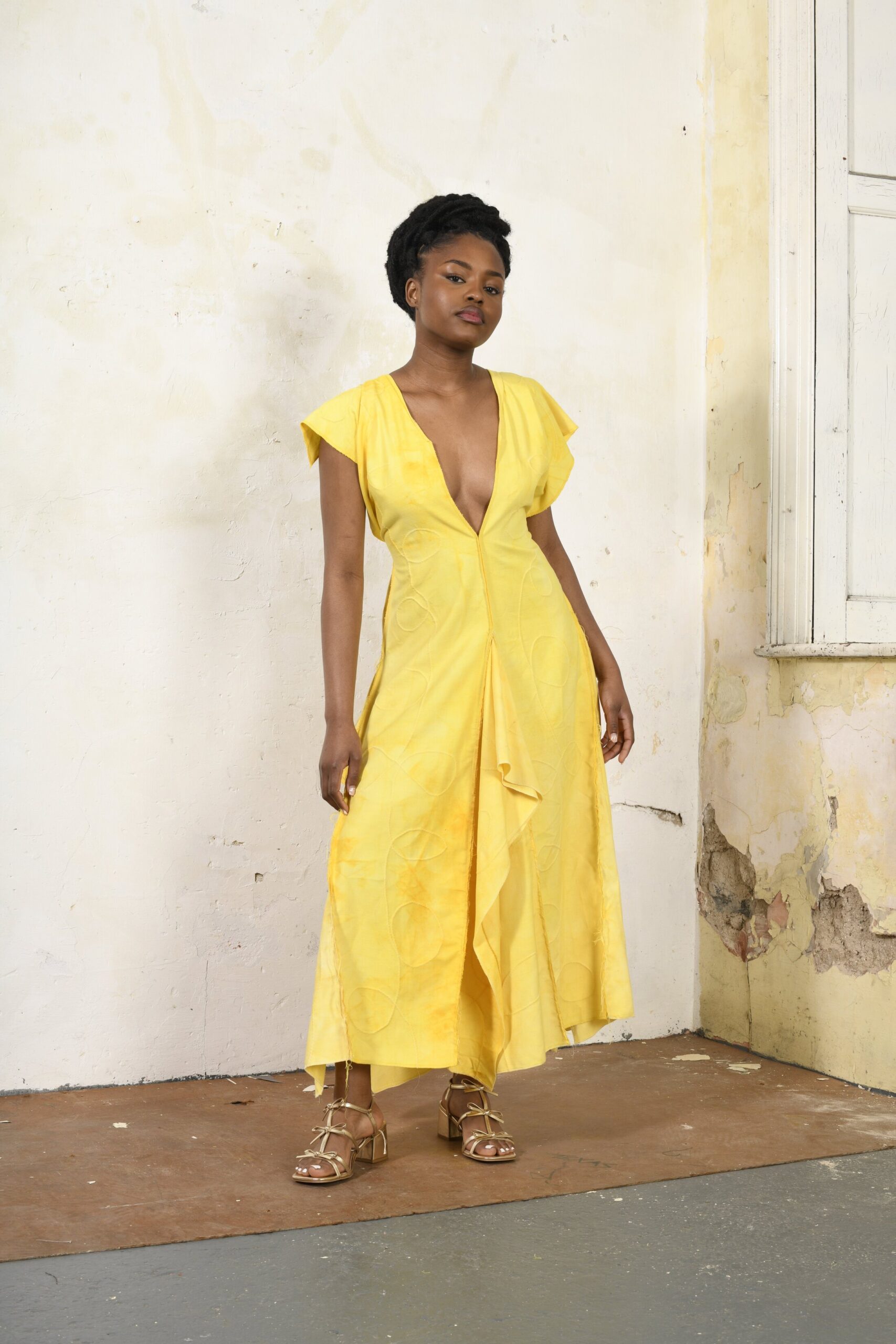
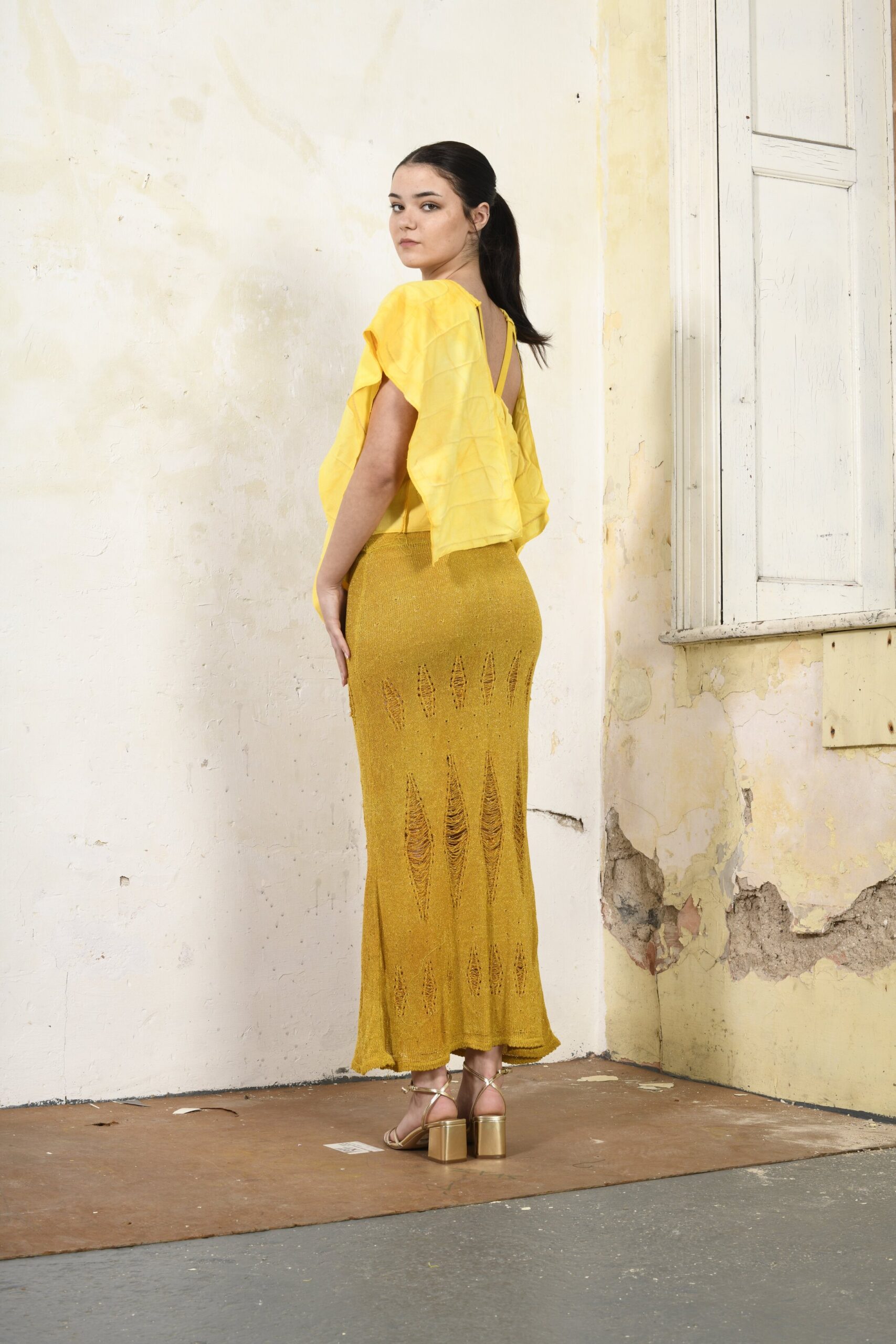
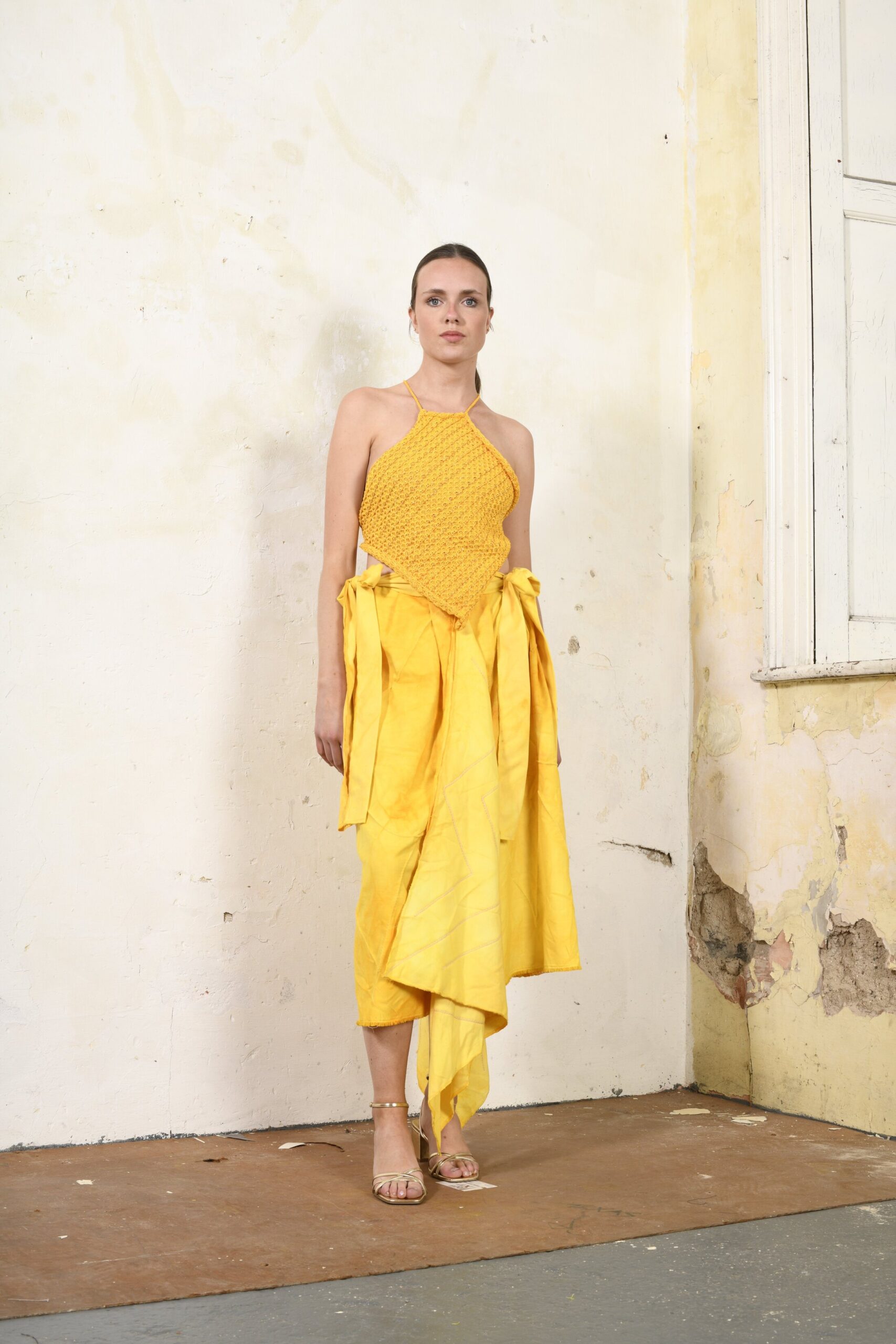
“The Many Faces of Oshun” is inspired by a Nigerian orisha (deity) from Yoruba mythology known as Oshun, or Osun in the Yoruba language. The collection draws on my own Nigerian heritage along with other pre-colonial aesthetics. I am using zero-waste pattern construction that includes draping, which is found in many ancient cultures. I am using locally sourced materials such as organic cotton and linen, which are naturally dyed with turmeric to create the golden/yellow hue often associated with Oshun. Traditional textiles that have been disregarded as "women's work" such as weaving and knitting are combined with organic materials such as wool, linen and cotton to create textiles and garments that are feminine and celebrate womanhood and our divine link to nature. Reclaiming the image of the goddess is something I am very passionate about, especially in today's climate in which misogyny and violence against women and girls is at an all-time high. Not only am I returning to natural materials and heritage textiles with this collection, but I am also returning to matriarchal societies of the pre-Christian and pre-colonial world where women were honoured and protected. Women need to be respected just as much as Planet Earth. Ancient cultures understood the importance of protecting women and the planet, and it is time that we reclaim the values and ideals that were stolen from us by the same male-dominated civilisations that are responsible for the climate crisis we are currently facing. I am trying to solve the problem of disposable, fast fashion. I’m also trying to disrupt the traditional linear economy, which involves taking, using, and throwing away. Traditional textiles and so-called “women’s work” are dying out all over the world in favour of cheap and easily produced fabrics. By using natural dyes and organic materials such as cotton, linen and latex, my garments are biodegradable, which means that they won’t pollute the planet and they will return to the Earth from which they came, contributing to a circular economy. I am also hoping to breathe new life into traditional textiles and the talented women who create them. Most importantly, I want all women and nature to be celebrated as they were in pre-colonial times.“The Many Faces of Oshun” is a collection that reflects Oshun’s multifaceted nature and the various ways she is worshipped in different cultures. Each look represents a different aspect of Oshun’s persona. Gauzy turmeric-dyed knits represent Oshun’s sexual nature, while the couched linen represents her as a motherly figure and a protector of children. Mustard and gold weaves are a throwback to Oshun’s West African heritage, while cotton textured knits reflect how Oshun continues to thrive in contemporary Afro-Caribbean diasporic traditions. My decision to also incorporate latex into my textiles was influenced by female wetness and pleasure, along with Oshun’s association with rivers and freshwater. Oshun is not only a symbol of Nigerian divine femininity, but she is also a goddess of women’s rights. When the male deities disrespected Oshun, all she had to do was withdraw her feminine powers and watch them fail. Just like Oshun, we too must stop giving our energy to these male-dominated structures and ideals that are no longer serving us and are damaging the planet.