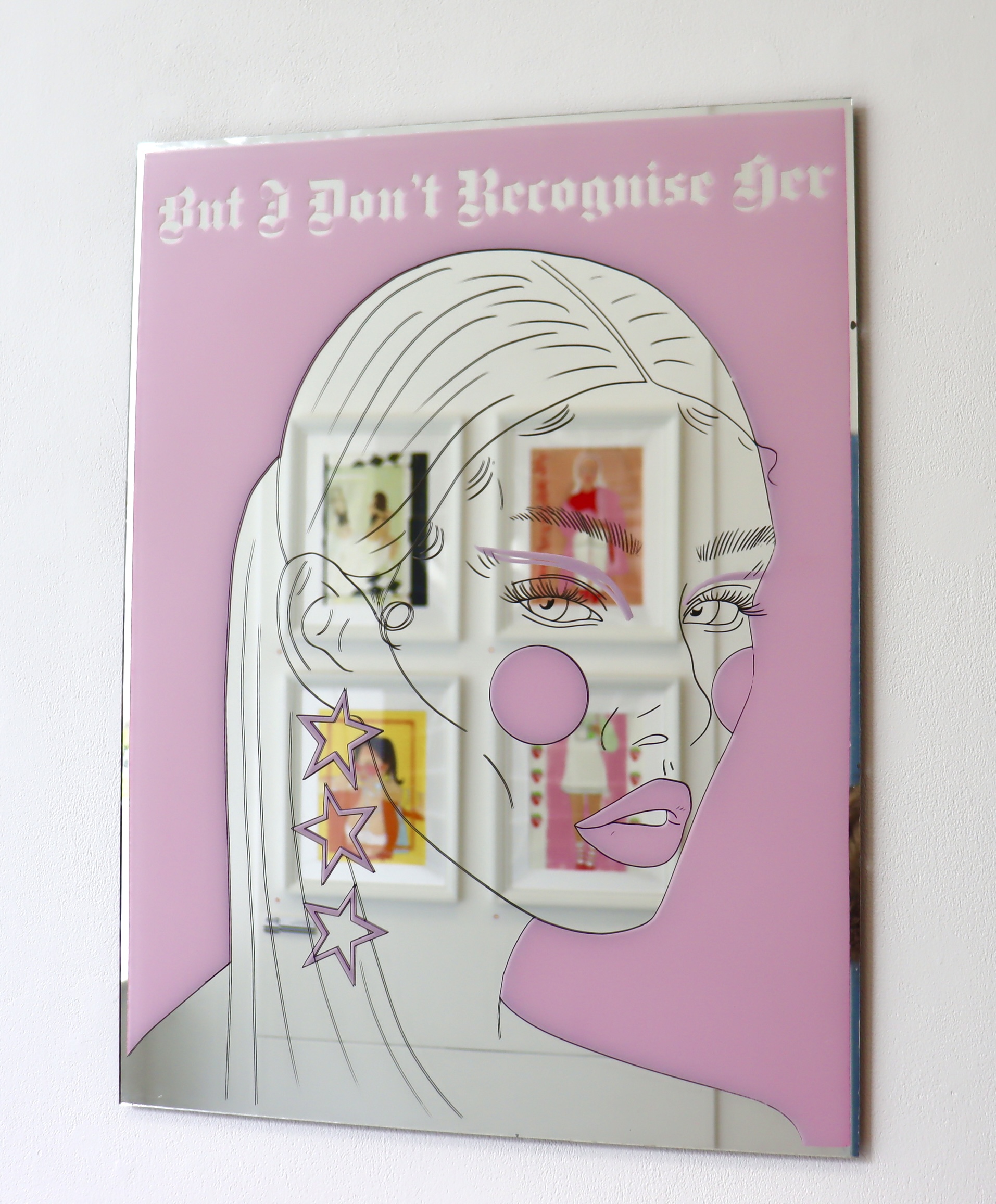
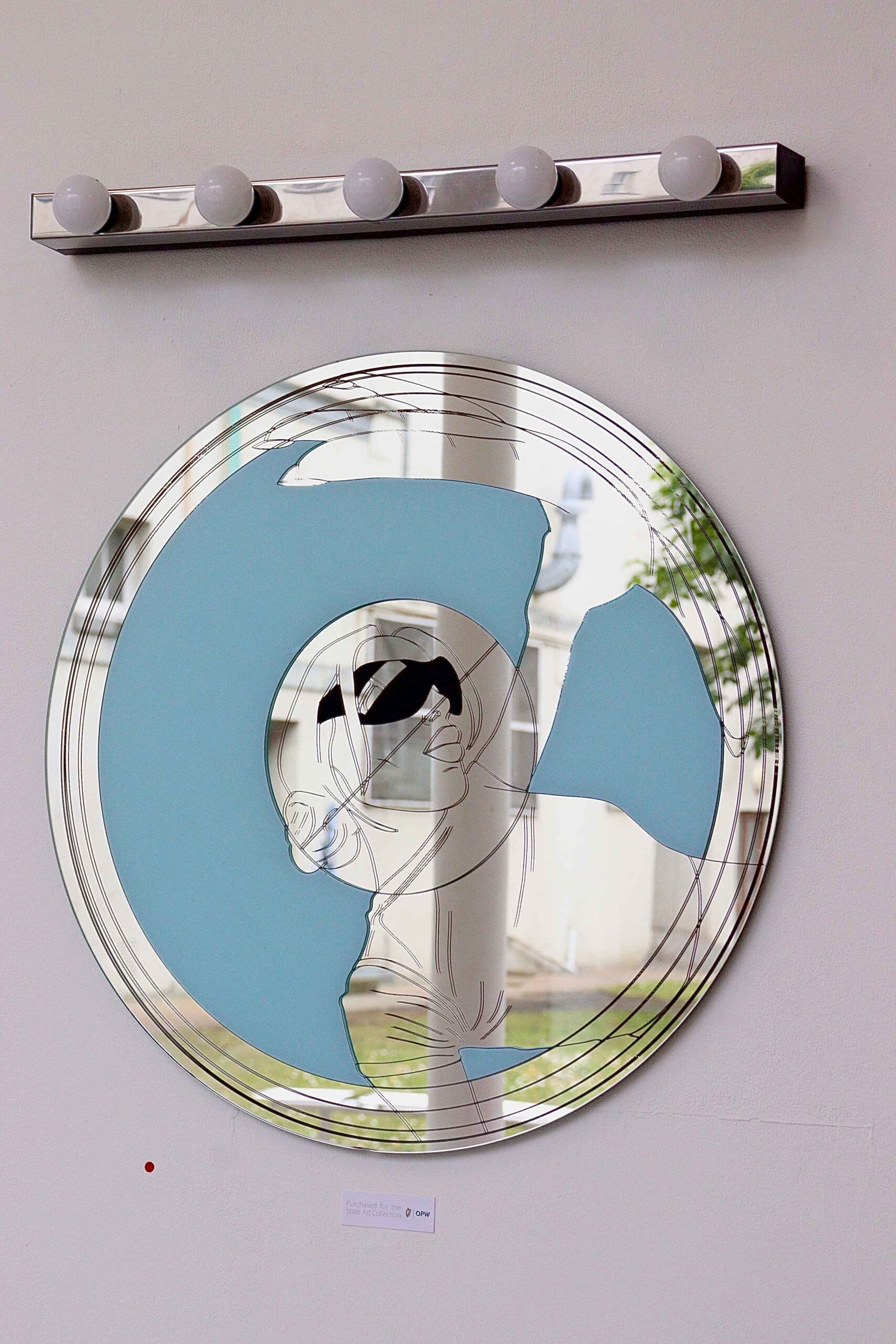
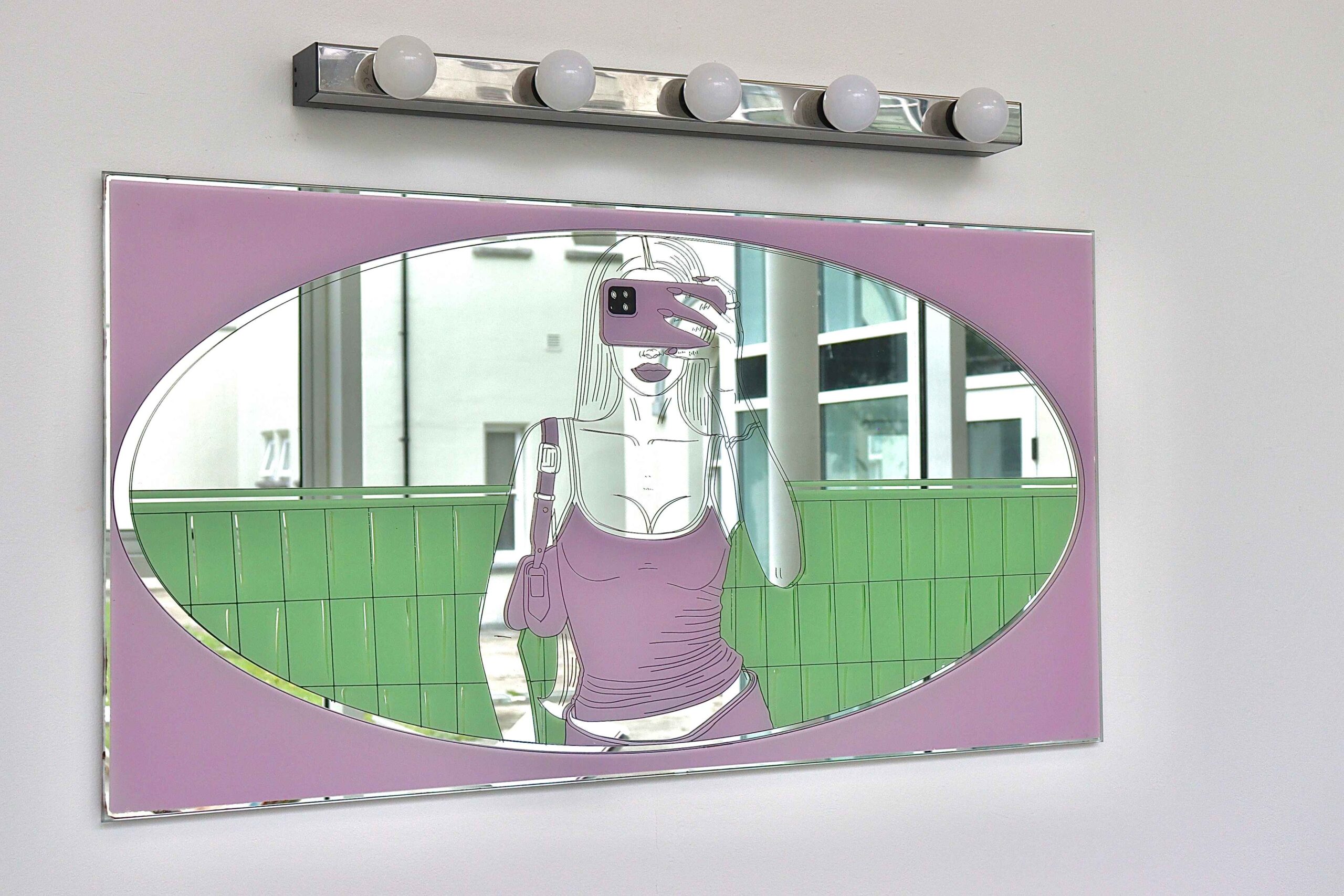
“You painted a naked woman because you enjoyed looking at her, put a mirror in her hand and you called the painting ‘Vanity,’ thus morally condemning the woman whose nakedness you had depicted for your own pleasure.” — John Berger. This quote captures the contradiction that lies at the heart of my work. It speaks to the long history of how women have been both objectified and judged for their appearance, especially when they acknowledge or take ownership of it. The moment a woman looks at herself—or is seen looking—she risks being labelled as vain. Her beauty becomes diminished by the suggestion that she is aware of it. At the heart of my practice is the concept of perception. I’ve always loved the way viewers engage with a piece—how they see it, interpret it, and bring their own experiences into its meaning. This dialogue between artwork and observer is, to me, one of the most beautiful elements of art: two people can look at the same piece and come away with entirely different understandings, shaped by their background, emotions, and creative intuition. While my work carries its own meaning, I deeply value the interpretations others bring to it. This is where mirrors become essential—not just as materials, but as conceptual tools. They allow the viewer to physically insert themselves into the artwork, blurring the line between subject and object. Each person sees something slightly different, not only in their reflection but in the meaning they extract. It becomes an interactive, evolving piece—never to be seen the same twice. It belongs to each viewer in a unique way. This project also speaks to the societal expectations placed on women to meet unrealistic beauty ideals while being shamed for engaging too closely with them. Beauty is encouraged, but vanity is punished—particularly when a woman appears aware of her own image. As Berger’s quote reveals, the mirror becomes a tool of moral judgment when placed in the hands of a woman. But in my work, I aim to reclaim it. I use mirrors not to condemn, but to empower—to allow space for reflection that is personal, complex, and unapologetically owned by the viewer themselves.