Renowned Irish poet Paul Durcan has had a lifelong fascination with visual art, writes Ciara Kerrigan
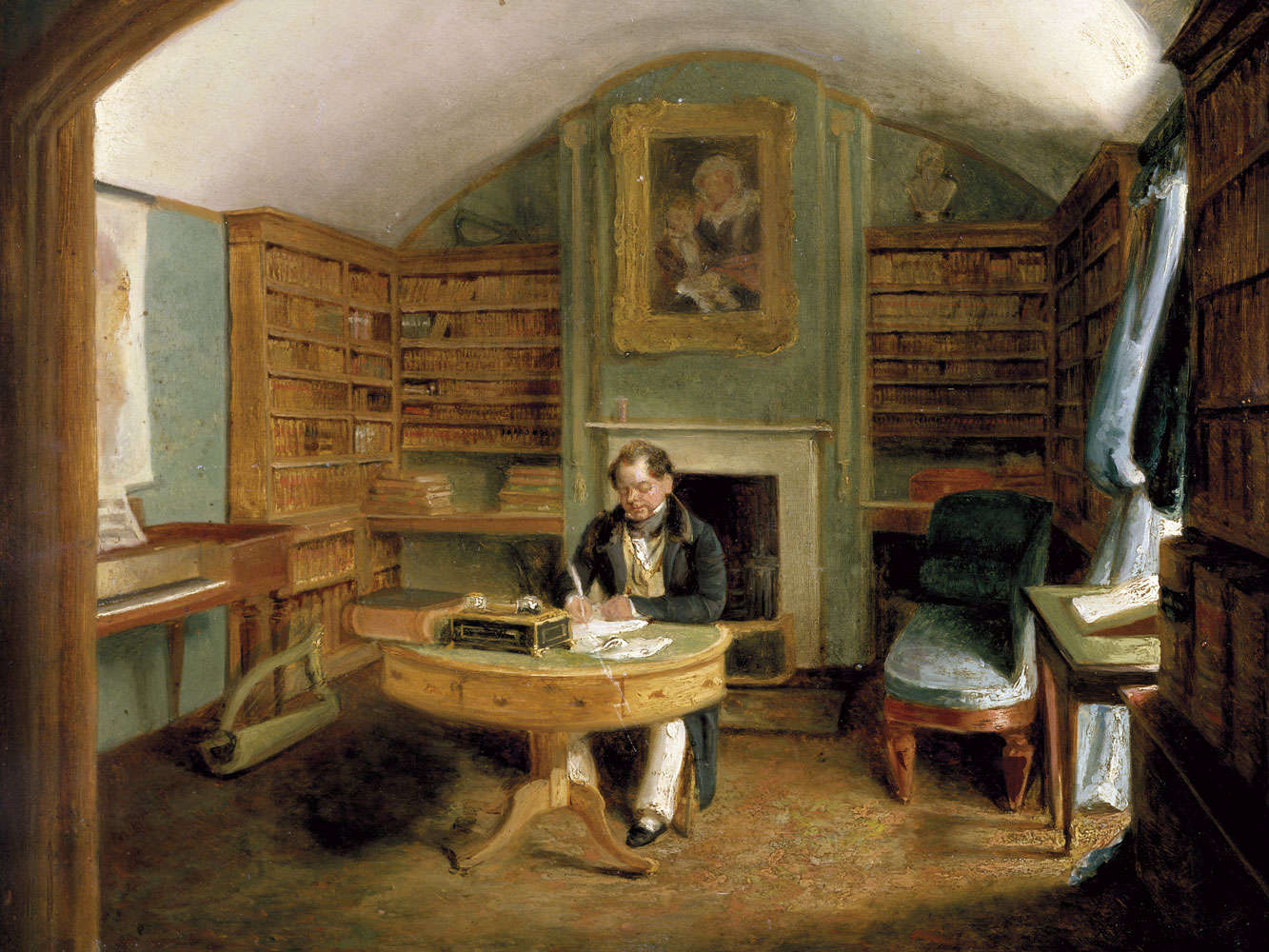
The National Library of Ireland (NLI) has acquired the second half of the literary and personal archive of one of Ireland’s leading contemporary poets, Paul Durcan. Comprising over 200 boxes, the archive spans Durcan’s literary career, from the 1960s to the present day. It contains material relating to his work as a poet, including drafts of his poems, hundreds of notebooks, diaries, photographs and an extensive corpus of correspondence.
Born in 1944, Paul Durcan spent much of his childhood between Dublin and the homes of his Mayo relatives. As a boy, he attended a weekly art class with painter Sheila Fitzgerald, which gave him a fascination with visual art that would have a profound and enduring impact on his life and work. He was an enthusiastic visitor to the Tate Gallery when living in London in the 1960s, which was also around the time when he began writing poetry.
Durcan published Endsville, his first collection of poems, in 1967. He continued to publish collections over the next two decades, including Teresa’s Bar (1976), Sam’s Cross (1978), Jesus, Break His Fall (1980) and Ark of the North (1982).
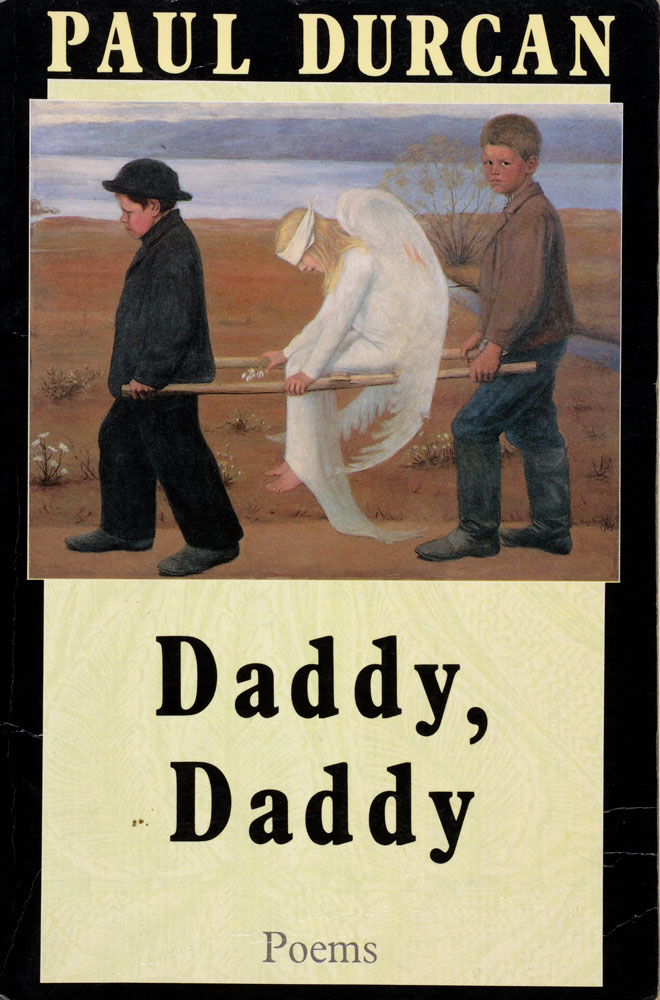
It was following the death of his father in 1988 that Durcan composed his most acclaimed collection, Daddy, Daddy. Published in 1990, the volume was shortlisted for the Irish Times Irish Literature Prize for Poetry and later won the poetry category of the Whitbread Awards (thereafter the Costa Book Awards).
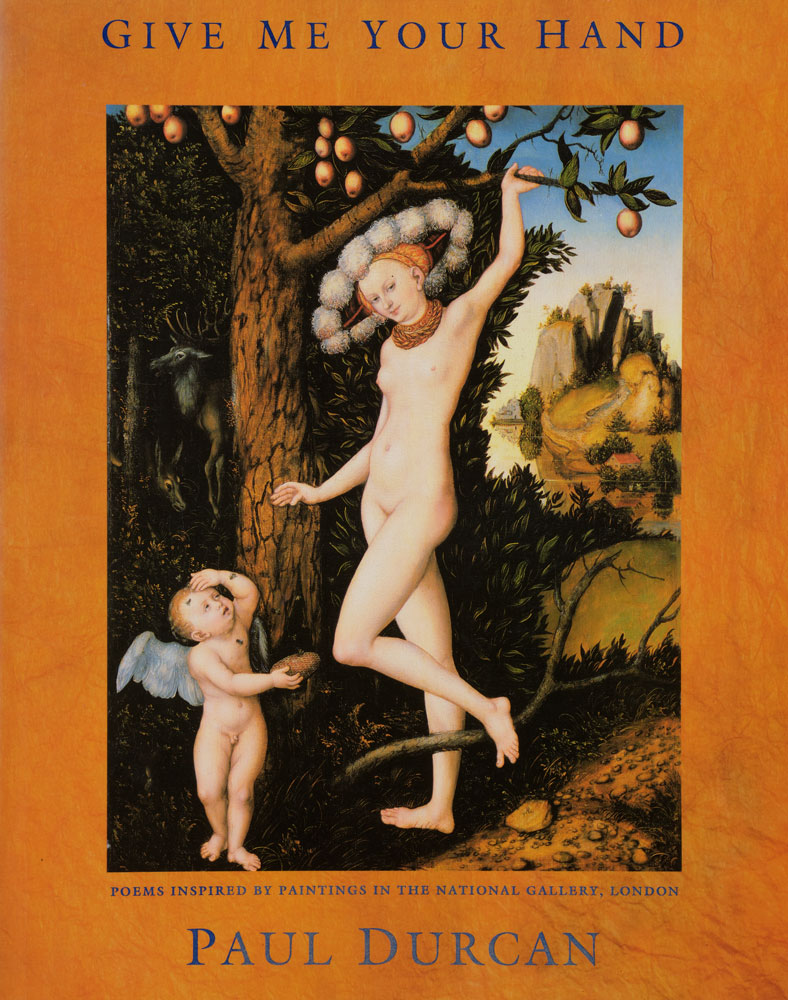
Durcan continued to publish through the 1990s and 2000s, with books including Give Me Your Hand (1994), A Snail in My Prime (1993), Christmas Day (1996), Greetings to our Friends in Brazil (1999), Cries of an Irish Caveman (2001), The Art of Life (published in 2004 to mark his 60th birthday), Praise in Which I Live and Move and Have My Being (2012) and The Days of Surprise (2015).
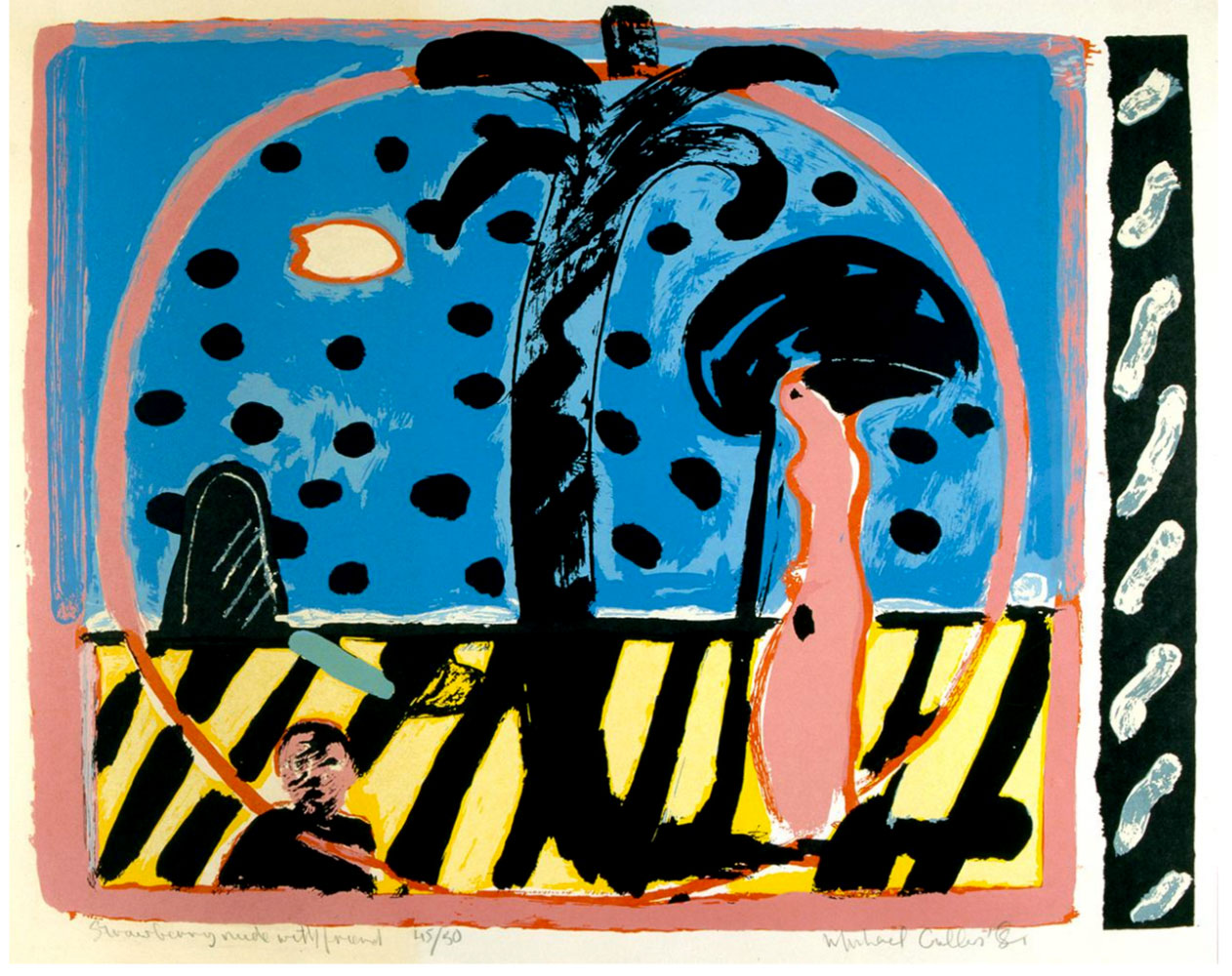
Durcan’s library was filled with art books, and many of his poems are direct responses to impressions he received from canvas. In 1969, he was invited to write a poem for the catalogue of the Dublin exhibition of Spanish painter Manuel Salamanca. He later wrote a poem in response to the artist Michael Cullen’s work Strawberry Nude with Friend (Fig 1). In 1987, Durcan collaborated with artist Gene Lambert on an exhibition of Lambert’s work entitled In the Land of Punt, and published a book of the same name in 1988.
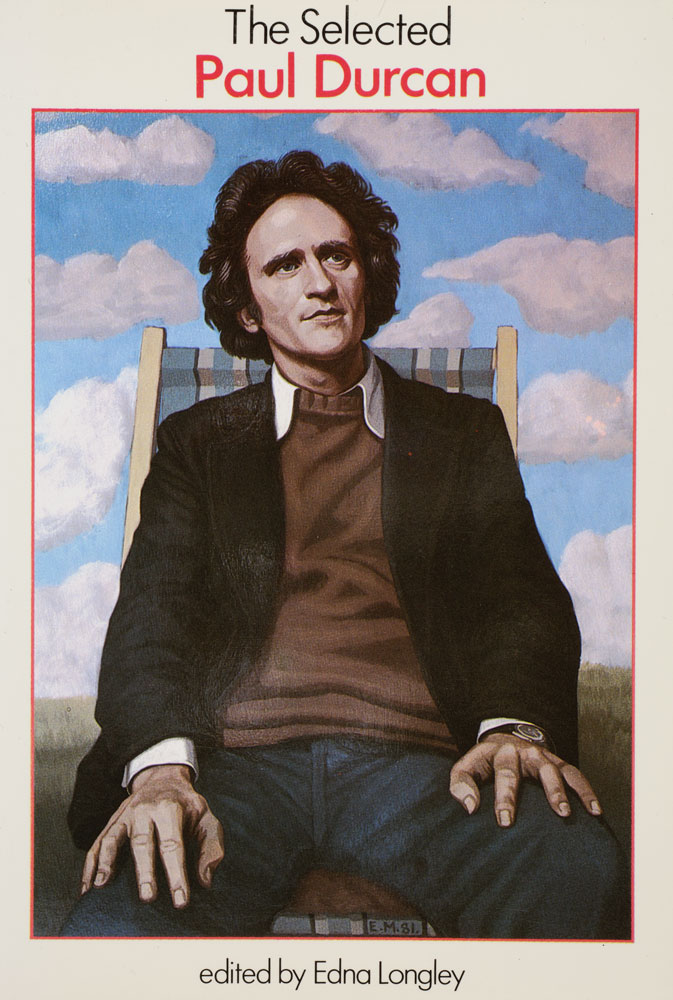
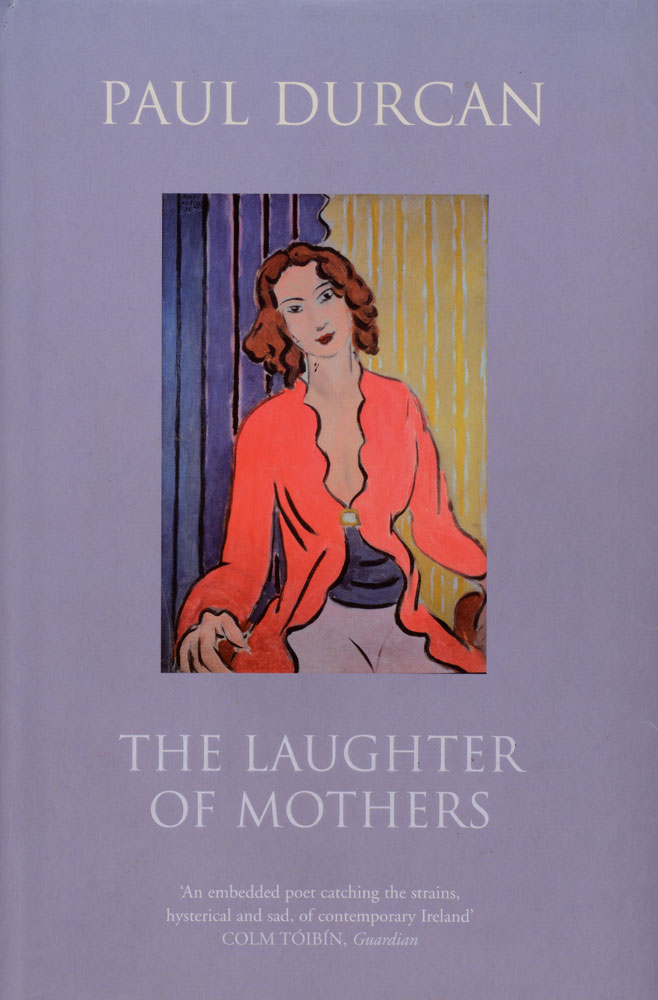
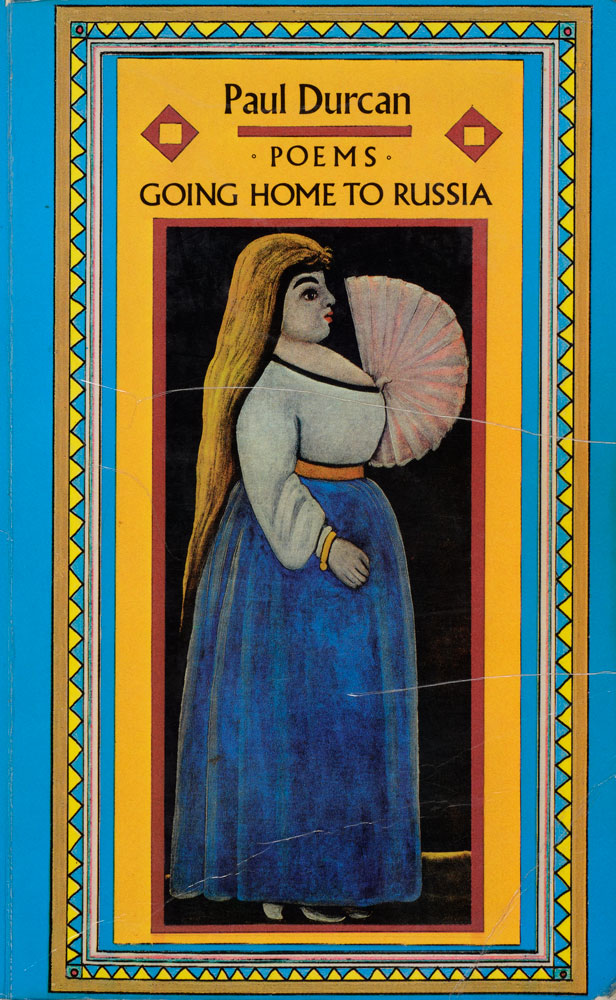
Durcan’s interest in art was also expressed though the cover designs of his books. O Westport in the Light of Asia Minor (1975) included cover art by Brian Lynch. Edward McGuire’s Blackbird on a Plate featured on the cover of The Berlin Wall Café (1985) and McGuire’s portrait of Durcan was reproduced on the cover of The Selected Paul Durcan (1985). The painting Ortachala Belle with a Fan (c. 1905) by Georgian artist Niko Pirosmani was used for the cover of Going Home to Russia (1987). A painting by Finnish Symbolist painter Hugo Simberg entitled The Wounded Angel (1903) was used for the cover of Daddy, Daddy, while Woman in a Persian Costume (1932) by Henri Matisse was used for the cover of The Laughter of Mothers (2007).
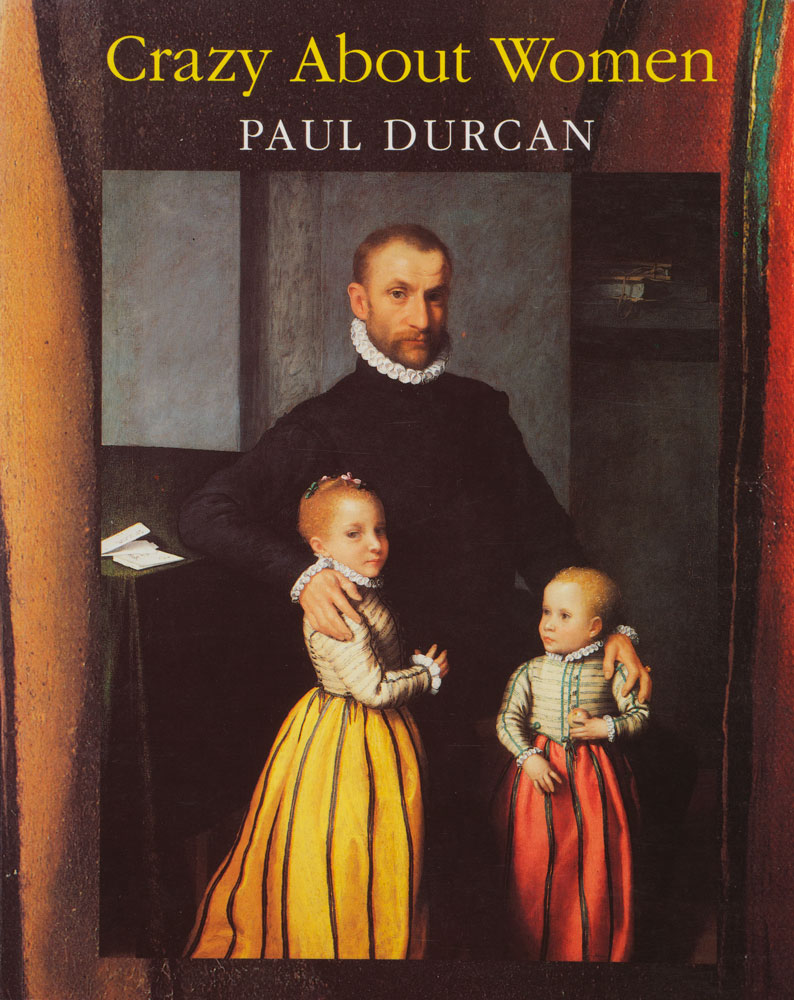
In 1990, the National Gallery of Ireland commissioned Durcan to write a collection of poetry in response to his personal selection of paintings from the collection. Crazy About Women was published in 1991 and an exhibition of the works Durcan chose was held in the gallery.
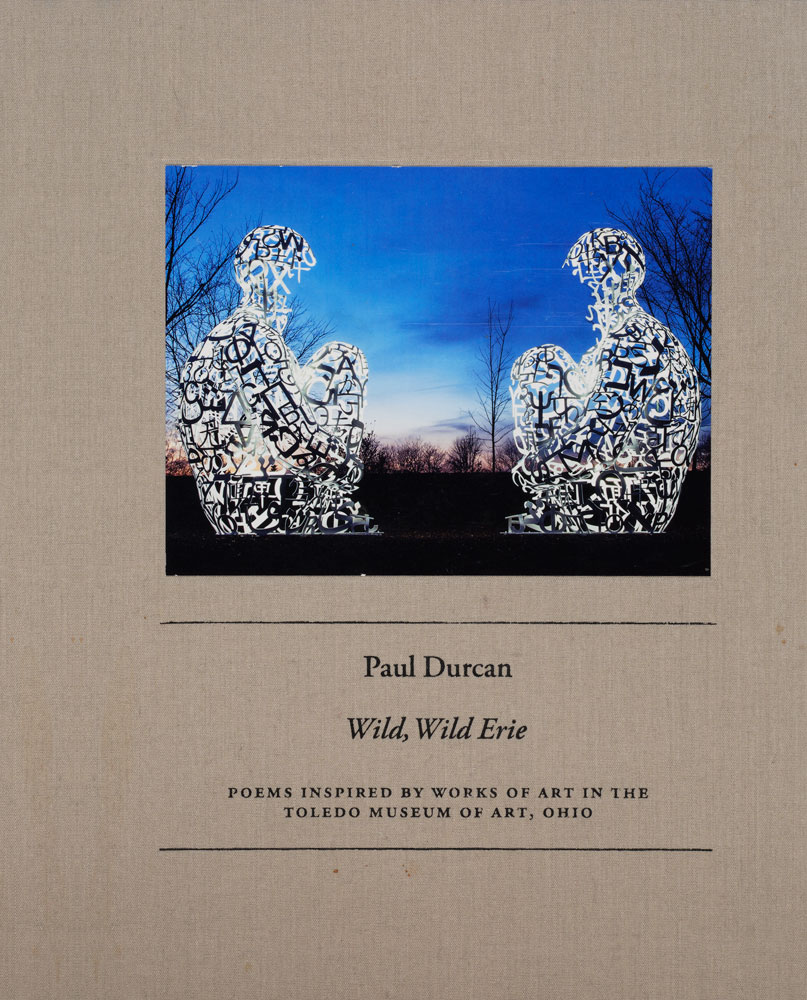
Durcan again produced a collection focused on paintings in 1994, Give Me Your Hand, this time using works held by the National Gallery in London. Once more, an exhibition was held to mark the book’s publication. Durcan’s most recent collection, Wild, Wild Erie (2016), contains fifty poems based on works that he selected from the Toledo Museum of Art’s collection.
A seminal time in Durcan’s career was a visit to the ‘Artist’s Eye’ exhibition at the National Gallery in London in 1980, curated by American-born painter RB Kitaj. He returned to view the exhibition every day for three weeks. He later wrote, ‘The Kitaj show changed my attitude to art – expanded it and revolutionised it and gave me back the authority of my own eyes. Since 1980 I have regarded painting… as essential to my practice as a writer. Picture-making is the air I breathe.’
Acknowledgement: I am indebted to Kathleen McCracken’s article ‘Canvas and Camera Translated: Paul Durcan and the Visual Arts’, The Irish Review 7 (1989).
Ciara Kerrigan is Assistant Keeper, Special Collections, National Library of Ireland.


Christian Dupont uncovers Belfast artist Eva McKee’s vision for achieving aesthetic resonance through Celtic patterns and Art Nouveau styling
Isabella Evangelisti views the work of Sri Lankan artist Anushiya Sundaralingam and finds in it hope and courage
Christina Kennedy considers artist Fergus Feehily’s recent exhibition, ‘Fortune House’