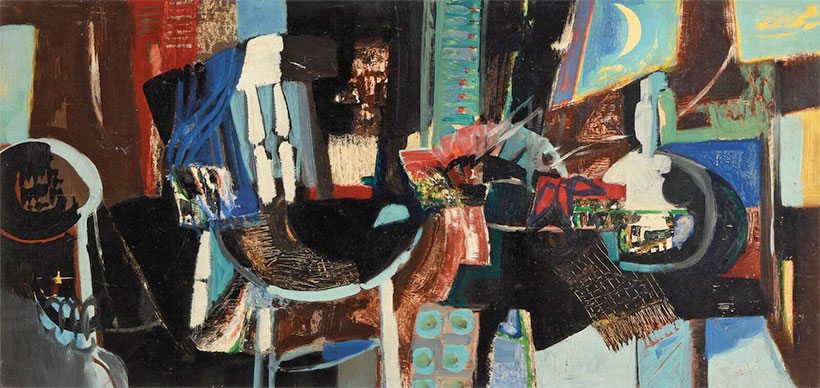
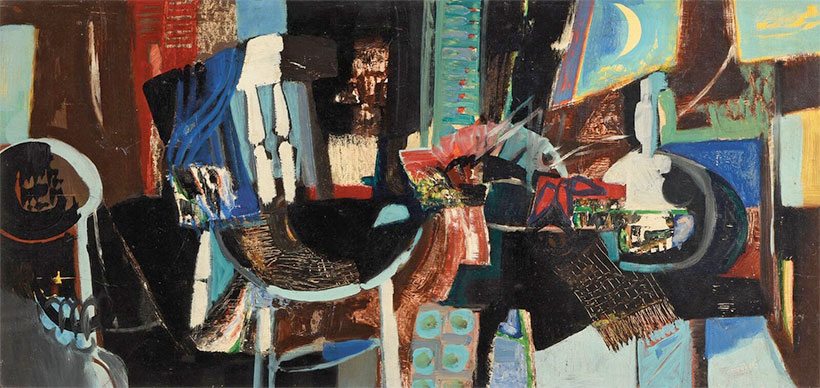
George Campbell has been a slightly neglected figure in Irish art. Rebuffs from establishment critics, rows with influential dealers, and snootiness about his self-taught origins all played a part. The Spanish thought enough of him to make him a Knight Commander of Spain and, rather bizarrely, named a roundabout after him in Malaga. He had a long and productive career and is a hardy perennial on the Irish auction scene where his dark, quasi-cubist works achieve steady rather than spectacular prices. His more colourful (both as painter and person) friend Gerard Dillon is inclined to do much better. Campbell spent a lot of his career in Spain and his output can be divided into Spanish and Irish phases. His Irish work focused on the West of Ireland and he produced many fine pieces inspired by that area – Roundstone in particular. His Spanish work is more colourful and more dense and cubist. It frequently featured musical instruments – he was an accomplished musician. Artist’s Studio is not a typical work but is fascinating in its cubist jumble of artistic and domestic trappings. There’s a white chair in the foreground, a blue scarf, palette and brushes, and a watchful owl in the background. One’s eye is drawn to a strange toothed image on the left foreground of the canvas – it suggests some unsettling presence that is observing proceedings. The colourful elements and the crescent moon suggest a Spanish location. This will feature in Morgan O’Driscoll’s 4 December auction and is guiding at €6,000-€9,000. The same auction will feature a major work by Walter Osborne, Rags, Bottles and Bones which is bound to attract a lot of attention.

To the Irish in America, the irony of using funds from a Fenian club to buy a set of Malton views depicting Georgian Dublin was not apparent, writes Christian Dupont
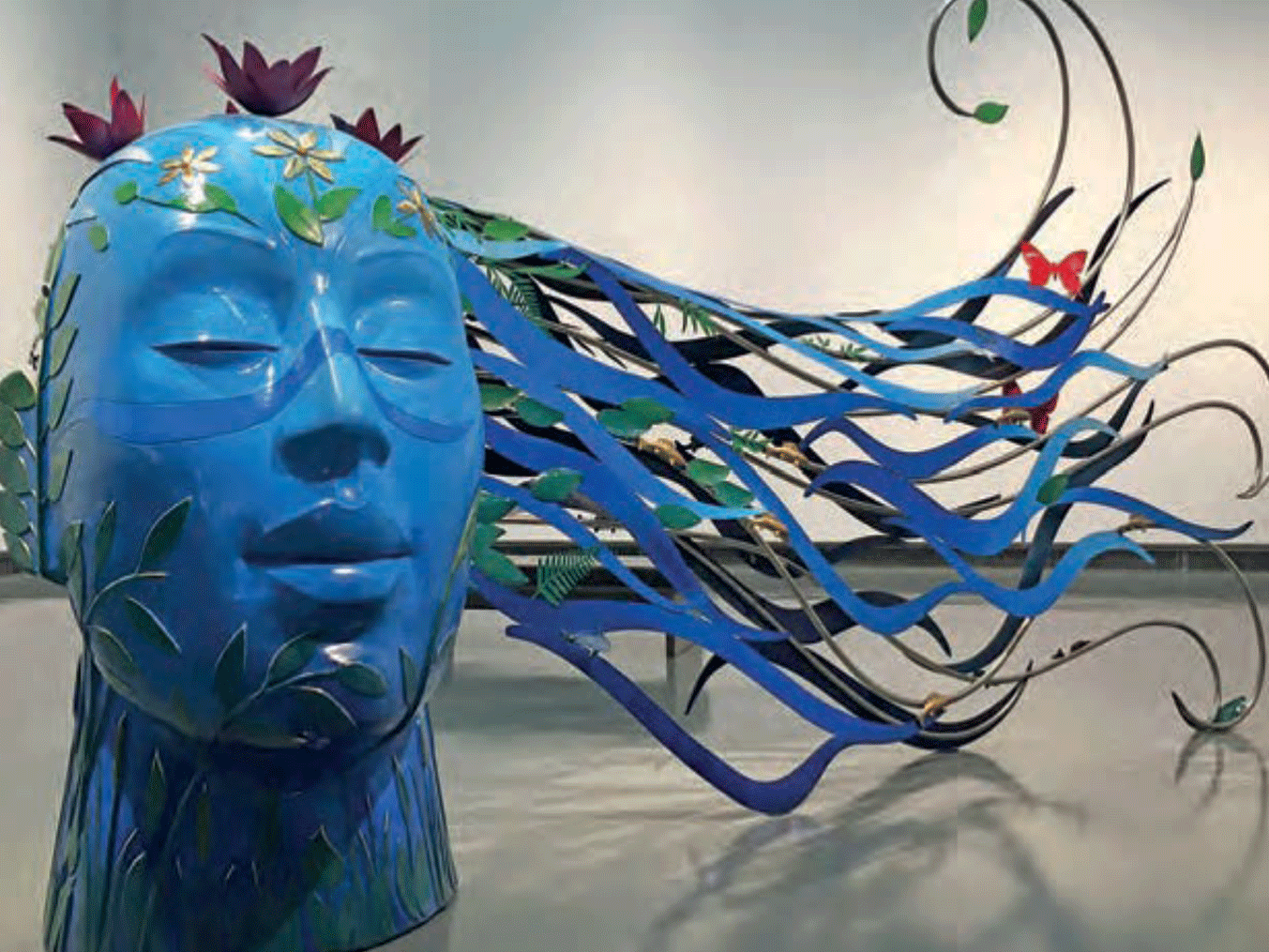
Linda Brunker’s female avatars affirm nature and spirit. Mark Ewart talks to the Irish sculptor as she departs California for France
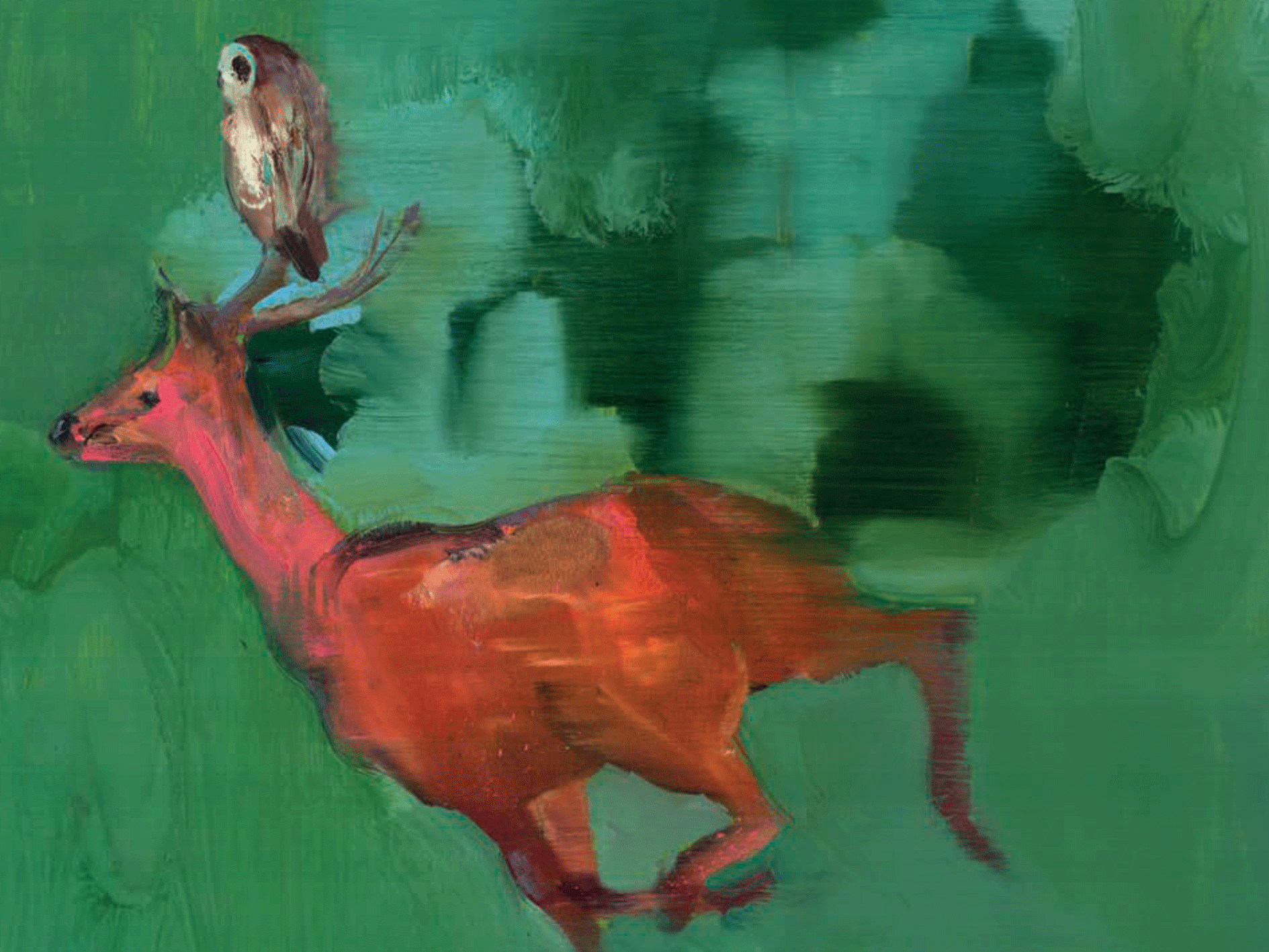
The magic realism of Sweeney’s transformation from man to bird continues Gabhann Dunne’s association with the natural world, writes Susan Campbell