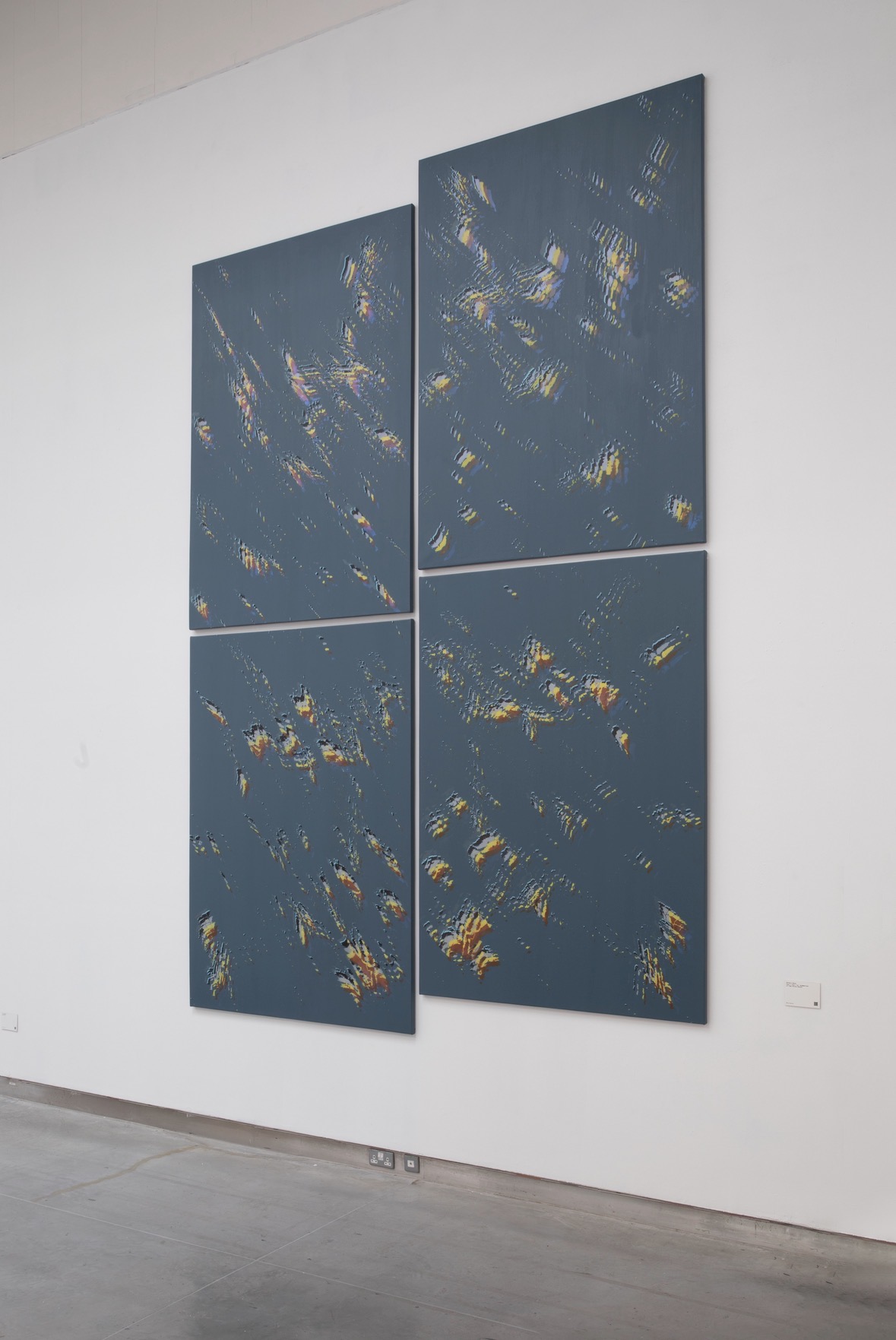
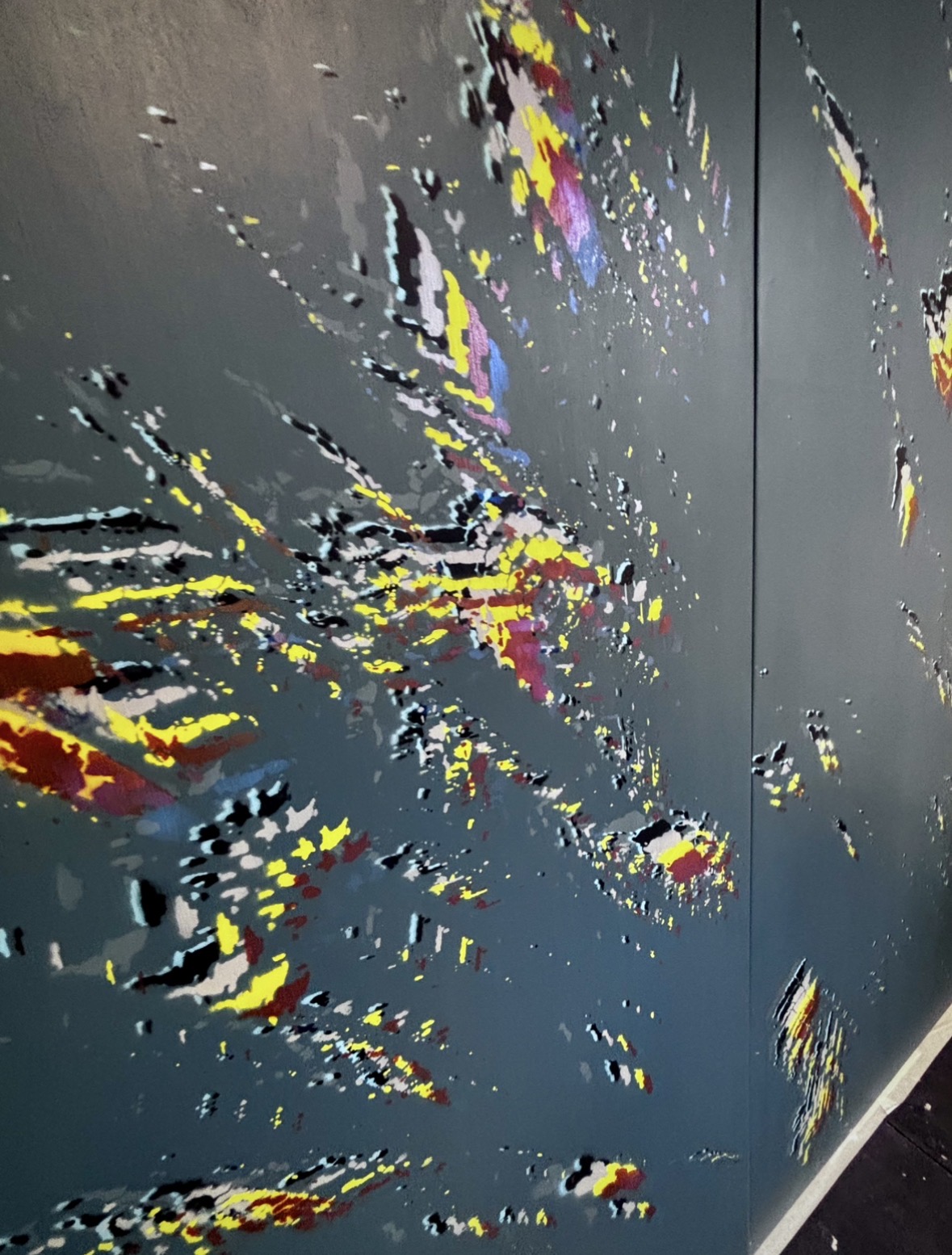
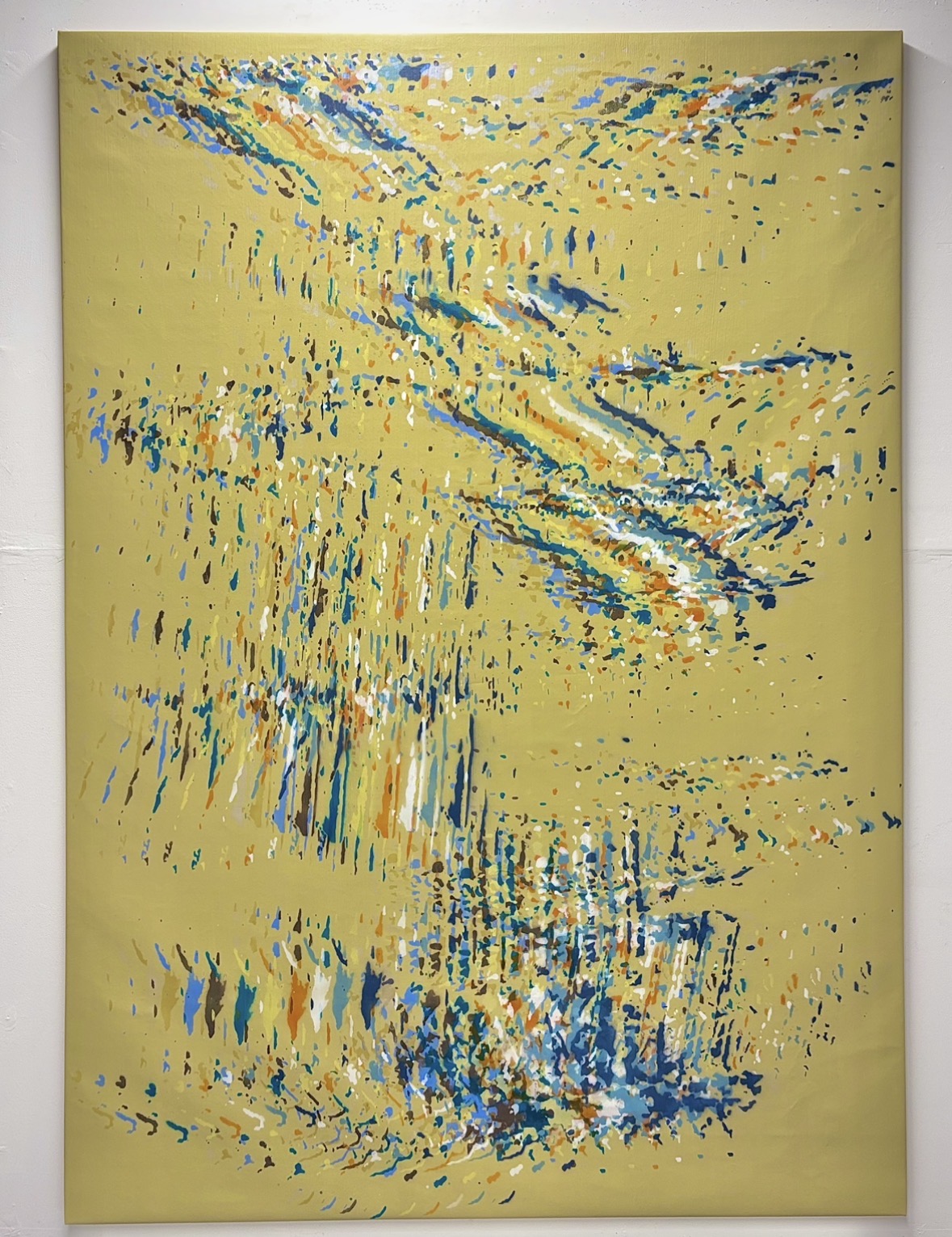
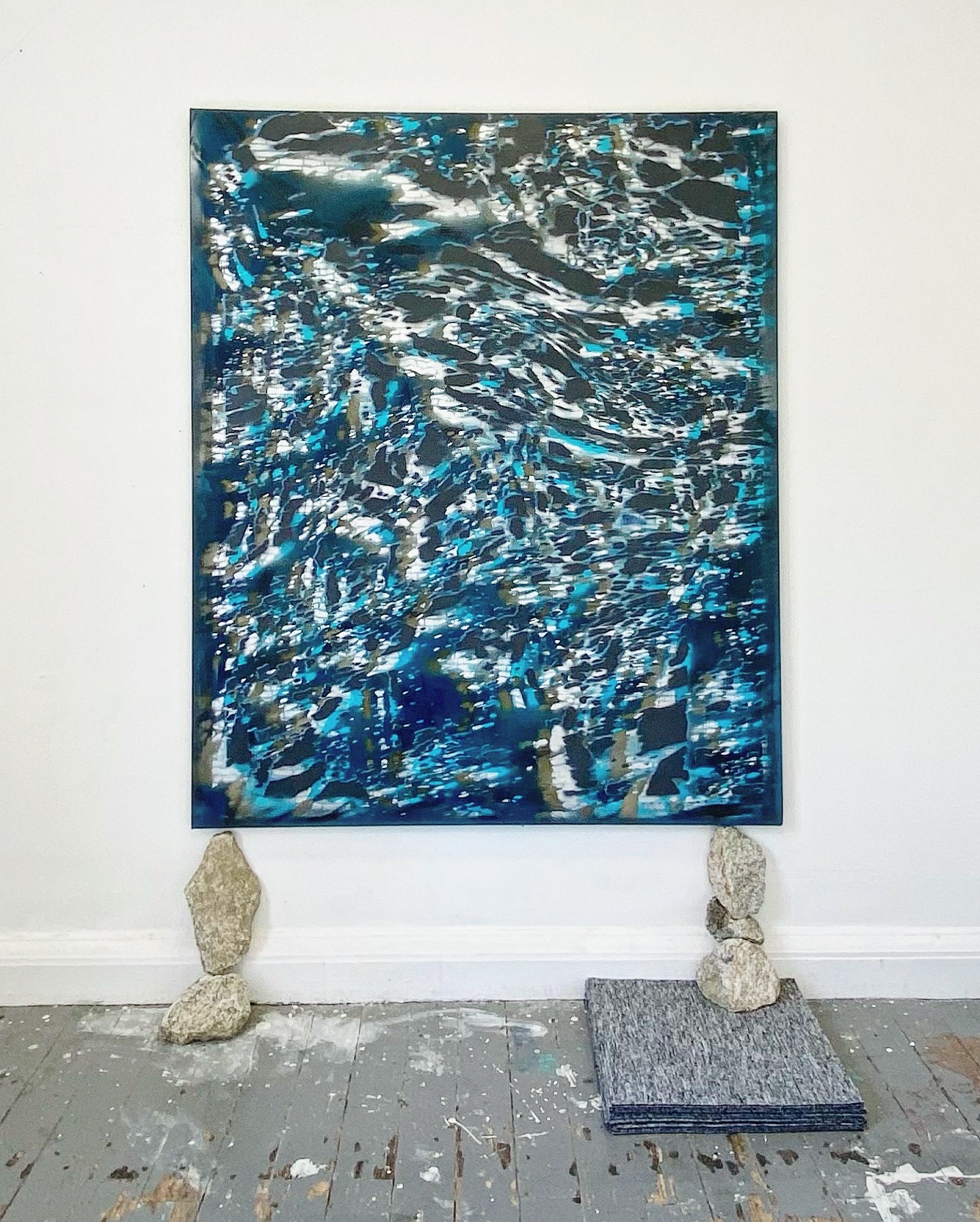
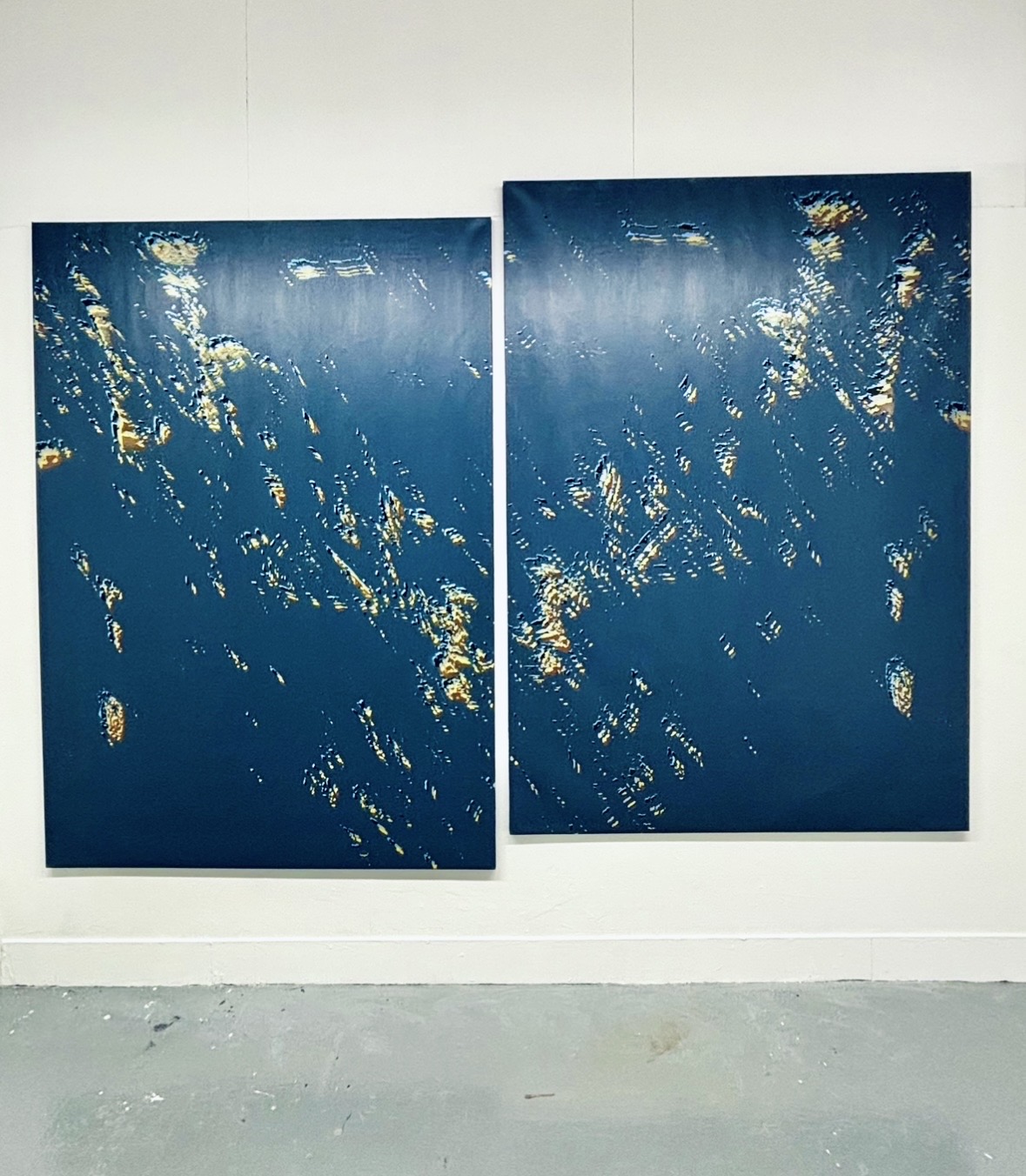
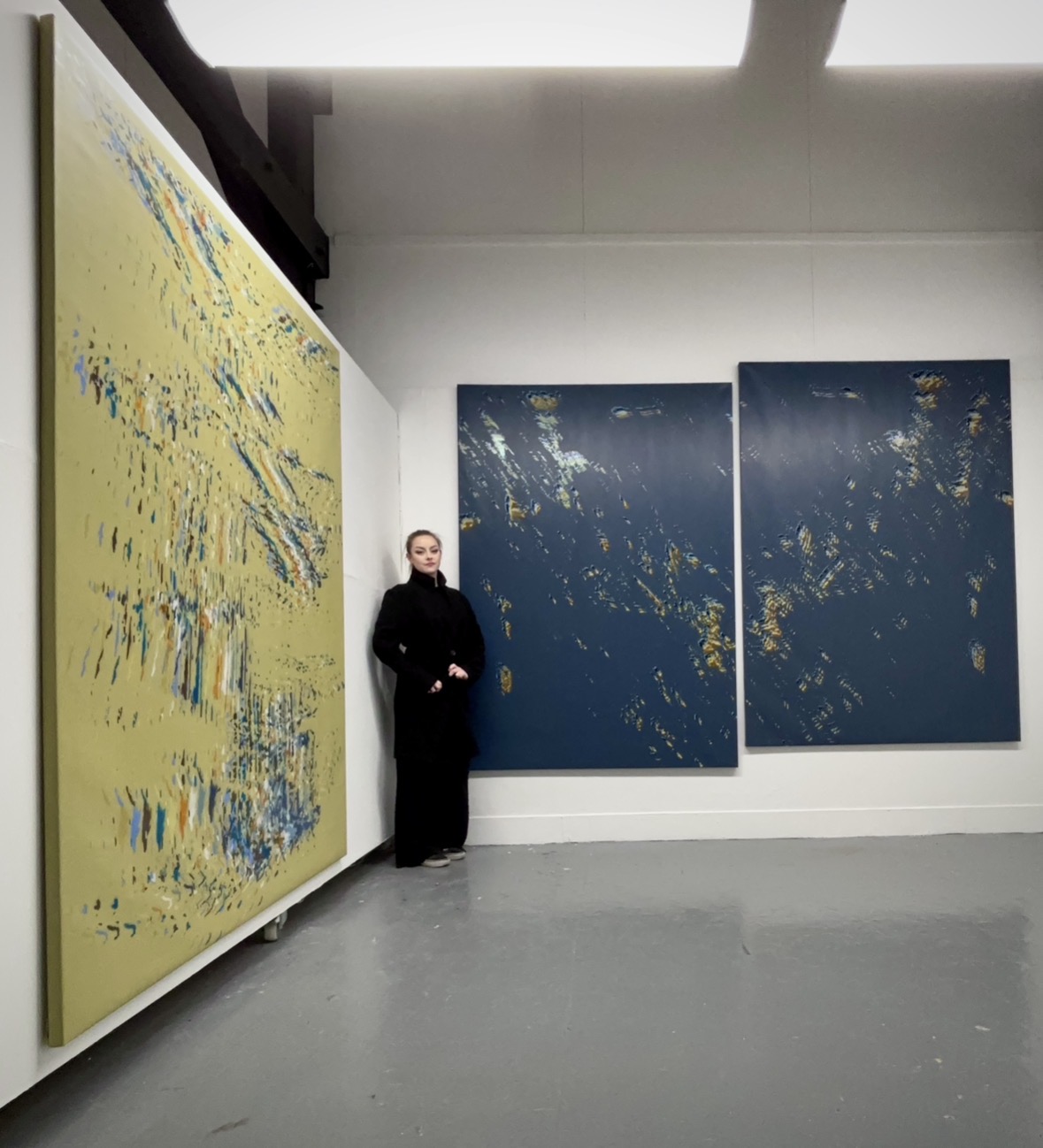
My work begins in the fragility of the human impulse to know what cannot fully be known. I do not depict time; I expose its instability. I zoom from satellite to granite in under a second. Liquefied fossils power the server that renders El Capitan into pixels. Rare earth minerals mined from strata circulate as conduits; the mountain and the microchip share a geology. I stand in Yosemite Valley and feel time misbehave. One hundred million years press against a body calibrated to calendars and clocks. We are momentary pulses against tectonic epochs, suspended between magnitudes that outlast and out-scale us. Yet we divide time into units, into hours, into systems of control, as if it were stable, measurable, ours. I look up to El Capitan and feel the hairs on the back of my neck stand up. Philosophy calls this the Sublime: the fracture between what the mind can conceive and what the senses can hold. But we no longer encounter the sublime only in mountains. It is in the flickers of quantum processors, in fibre-optic pulses, in the hum of data centres. The technological sublime promises that nothing is too vast to visualise. Deep-time becomes a dataset. Infinity becomes interface. Lev Manovich describes this as the anti-sublime: the belief that data visualisation can domesticate immensity, translating terror and awe into legibility. Yet something always escapes. Timothy Morton describes ‘Hyperobjects’ as entities so massively distributed across time and space that they cannot be grasped as wholes. Deep-time. Technological infrastructure. We are not observers of these systems; we are inside them. We do not encounter these temporalities directly; we encounter translations. Every image is a slice; every measurement a compression. They are phase shifts and interference patterns. Silicon is refined sand. Circuits are mineral reorganisations. The machine is not outside the Earth. When I zoom or render, I participate in a compression that dissipates what it touches. Measurement interferes with what it measures. Representation is compression. A JPEG of a mountain is a lossy translation of duration. The rift never closes. Painting, for me, reintroduces friction and amplifies the rift. It exposes the fault in the illusion of precision. It stages the asymmetry between a body that cannot count to one hundred thousand years and infrastructures that simulate planetary scale in real time. I position my practice within this asymmetry not to resolve it, but to hold it open. My paintings begin as sections derived from LiDAR scans of El Capitan. They are processed through infrastructural software and hardware. The laser logic used to scan the mountain also scours the Mylar surface. Granite minerals are re-materialised through airbrushed interference mica on canvas. The system promises clarity, alignment, optimisation. I refuse it. Each translation introduces more fault. Stencils drift. Edges blur. Paired paintings function as reflections that echo and iterate. Pigment shifts as the viewer moves. No single vantage point stabilises the field. My non-linear, neurodivergent experience of time operates as methodology. Clock-time is revealed as industrial fiction. Geological-time erodes it. Quantum-time destabilises it. The paintings sit within these intersecting scales. They are not images of deep-time, but temporal surfaces where compression and human fragility are embodied. Alongside painting, I compose ambient sound that extends this phasing into frequency. Sustained drones and elongated tonal structures unfold. Sound requires duration. Without time, it collapses into a score without activation. Painting and sound operate as parallel apparatuses. Both recalibrate the viewer’s sense of scale and temporal instability. Time is not linear but a field of frequencies. Rock thickens in tectonic pulses. Processors tick in nanoseconds. Lasers score surfaces. Compressors breathe pulverised stone and exhale atomised pigment in calibrated bursts. The work does not resolve. It folds back into its origin. It returns to the impulse to know what cannot be fully known. Each process feeds forward and returns as interference, error, and drift. The mountain becomes data. The data becomes surface. The surface becomes fault. Every measurement produces new uncertainty. The work does not progress. It iterates, misaligns, and returns to the fragility of the human impulse to know what cannot be fully known.