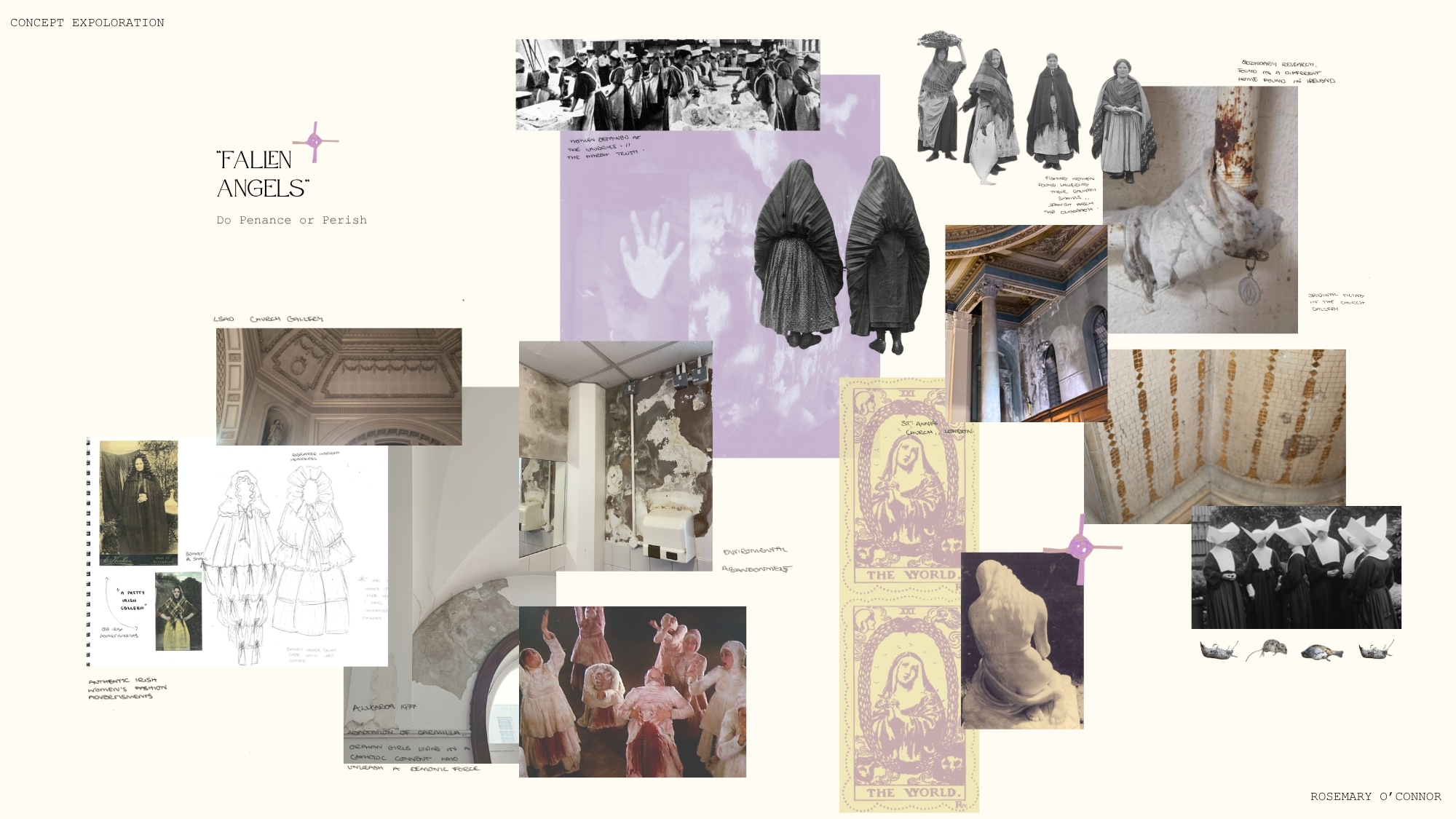
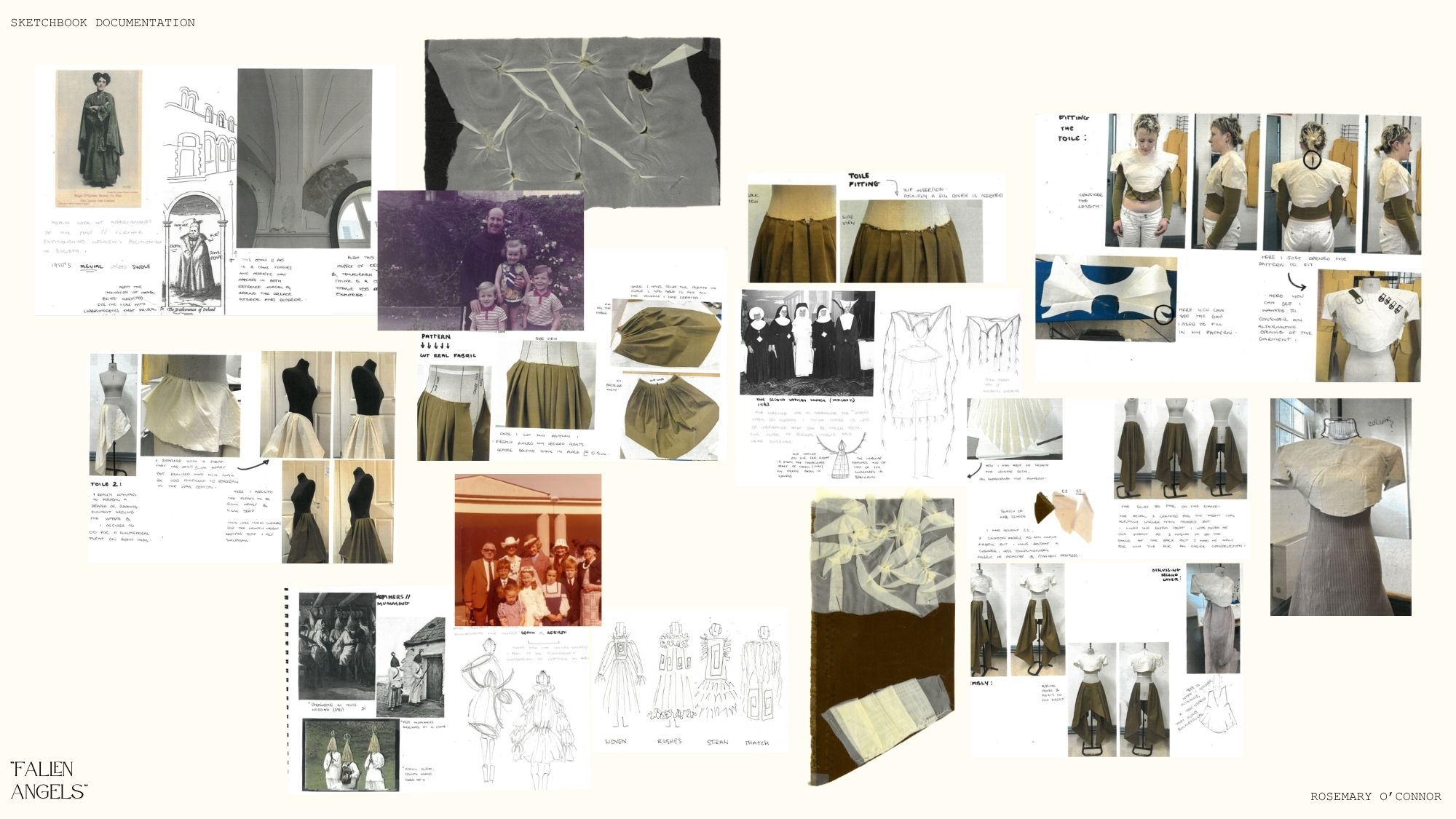
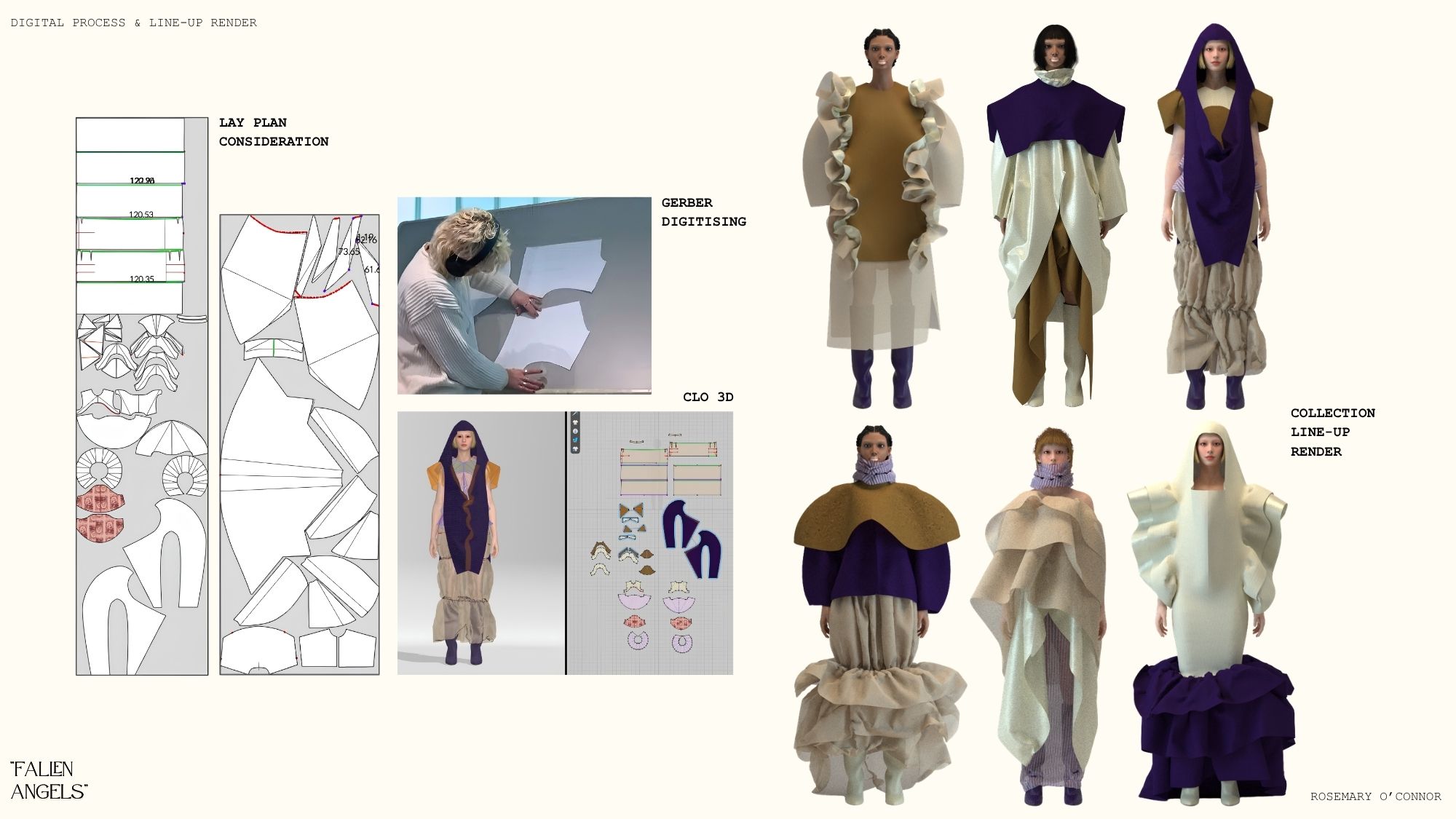
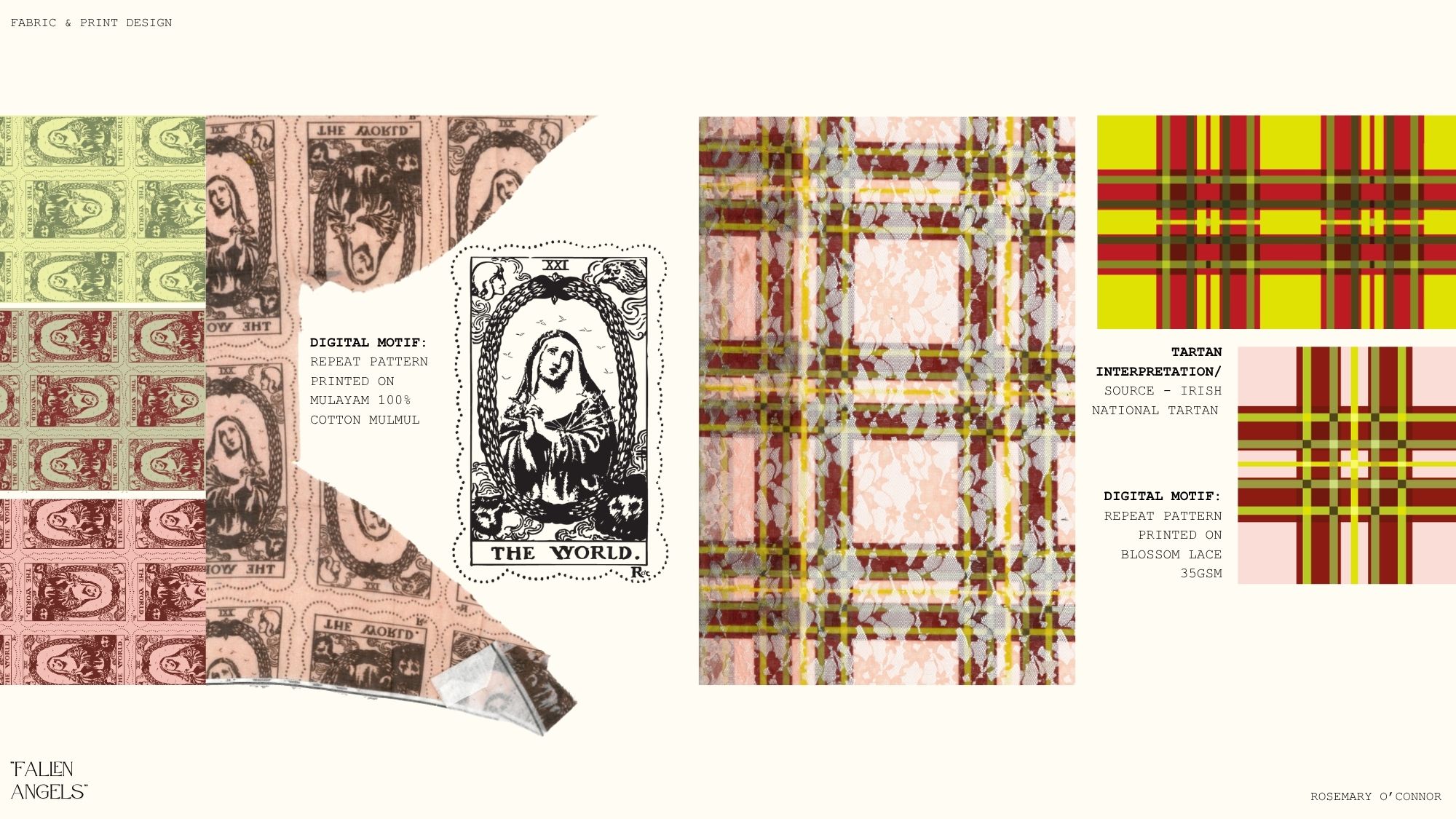
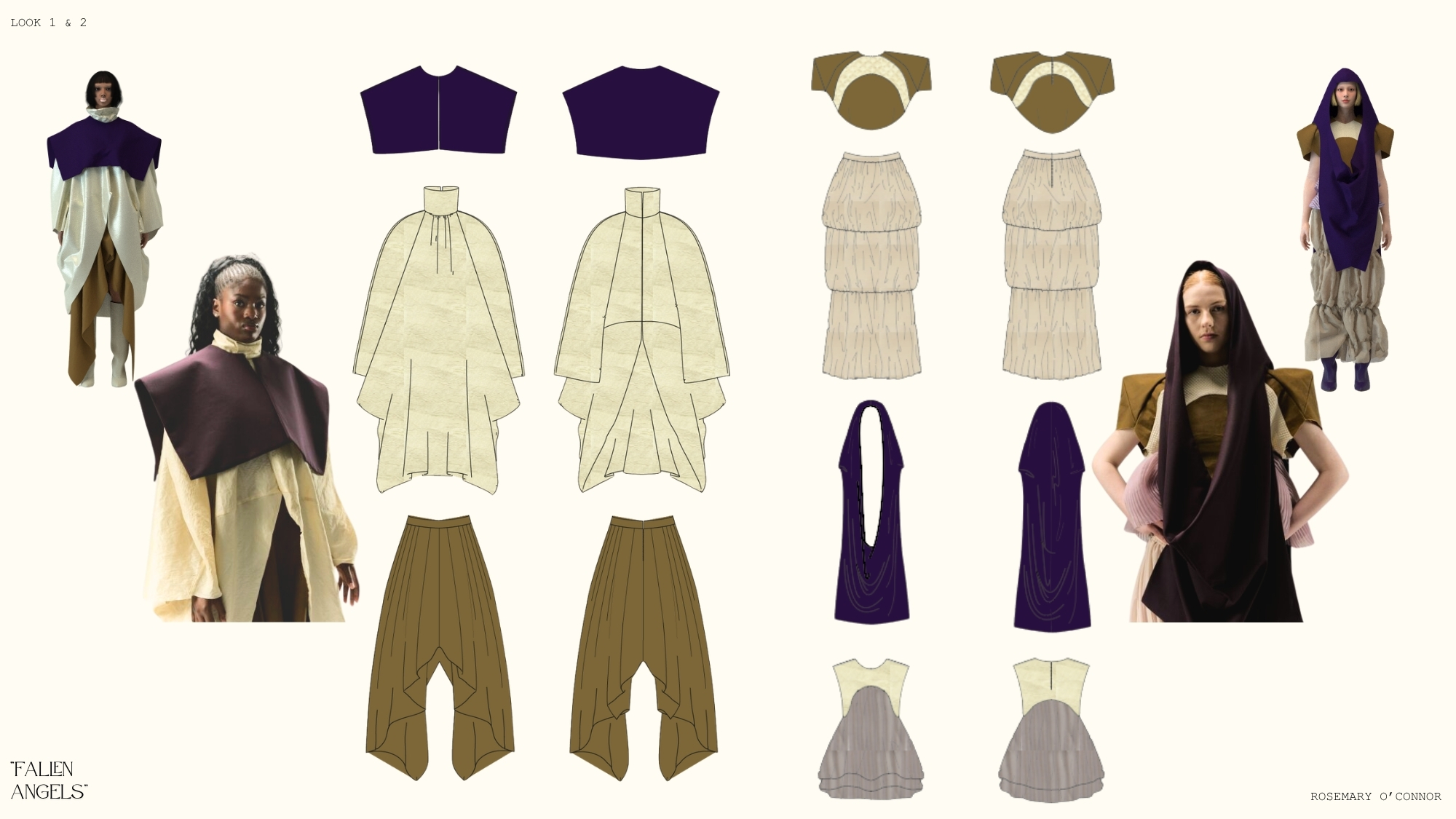
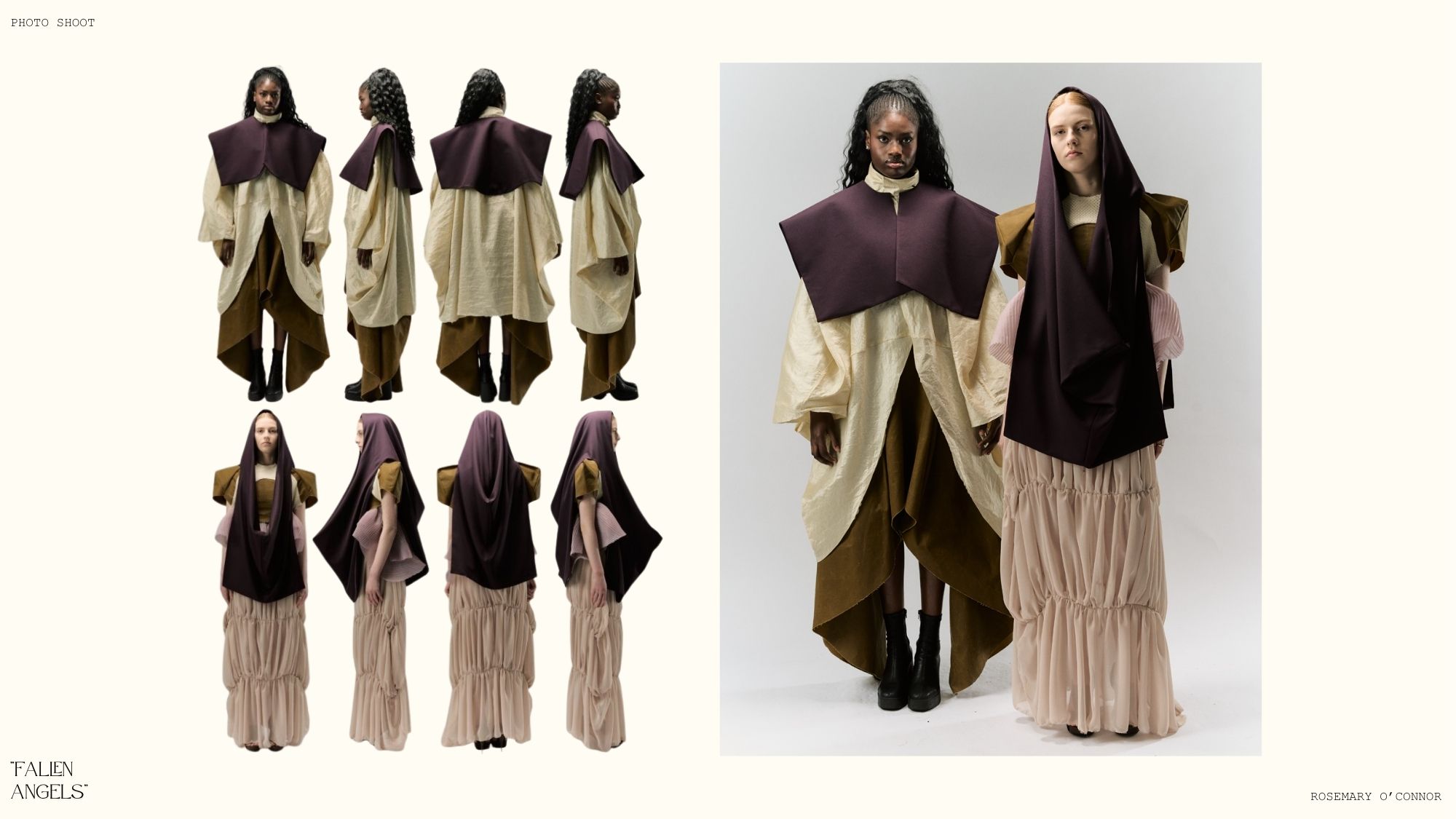
The collection “Fallen Angels” emerged from the intimate and often uncomfortable dialogue between place, history, and lived experience. Studying fashion within the Limerick School of Art and Design campus on Clare Street—once a Magdalene Laundry and Mother and Baby Home—has made it impossible for me to separate creative practice from the weight of the building’s past. Its walls, arches, and domed forms carry the imprint of over a century of institutional confinement, where women were hidden, controlled, and silenced under the intertwined authority of church and state. Working within this building means constantly confronting a rigid standard of womanhood defined by strict Catholic values. As someone who has experienced sexual assault and struggles with mental health; I am acutely aware that only a few decades ago, this exact site could have been my inevitable destination- not as a student, but as one marked “Fallen”. Placing me outside the boundaries of moral acceptability, vulnerable to the very system that institutions like this have enforced. The collection responds to this history through form and restraint. Silhouettes draw directly from the architecture of the site—structured, enclosing, and repetitive—echoing the domed curves and stately symmetry of the building. Garments are intentionally modest and conservative, limiting the expression of the individual wearer. They obscure rather than reveal, flattening identity and resisting personal distinction. In doing so, they reference the regulations imposed upon the women once confined here, whose individuality was systematically erased. My intention was never to romanticise our past; but to confront it. This collection is not about reclaiming aspects of oppression, but about acknowledging its presence—and ensuring it is neither forgotten nor repeated. Digital software became an important part of the design process, creating a significant juxtaposition within the work. While the collection references a system rooted in restriction and oppression, digital design allowed for limitless experimentation, manipulation, and creative freedom. Through digital processes, silhouettes could be endlessly altered and refined, offering a sense of autonomy denied to the women who once occupied these spaces. This contrast between historical confinement and contemporary freedom became central to the project.