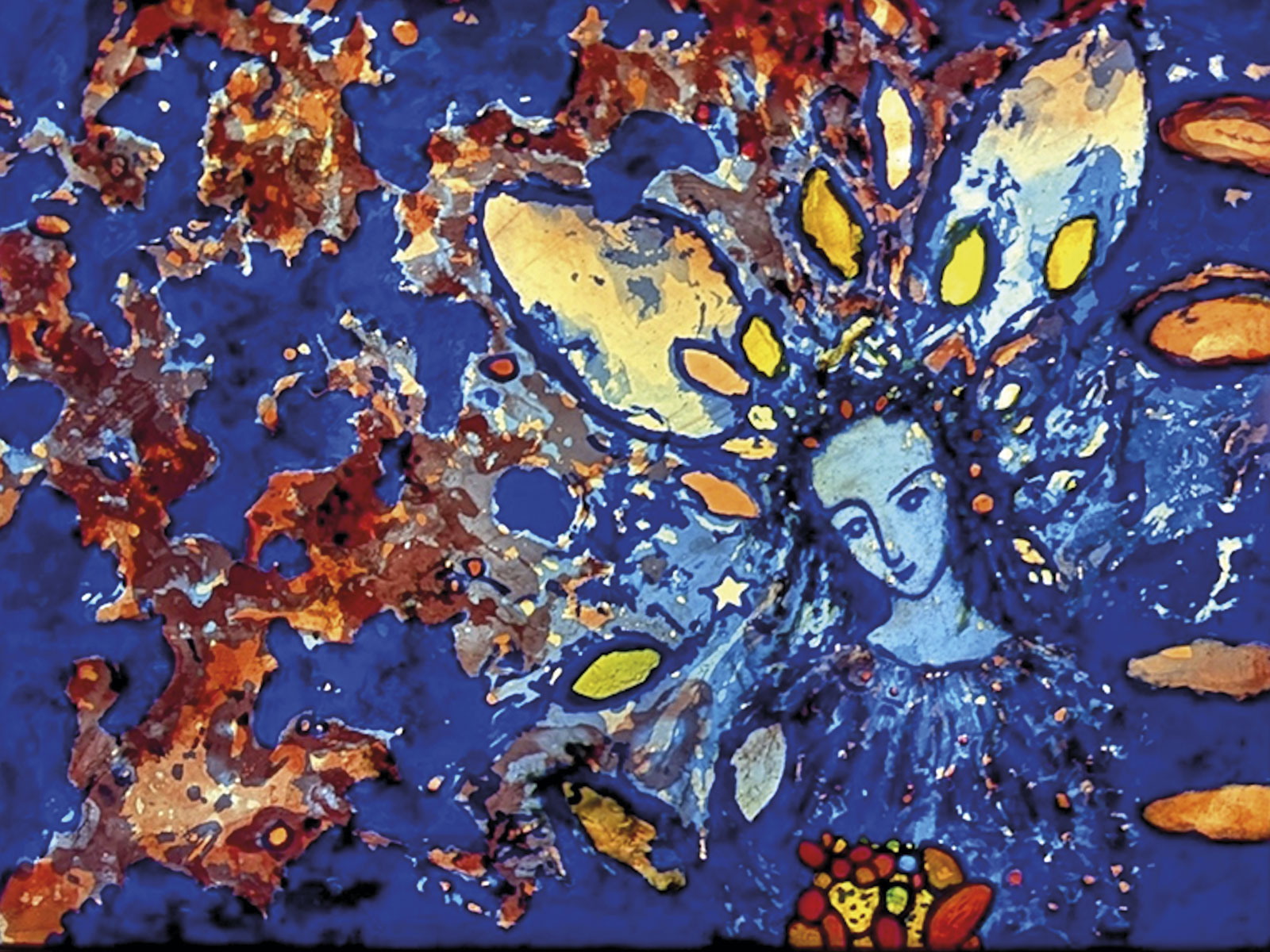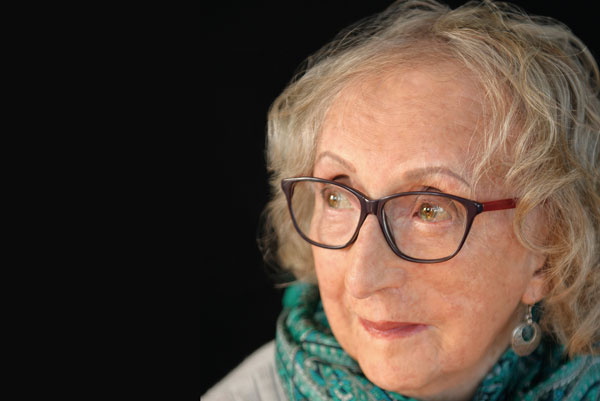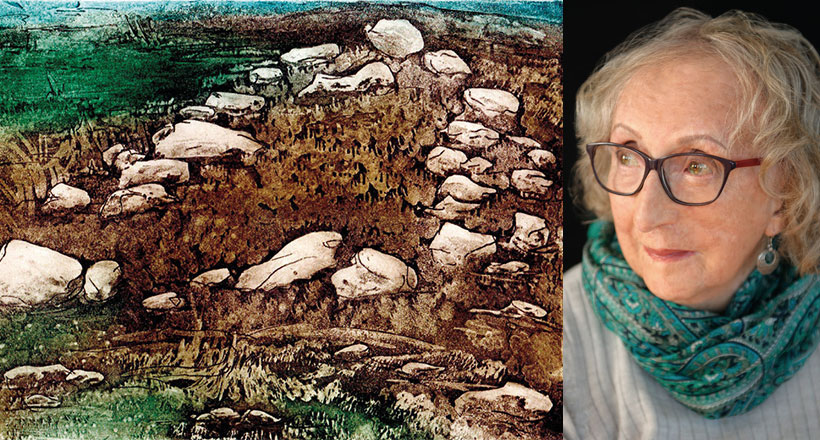
Above: FULACHT FIADH INISHBOFIN. Right: Margaret Irwin West
Just shy of her 93rd birthday, artist Margaret (Mo) Irwin West popped a bottle of champagne with family and friends at her home in Claddaghduff, north Connemara. They had gathered to celebrate her election to Aosdána, the 250-strong artist organisation whose collective are honoured for their contribution to the arts in Ireland.
Born in India, Mo’s Irish parents returned to Ireland when she was a young girl. Her mother engaged a governess for two years to prepare Mo for school and during the same period, she also took drawing classes with Lilian Davidson. ‘From then on, I knew what I wanted to do but my mother was having none it,’ said Mo. After boarding school in Mount Anville in Dublin, Mo studied at Trinity College.
‘Four years later however I still wanted to paint. It was the local curate who my mother turned to for advice (Fr Jack Hanlon). He convinced her to allow me to go to Paris to study art under André Lhote. When she had left the room, he winked at me and said: ‘It’s alright, you’re going to a Cubist school and you’ll have a ball!’’
I don’t want people to feel entirely comfortable with what they see. I want them to look further and question
Mo West is currently working towards a solo retrospective during Clifden Arts Festival in September and a group show in AKIN, the award-winning artist group, later in the year in the Galway Arts Centre. Regarding her work, Mo says: ‘In the large, I don’t want people to feel entirely comfortable with what they see. I want them to look further and question, even the ‘flower’ – can it refer to death? Or is it about how all is re-born in Spring? Perhaps it is simplistic but that is the discourse I carry on with myself.’
Proposed by John Behan and seconded by Dorothy Cross, Mo West was elected at Aosdána’s annual general assembly in April. Further visual artists elected were Clare Langan and Aideen Barry, and architect, Niall McLaughlin.
Brigid Mulcahy