
Eilis O’Brien previews a selection of sculpture by Eamonn Ceannt who draws inspiration from the dynamic form of dancers in movement currently on view at Gormley’s Fine Art, Belfast
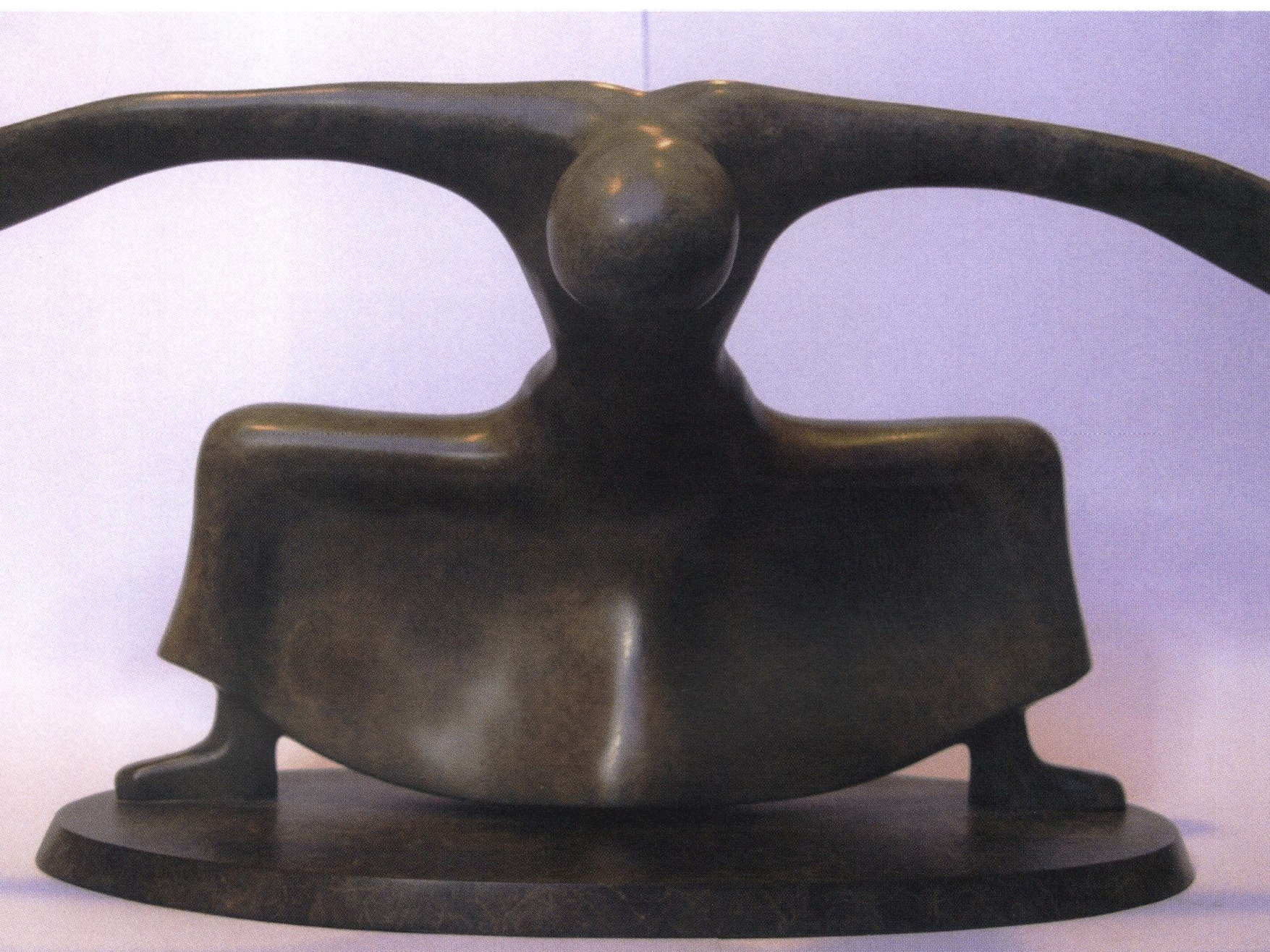
Eamonn Ceannt’s work has undergone a number of phases. From his early heads inspired by the art of the die culture, his themes are often influenced by native art as well as by classical references. Although his penultimate career was as bursar (CFO) of University College Dublin, he worked previously abroad and travelled extensively, mainly in Africa. And it is out of Africa that his love of bronze sculpture was born – particularly from the kingdoms of Ife and Benin, which thrived between 1200 and 1600AD in what is now Nigeria. He explored some of the more remote areas of Kenya; crossing Samburu, Masai Mara, the Rift Valley, Amboseli and the coast, absorbing their colours and to some degree, their physical form. His work is mainly figurative and highly stylised. His pieces are smooth in form – close to sensuous; they invite you to touch, to run your hand over the body, or the face or the clavicle. The colour palette of his work is dominated by greens and blues ranging from mallard to peacock. He is fastidious about the layering of the patina with his foundry Bronze Art, in Fairview, Dublin.
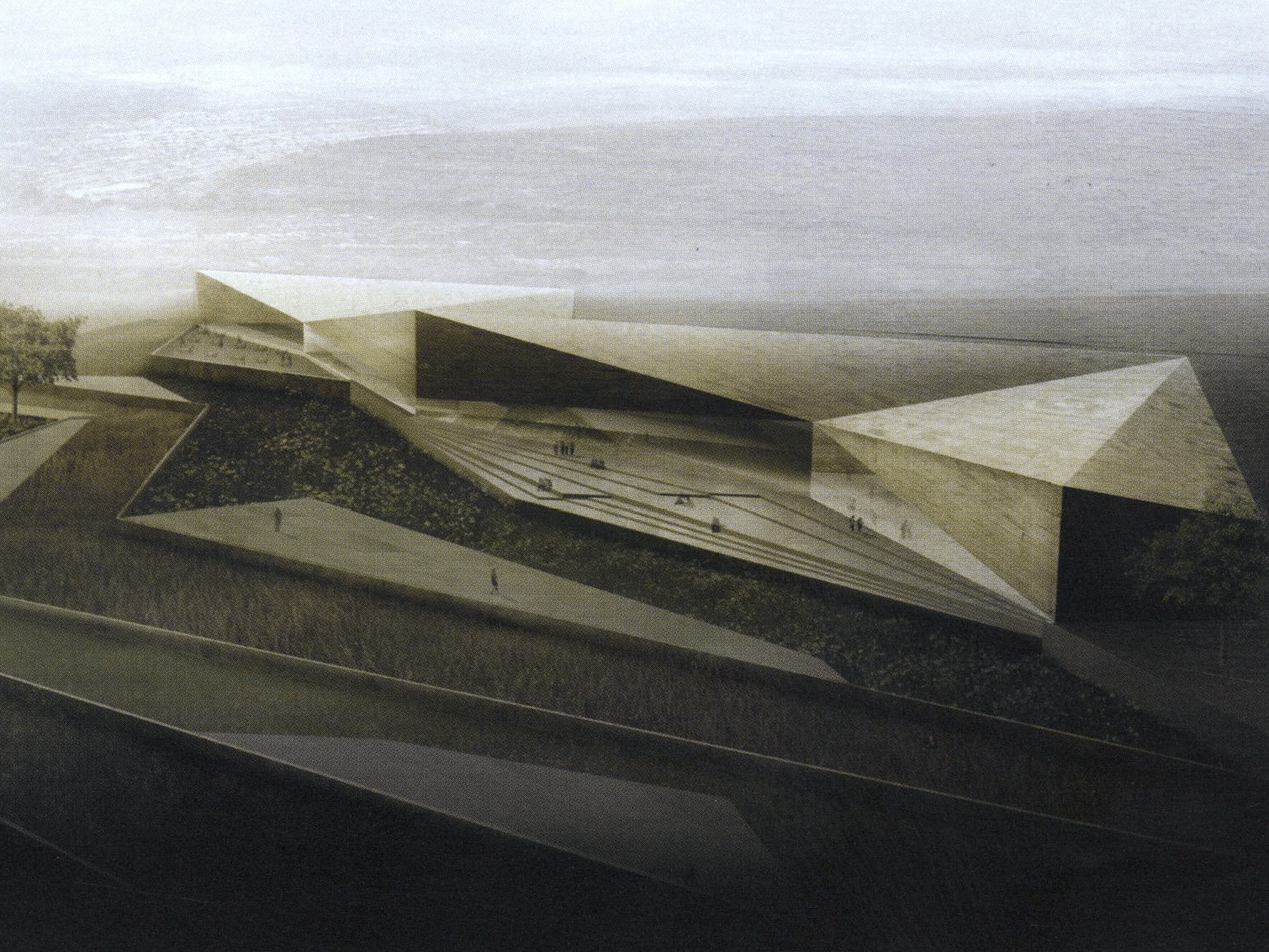
Overcoming the slow down at home, Irish architects Heneghan Peng, Grafton Architects, O’Donnell+Tuomey amongst others have looked to international competitions, but overseas projects are not without risk, writes John McLaughlin
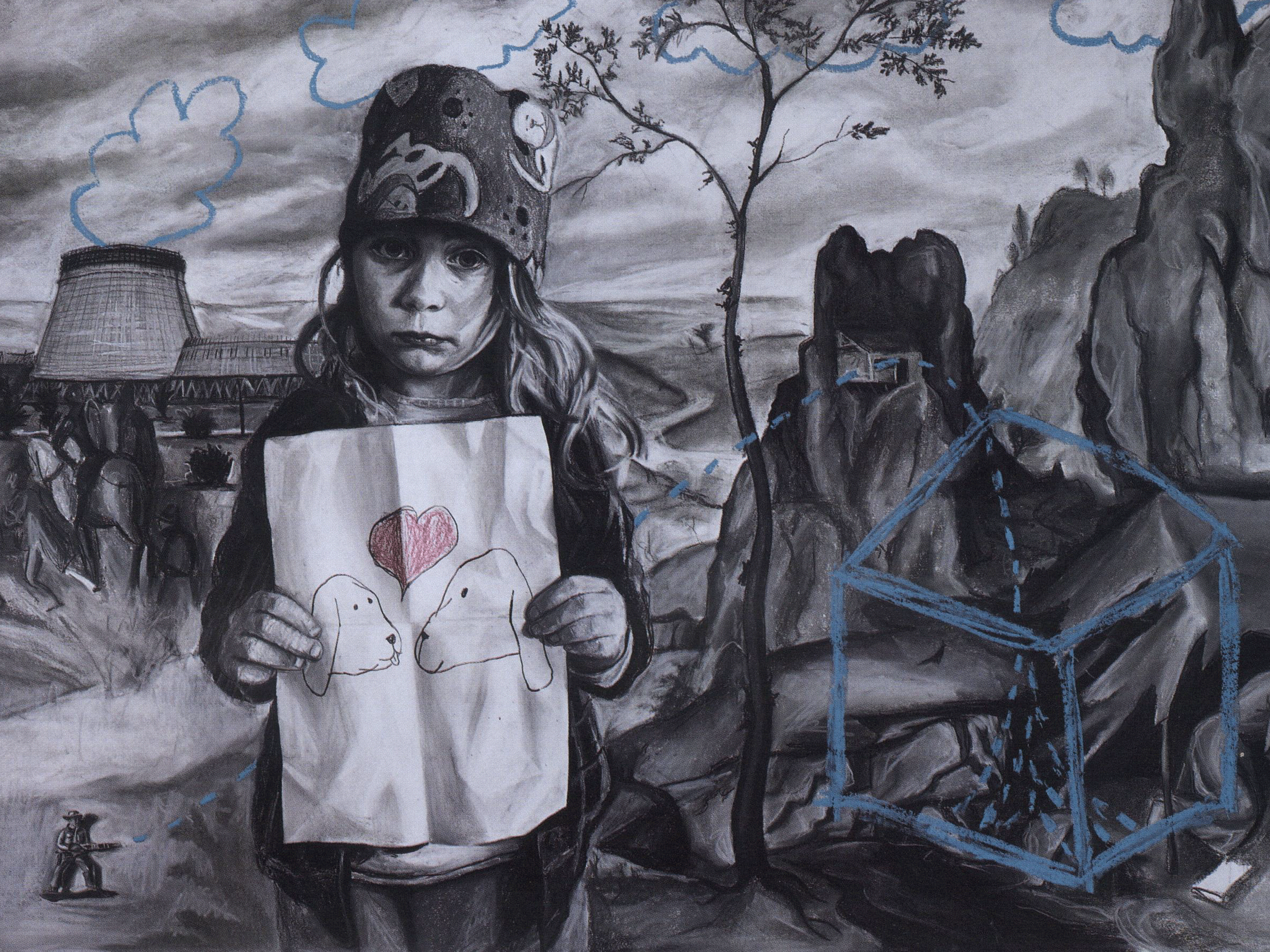
In addition to creating a likeness of her daughter, Geraldine O’Neill has in mind the age-old interrogation of representation, writes Robert Ballagh of this year’s recipient of the Ireland-U.S. Council/Irish Arts Review Portraiture Award
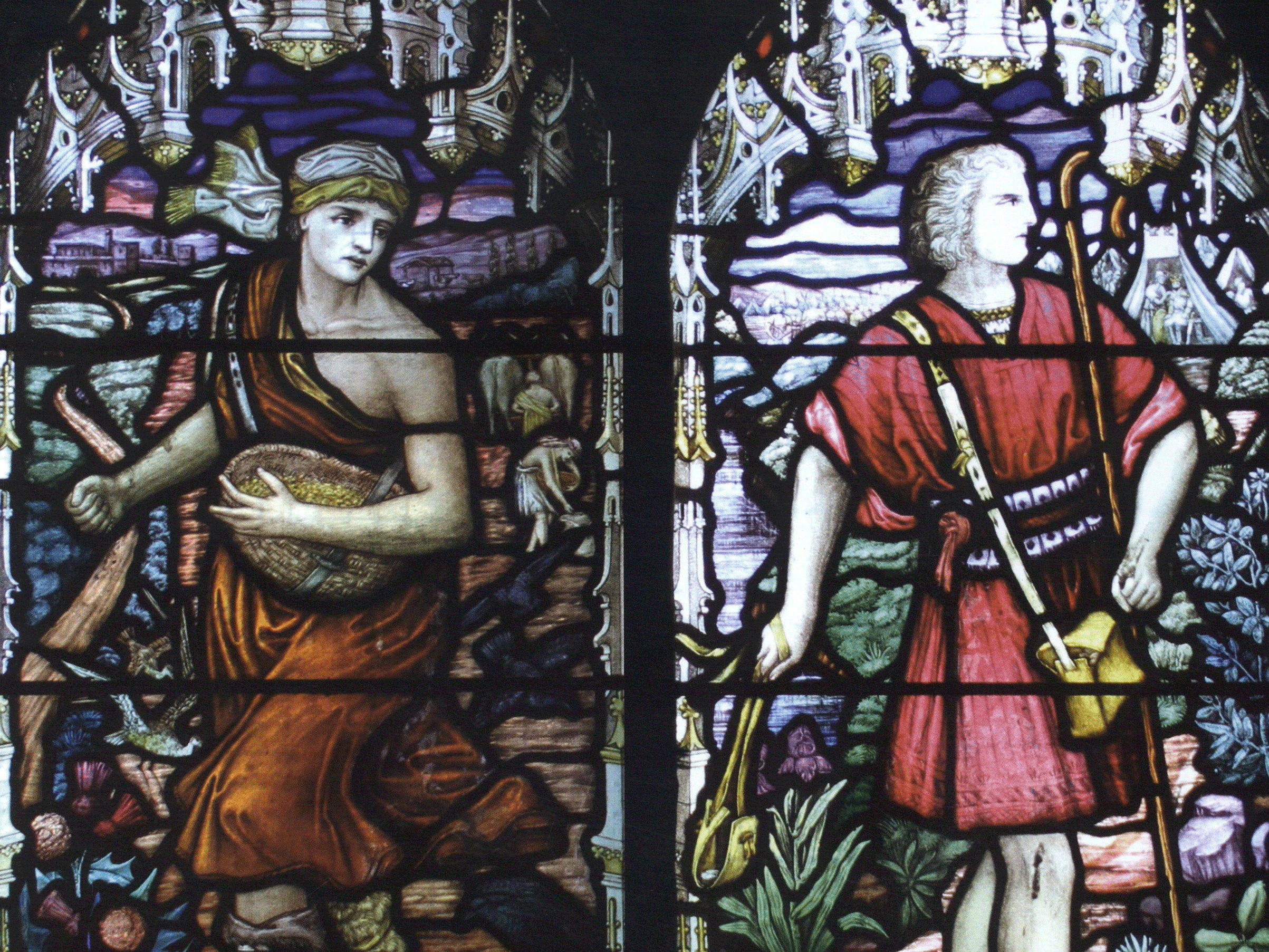
James Watson could trace his family’s artistic lineage to York Minster and following his move to Cork he launched a new tradition to last a hundred years, writes Vera Ryan.