
Peter Harbison retraces the career of W F Wakeman, whose widely published work brought archaeology beyond the confines of antiquarian circles
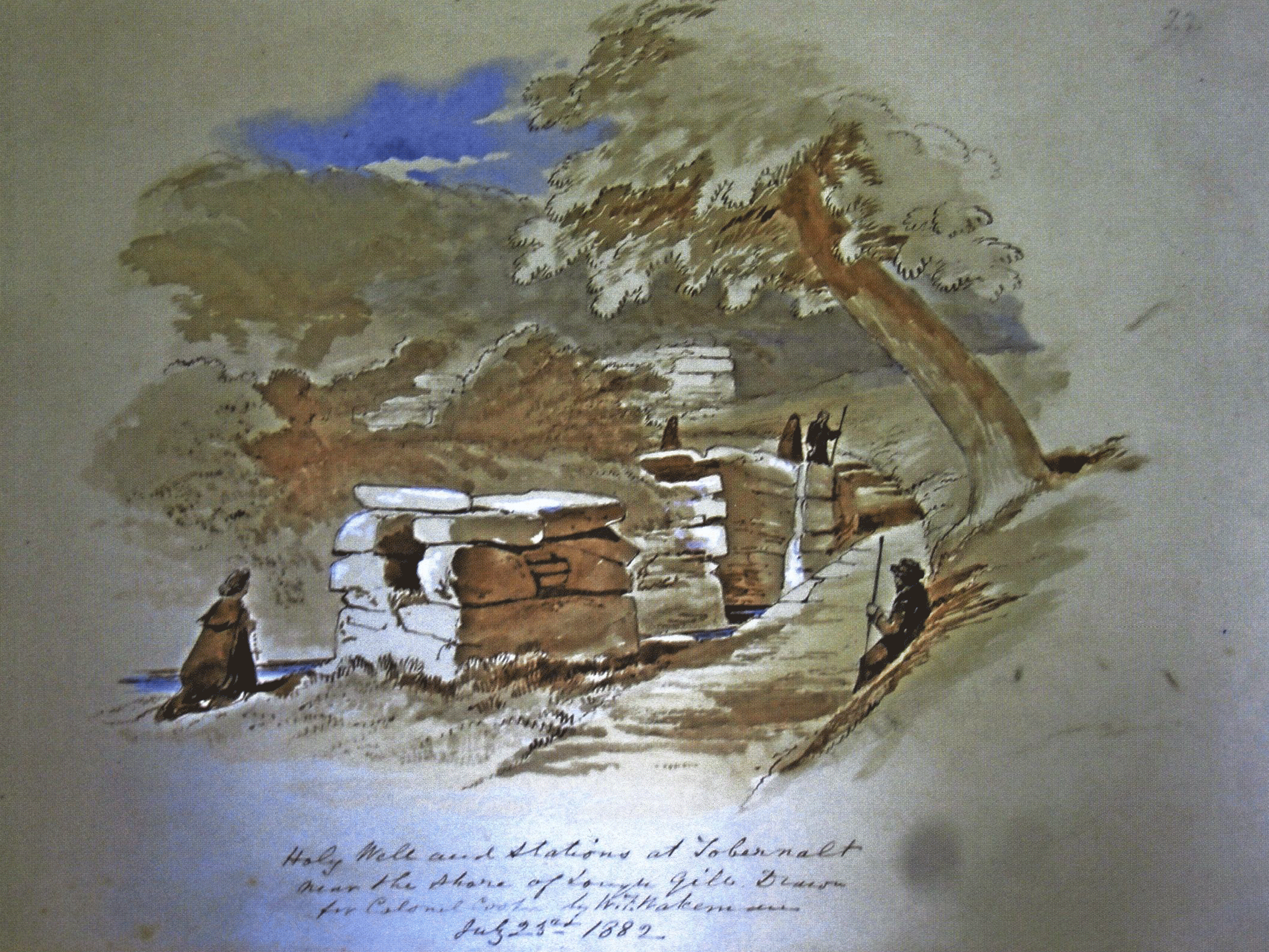
George Petrie was his drawing master. Yet it was Petrie’s talents as a draughtsman and high reputation as ‘the father of Irish archaeology’ that put W F Wakeman (1822–1900) in the shade as an antiquarian artist, and relegated him to the second division throughout much of his life, even though he lived more than a third of it in the shade after Petrie’s death in 1866 (Fig 4). But now is the time to start taking him out from under Petrie’s shadow!
Wakeman always seems to have used just his initials W F, presumably to distinguish himself from his father who bore exactly the same set of Christian names, William Frederick. It was as a lad of a mere fifteen summers that we hear of him first taking private drawing lessons from Petrie who, at that stage, was already involved in the great undertaking of the Irish Ordnance Survey. Petrie probably prevailed upon its Director, Thomas Larcom, to offer Wakeman a job as draughtsman in the Survey’s Topographical Department at the age of sixteen. In this position, he was rubbing shoulders with Petrie and other greats such as Eugene O’Curry and John O’Donovan, and, in 1862, Duffy’s Hibernian Sixpenny Magazine entertained the world with Wakeman’s account of an exciting tour accompanying O’Donovan around the Aran Islands twenty-three years earlier.
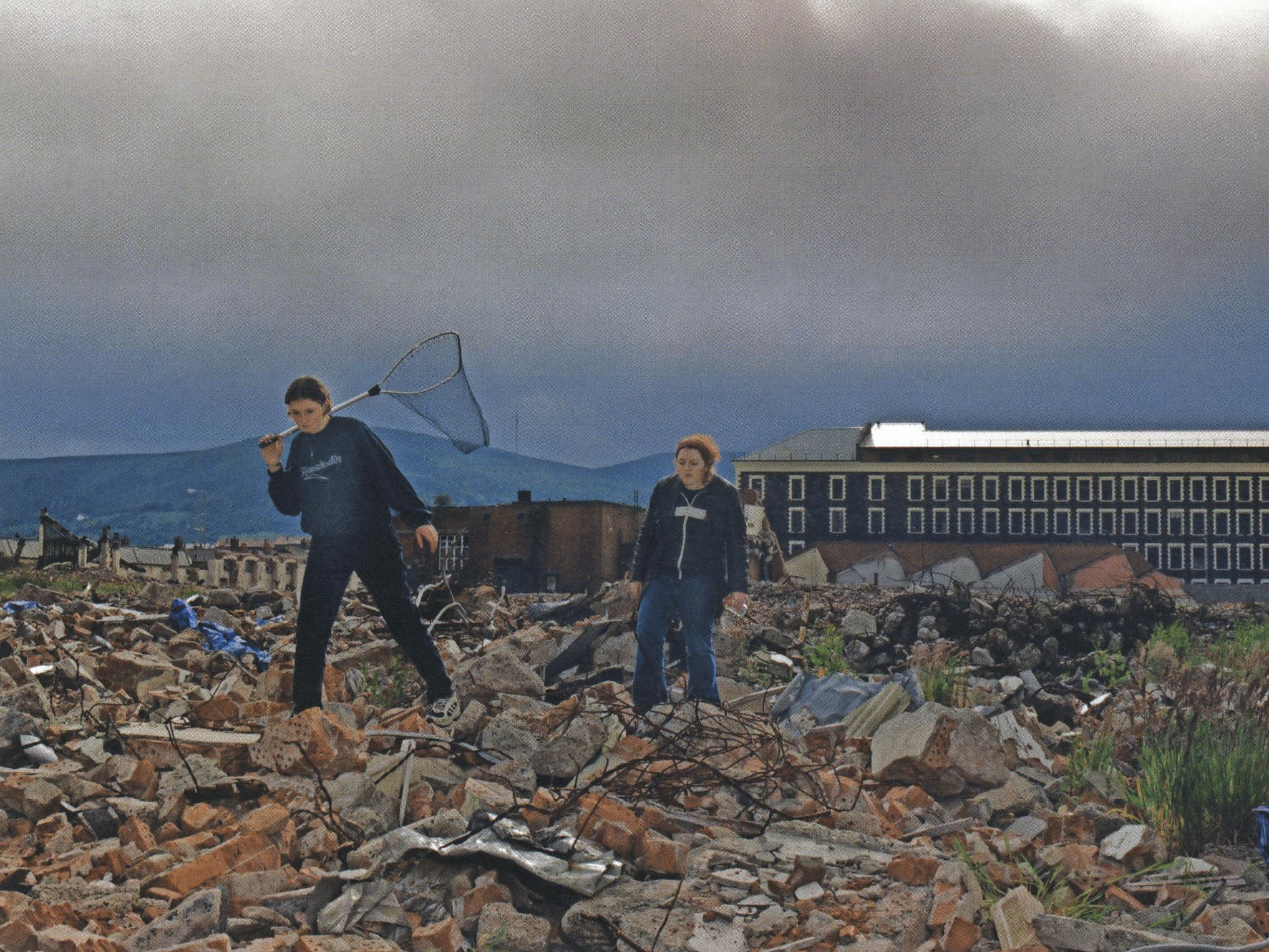
Northern Ireland: 30 Years of Photography at Belfast Exposed and the MAC this summer highlights the medium as a highly-charged, critical artform that constantly questions its own role in the construction of memories, writes Stephanie McBride
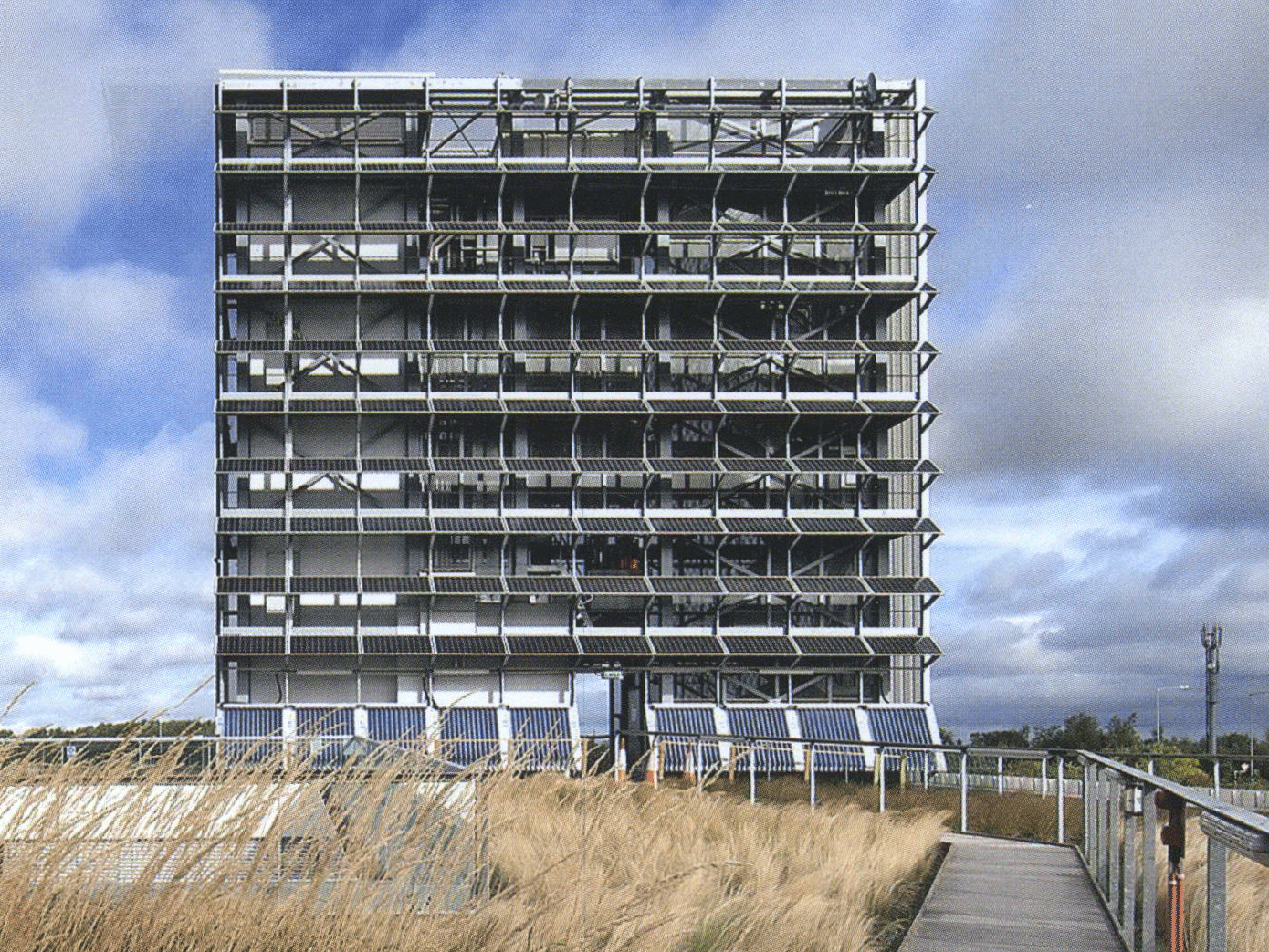
As a building commissioned by a State entity charged with the stewardship of a precarious energy resource, Bord Gáis Network Services Centre warrants some reflection on its relevance as a benchmark and path-finder, writes Seán O’Laoire