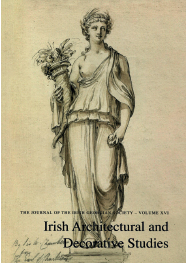
CONOR LUCEY (ED)
Irish Georgian Society, 2013
pp 160 fully illustrated p/b
€20.00 ISBN 978-0946846-83-2
Paul Harron
Now in its 16th edition, the Irish Georgian Society’s journal continues to play an essential and unsurpassed role in providing the space for publishing rigorous contemporary scholarship in diverse aspects of the history of Irish art, architecture and material culture. Meticulously researched articles attractively presented invariably result in a handsome and interesting publication.
The latest volume with six contributions continues the trend of thinning over the past few years, and while this may simply reflect the vagaries of quantity and quality of submissions it is to be hoped that future volumes will offer more rather than less for even wider appeal and broader range. The cover features an elegant pencil drawing by Giovanni Battista Cipriani of the god Ceres holding a cornucopia, one of several illustrations accompanying an article by William Laffan and Kevin Mulligan on the artist’s designs for the attic statuary at the Casino at Marino. This account is eloquent and probably (for this reader anyway) the most rewarding in the volume, not least because it further informs us on this exquisite neoclassical structure which the authors state amounts to a monument of exceptional architectural refinement in the European context.
In marked contrast to neoclassical perfection, Thomas Wright’s whimsical ‘Romantick‚’ folly structures at Tollymore Park for Lord Limerick are usefully described in a short but generously illustrated article by Eileen Harris.
Churches are well treated. Colm O’Brien records the work of and stylistic influences on Frederick Darley Jnr and there is an extensive examination by Roger Stalley of Waterford’s ‘lost‚’ medieval cathedral – only three Gothic cathedrals in Ireland had sophisticated interior elevations and this the only one outside Dublin was demolished in 1773; who knew? Stalley, editor of the recently published Irish Gothic Architecture, revisits it masterfully, explaining that the significance of its giant order was lost on Waterford’s destructive Protestants of the 1770s who were ‘concerned with the structural and utilitarian aspects of their churches rather than their historic value‚’.
Patricia McCarthy’s piece on private theatricals in Irish houses 1730-1815 uncovers much on these alternatives to the raucous Dublin theatre scene of the time and is accompanied by wonderful caricatures, while Philip McEvansoneya provides ‘more light on George Sharp‚’ a somewhat obscure 19th-century painter, based on several small sketches and letters; this reader would have found this article even more engaging had it included a reproduction of the View of the West painting which the author describes as having been sold for a high price in 2005.
Paul Harron is an architectural historian. His monograph on Young & Mackenzie Architects will be published by the Ulster Architectural Heritage Society later this year.
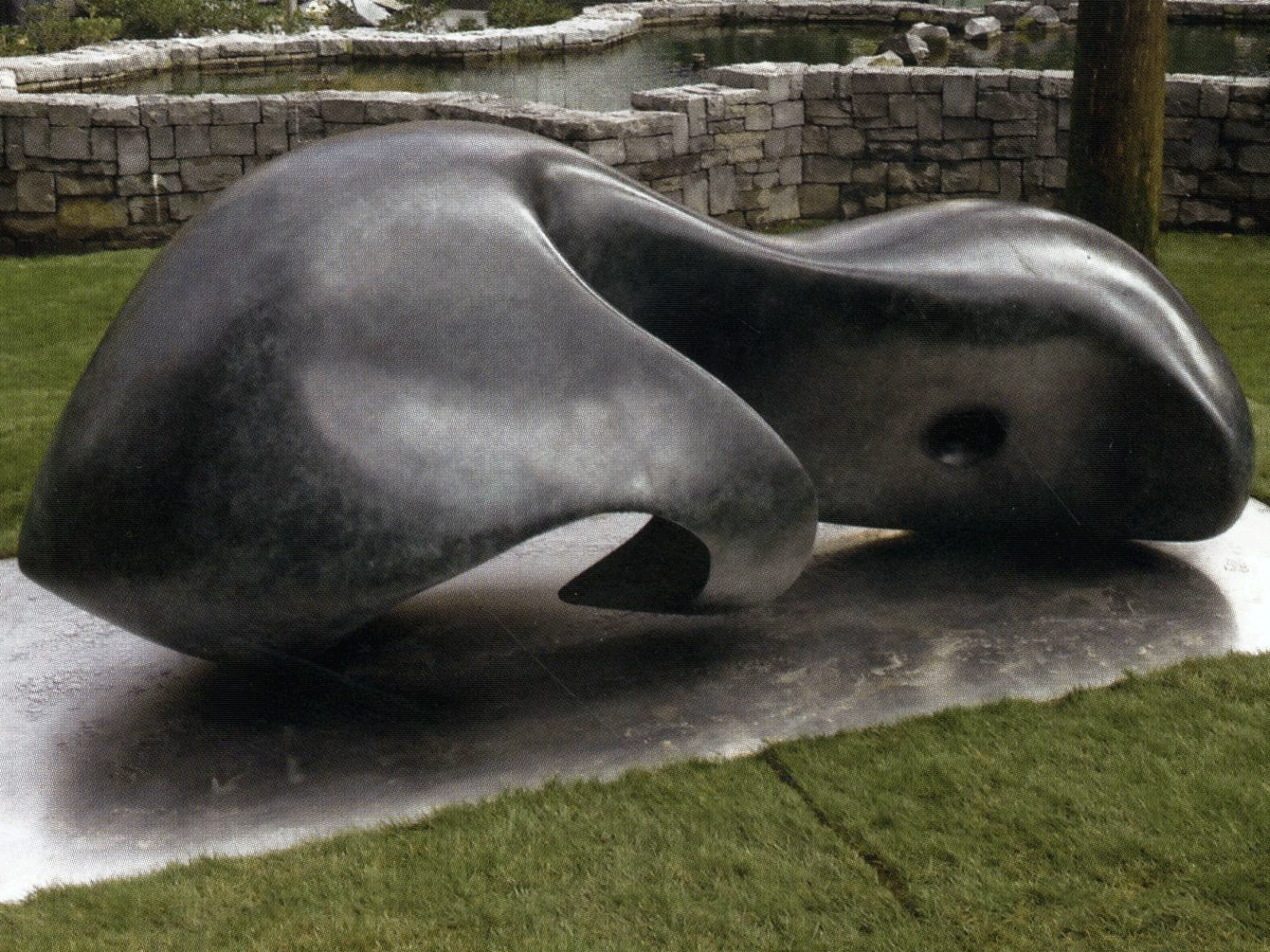
What is it about the work of the Irish sculptor Eilís O’Connell that has led to her having created, in this most difficult and masculine medium, over thirty permanent site-specific installations in Britain and Europe, including the sensual, orchid-like Unfurl (Fig 1), a bronze commissioned by Kensington Borough Council and the residents of Kensington Gate, to celebrate the Millennium?
O’Connell subtly combines a number of different elements that give her work both a sense of physical vitality and poetic metaphor. It is monumental yet intimate, atavistic yet contemporary. From discarded agricultural tools to birds’ nests and whale bones she appropriates the quotidian and the natural to create dynamic forms in stone, steel, resin, plaster and bronze. Like her poetic compatriot, Seamus Heaney, O’Connell looks to the archaeology and topography of her Irish homeland for inspiration but the ideas she finds there are filtered through a considered relationship to architecture and geometry. The work is never soft: emotion is always tempered by intellect and painstaking technique to combine something of the muscularity of Richard Serra with the female sensibility of Barbara Hepworth. Science and mathematics meet the natural world within her organic and biomorphic forms. Inside and outside coalesce. In the layered and slippery space of contemporary culture she has created objects that generate a unifying narrative and suggest a philosophy of interdependence rather than of confrontation, an openness and desire for contact and inclusivity, rather than a brittle postmodern autonomy, which unapologetically recalls the timeless resonances of Brancusi.
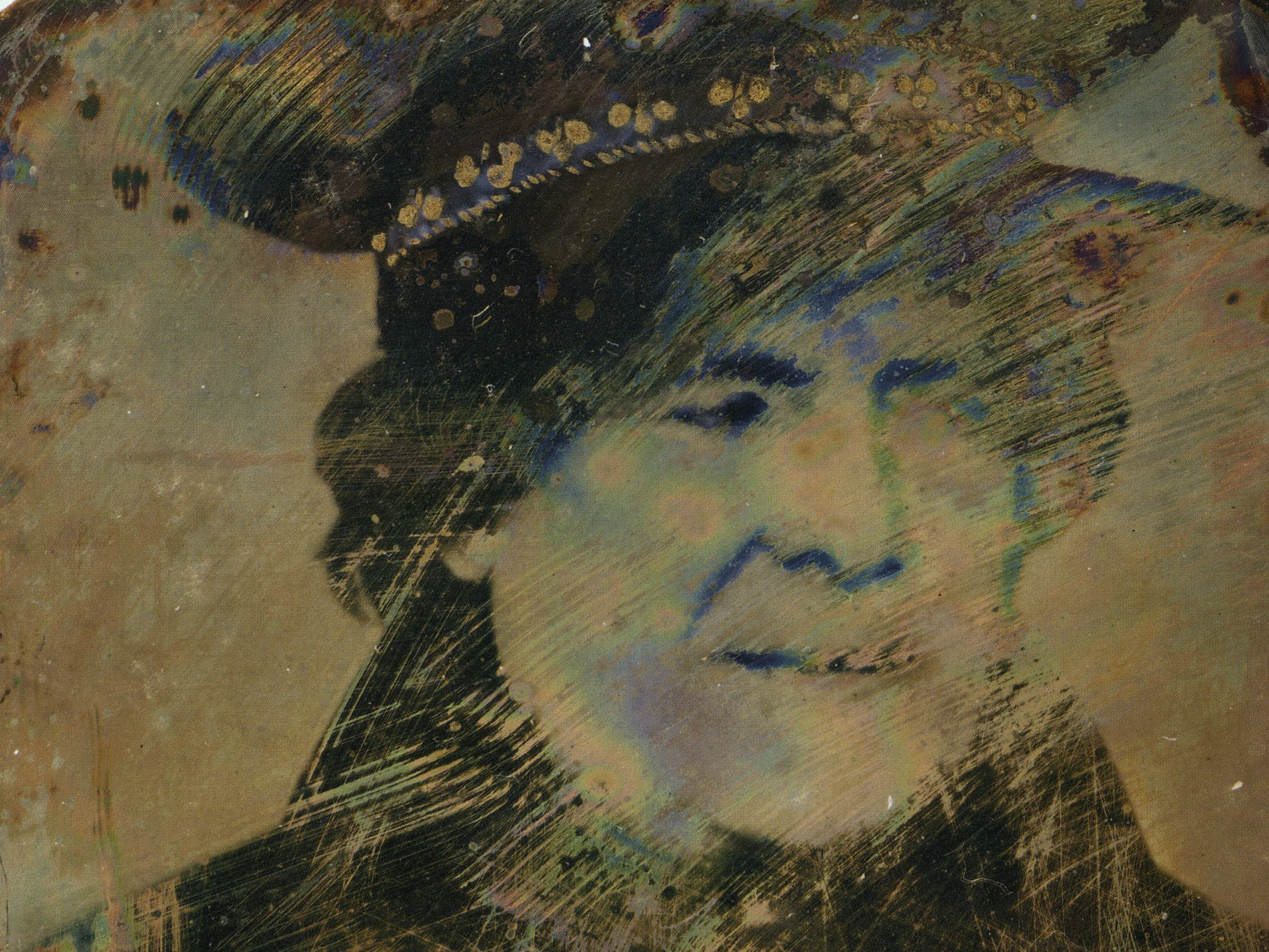
Anne Hodge and Peter Harbison examine the visual evidence of Daniel O’Connell’s unusual conditions of imprisonment in the Richmond Bridewell, Dublin
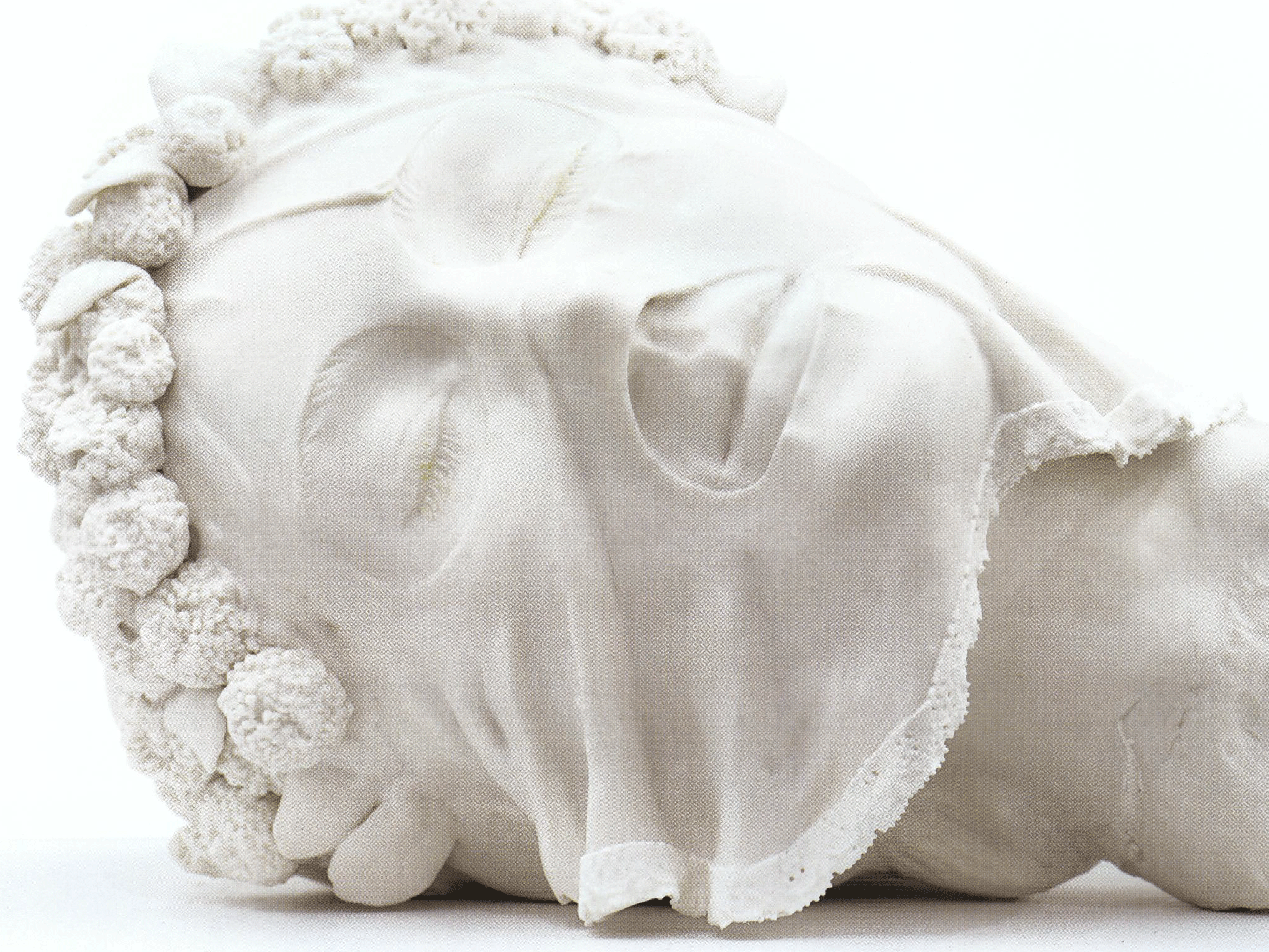
Ursula Burke, Emma Donaldson and Deirdre McKenna explore the mutable topic of time at the F E McWilliam Gallery, Banbridge. Claire Dalton looks at their responses