Swedish-born artist Cecilia Danell is this year’s winner of the €5,000 Merrion Plinth Award.
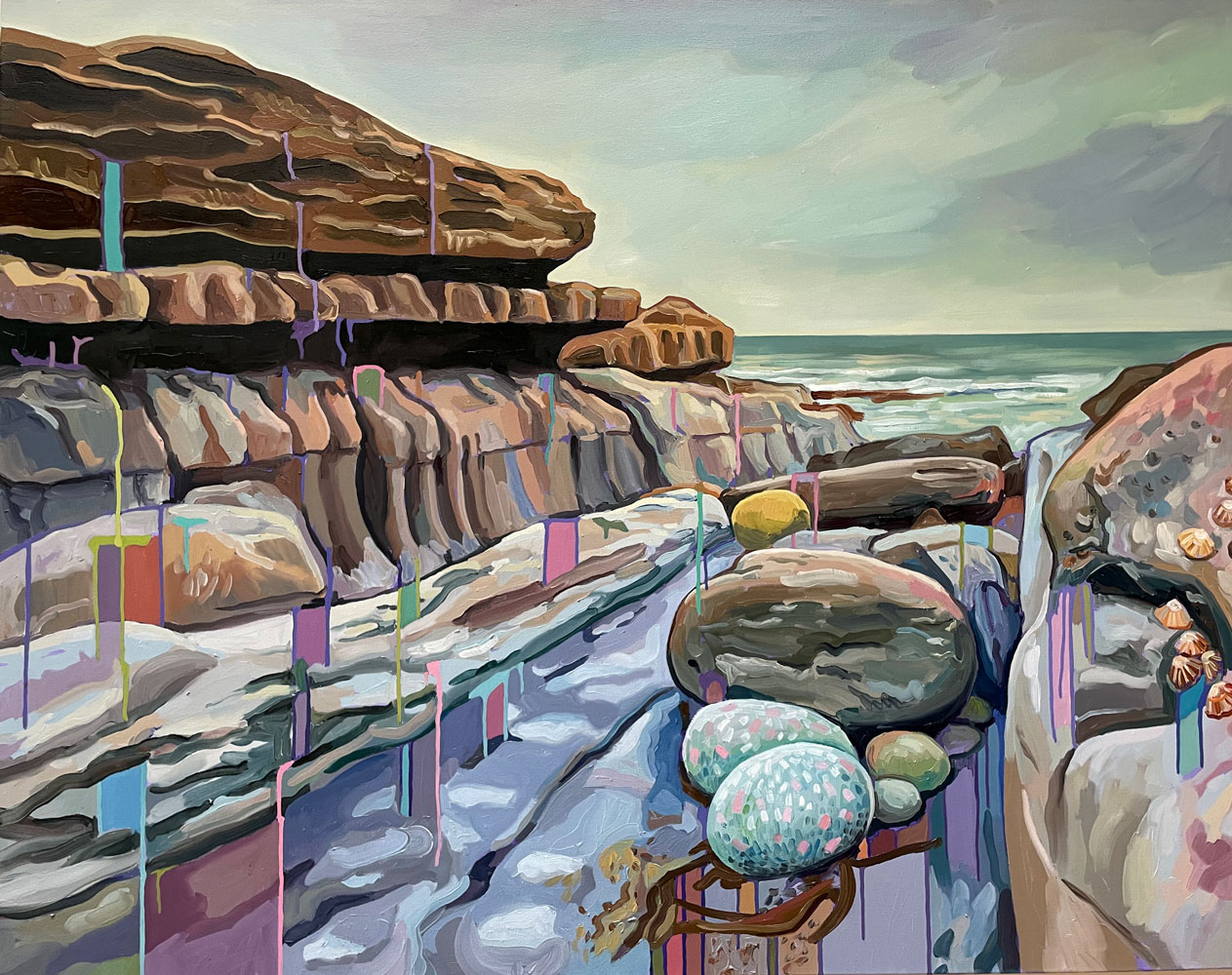
Swedish-born artist Cecilia Danell is this year’s winner of the €5,000 Merrion Plinth Award. Supported by the Merrion Hotel in Dublin, the biennial competition is open to all forms of contemporary art from artists resident in Ireland and the UK.
The hotel has an established collection of 20th-century Irish art on show and the stated purpose of this award is to ‘provide a platform for artists to bring their work to new audiences and be seen alongside some of the great Irish artists of the last century’.
Judges this year were chairman of the Merrion Lochlann Quinn, Patrick Murphy, director of the RHA, and gallerist Oonagh Young.
Danell’s winning painting, The Farthest Shore, will hang for two years in the hotel, which has first refusal to purchase the work and takes no commission.
‘I was on a residency in Áras Éanna Ionad Ealaíne, the most westerly arts centre in Europe, on Inis Oírr, an island off Co Galway, in March when I heard about the competition,’ says Danell, who is based in Galway. ‘I was working on the painting then and thought that if I was happy with how it turned out I would submit it. I’m really delighted to be this year’s winner and to have the painting displayed so prominently at the hotel. The award money will go towards supporting my practice over the coming months as I make new work for my solo exhibition at the Solstice Arts Centre in Navan next summer, which will be curated by Brenda McParland. It will be my most ambitious show to date.’
The other shortlisted artists for the award were Aidan Harte, Cathy Dorman, Mark Ryan, Mary O’Connor and Tony Gunning. Presenting the prize, Quinn said, ‘Her painting is a new take on Connemara. It’s very hard to do something different on the West of Ireland and Cecilia Danell has managed to do that.’
Rose Comiskey