Description, writes Eleanor Flegg. This article first featured in the Summer 2014 edition of the Irish Arts Review
The American glass artist Dale Chihuly has two exhibitions in Ireland this summer. ‘Ulysses Cylinders‚’ by Dale Chihuly and Seaver Leslie, a narrative painter in the American tradition; Flora C Mace, a sculptor and painter in glass, and Joey Kirkpatrick, opens at Dublin Castle Coach House on 18 June, to coincide with Bloomsday, and runs until 23 August before it embarks on a world tour. This series revisits a group of pieces known as the ‘Irish cylinders‚’, made by Chihuly in 1975. The ‘Ulysses Cylinders‚’ are hollow gold cylindrical vessels carrying imagery that describes the escapades of Leopold and Molly Bloom, and Stephen Daedalus around Dublin. ‘Suspended between a leaf of 24-carat gold and a skin of molten glass are elements of James Joyce’s iconic book captured in fluid images,‚’ writes Róisín de B√∫itlear. But akin to Ulysses, there are deep layers within the collaborative pieces: Leslie developed drawings based on different chapters from Ulysses while Chihuly envisioned the works made on cylinders covered in gold leaf, on each side of which an image is suspended in the skin of the glass on a layer of gold leaf. ‘It is hoped that this series of works will entice its onlookers to uncover the powerful mental imagery that is James Joyce’s Ulysses and its strong Irish cultural context alongside that of contemporary artistic expression in glass,‚’ writes Audrey Whitty, curator of European and Asian Glass at the Corning Museum of Glass, New York. Concurrently an exhibition of the artist’s signature works runs at the Solomon Gallery from 19 June – 31 July. Works include his Persian, Seaform, Jerusalem & Soft Cylinder series and ‘Waterford Sconce‚’ inspired by his experiences cutting glass with the craftsmen at Waterford Crystal in 1996 during his ‘Chihuly Over Venice‚’ international project.
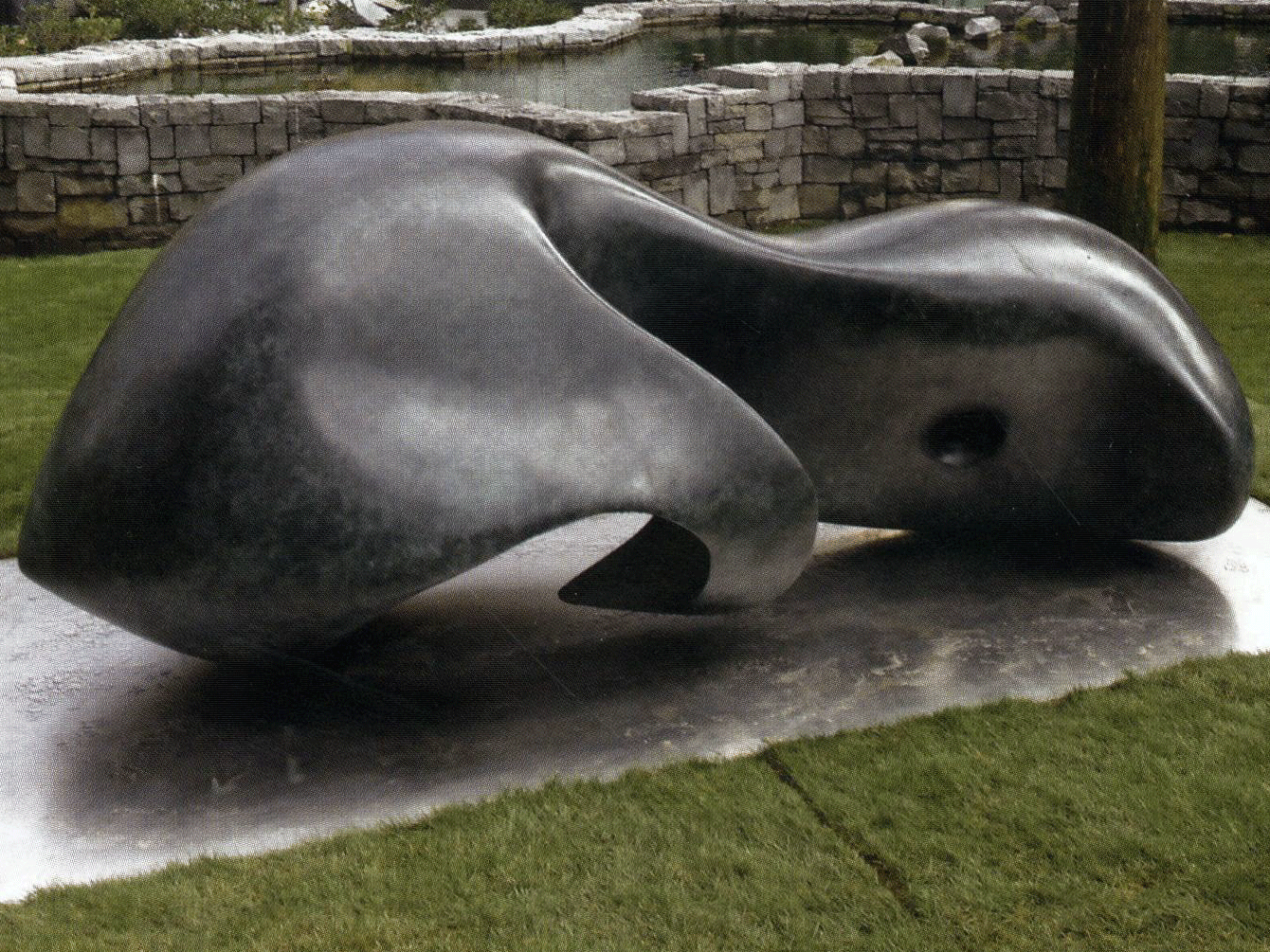
What is it about the work of the Irish sculptor Eilís O’Connell that has led to her having created, in this most difficult and masculine medium, over thirty permanent site-specific installations in Britain and Europe, including the sensual, orchid-like Unfurl (Fig 1), a bronze commissioned by Kensington Borough Council and the residents of Kensington Gate, to celebrate the Millennium?
O’Connell subtly combines a number of different elements that give her work both a sense of physical vitality and poetic metaphor. It is monumental yet intimate, atavistic yet contemporary. From discarded agricultural tools to birds’ nests and whale bones she appropriates the quotidian and the natural to create dynamic forms in stone, steel, resin, plaster and bronze. Like her poetic compatriot, Seamus Heaney, O’Connell looks to the archaeology and topography of her Irish homeland for inspiration but the ideas she finds there are filtered through a considered relationship to architecture and geometry. The work is never soft: emotion is always tempered by intellect and painstaking technique to combine something of the muscularity of Richard Serra with the female sensibility of Barbara Hepworth. Science and mathematics meet the natural world within her organic and biomorphic forms. Inside and outside coalesce. In the layered and slippery space of contemporary culture she has created objects that generate a unifying narrative and suggest a philosophy of interdependence rather than of confrontation, an openness and desire for contact and inclusivity, rather than a brittle postmodern autonomy, which unapologetically recalls the timeless resonances of Brancusi.
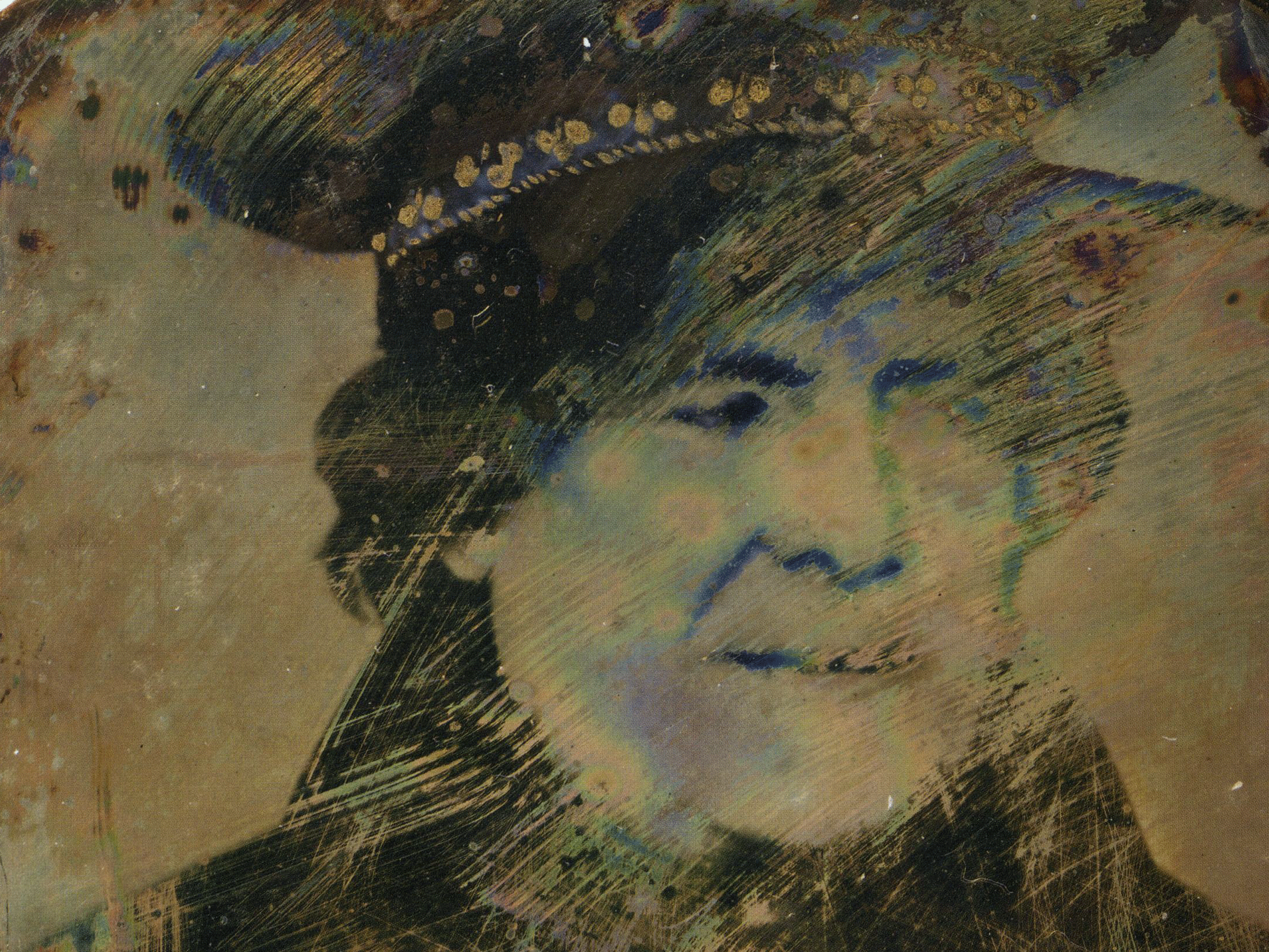
Anne Hodge and Peter Harbison examine the visual evidence of Daniel O’Connell’s unusual conditions of imprisonment in the Richmond Bridewell, Dublin
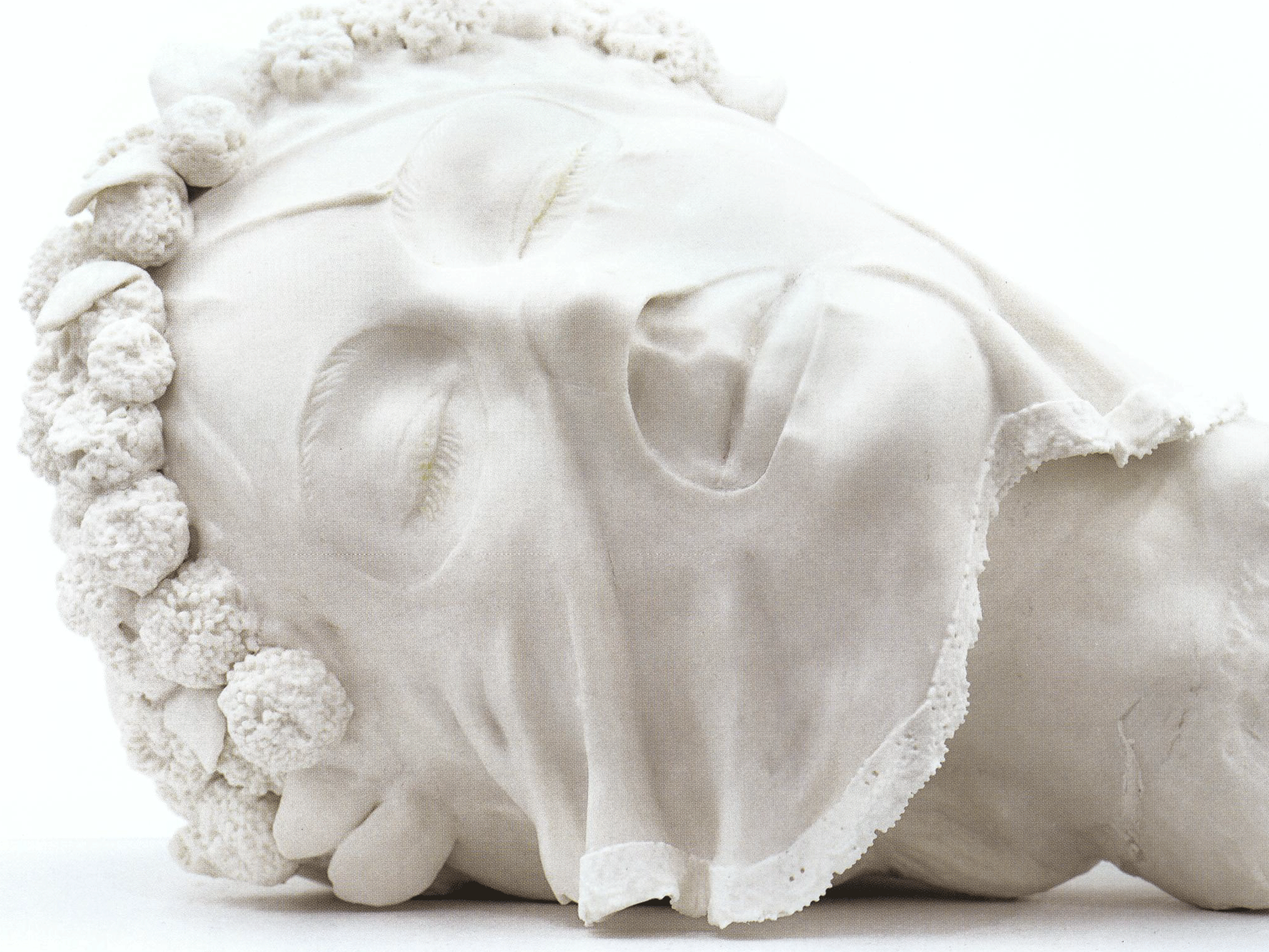
Ursula Burke, Emma Donaldson and Deirdre McKenna explore the mutable topic of time at the F E McWilliam Gallery, Banbridge. Claire Dalton looks at their responses