
As a building commissioned by a State entity charged with the stewardship of a precarious energy resource, Bord Gáis Network Services Centre warrants some reflection on its relevance as a benchmark and path-finder, writes Seán O’Laoire
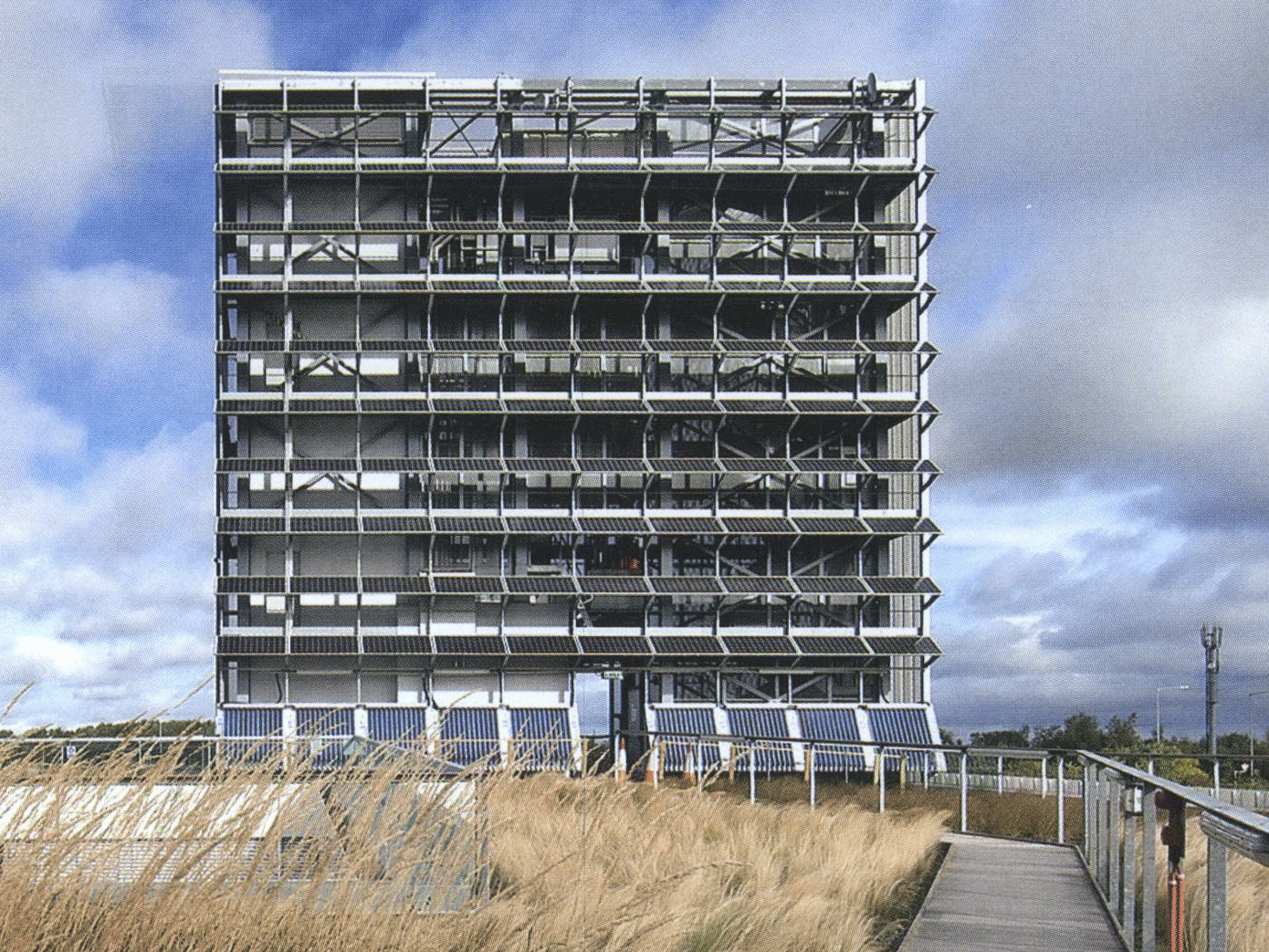

If science fiction can be seen to have informed scientific development, then we need to acknowledge Jules Verne’s Nautilus (1870), as the progenitor of submarines engaged in marine research, and by extension, exploration of gas fields below the globe’s sea beds. Ron Herron’s ‘Walking City’ (Archigram 1964), spawned by the discovery of North Sea gas in the 1960s, and the technology of oil and gas rigs, links science fiction with architecture.
Equally if abundant ‘energy’ with its perceived capacity to liberate mankind from the shackles of history can be seen to have informed architecture and urbanism, then it is worth reflecting, however fleetingly, on how the powerful ‘future’ urban imagery (La Citta Nuova 1912-14) of the Futurist, Antonio Sant’ Elia, inspired by the muscular sculptural forms of hydro-electricity generation, influenced ‘modernism’. It did of course, obliquely, and pervasively, as did subsequent speculations and manifestos such as Le Corbusier’s Vers Une Architecture (1923) and his utopian proposition La Ville Radieuse (1924) There is a perverse irony in the near convergence of La Ville Radieuse with Fritz Lang’s apocalyptic film Metropolis (1927), which is acknowledged as being a homage to Sant’ Elia, as indeed is Ridley Scott’s Blade Runner (1982).
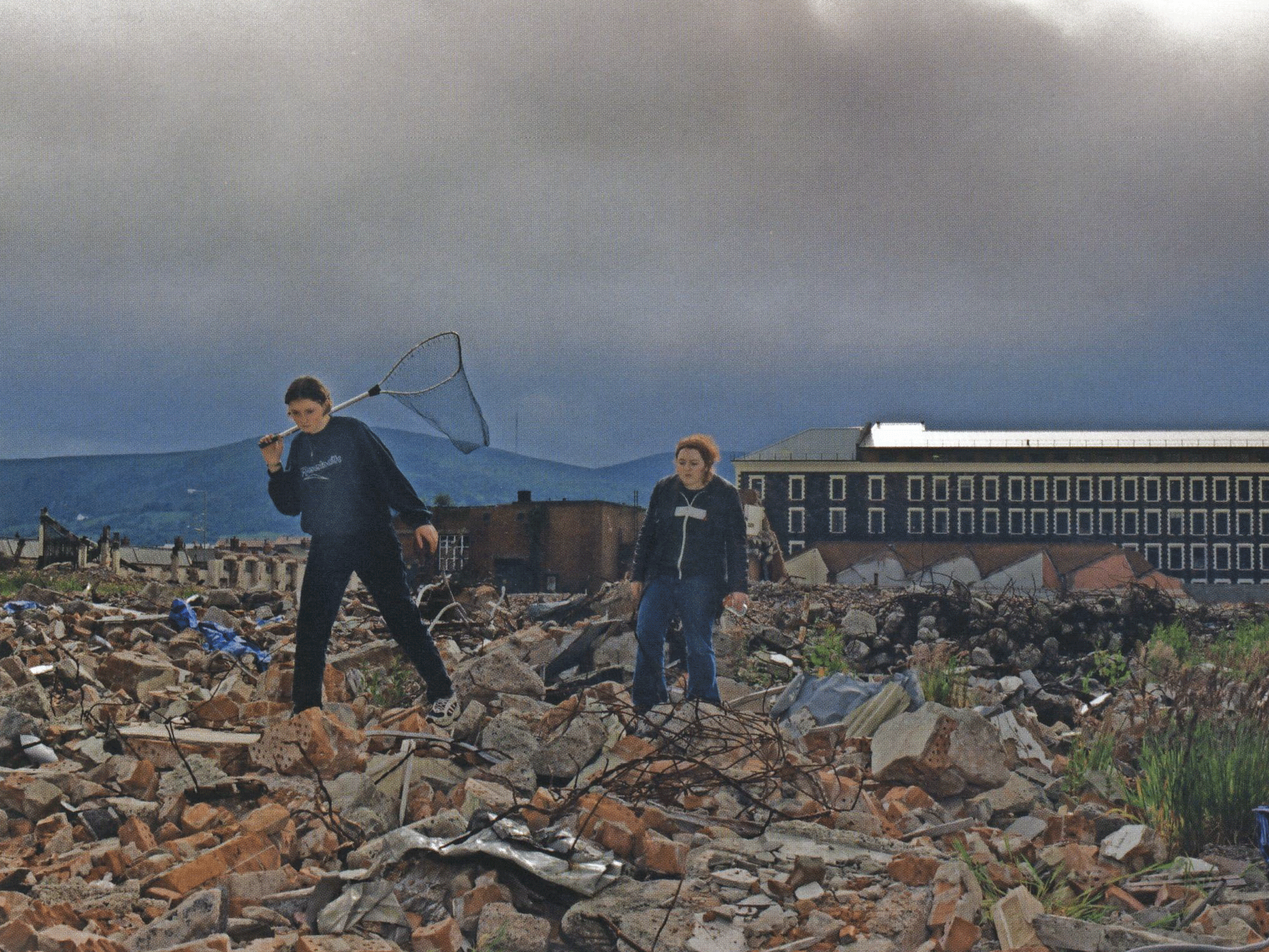
Northern Ireland: 30 Years of Photography at Belfast Exposed and the MAC this summer highlights the medium as a highly-charged, critical artform that constantly questions its own role in the construction of memories, writes Stephanie McBride
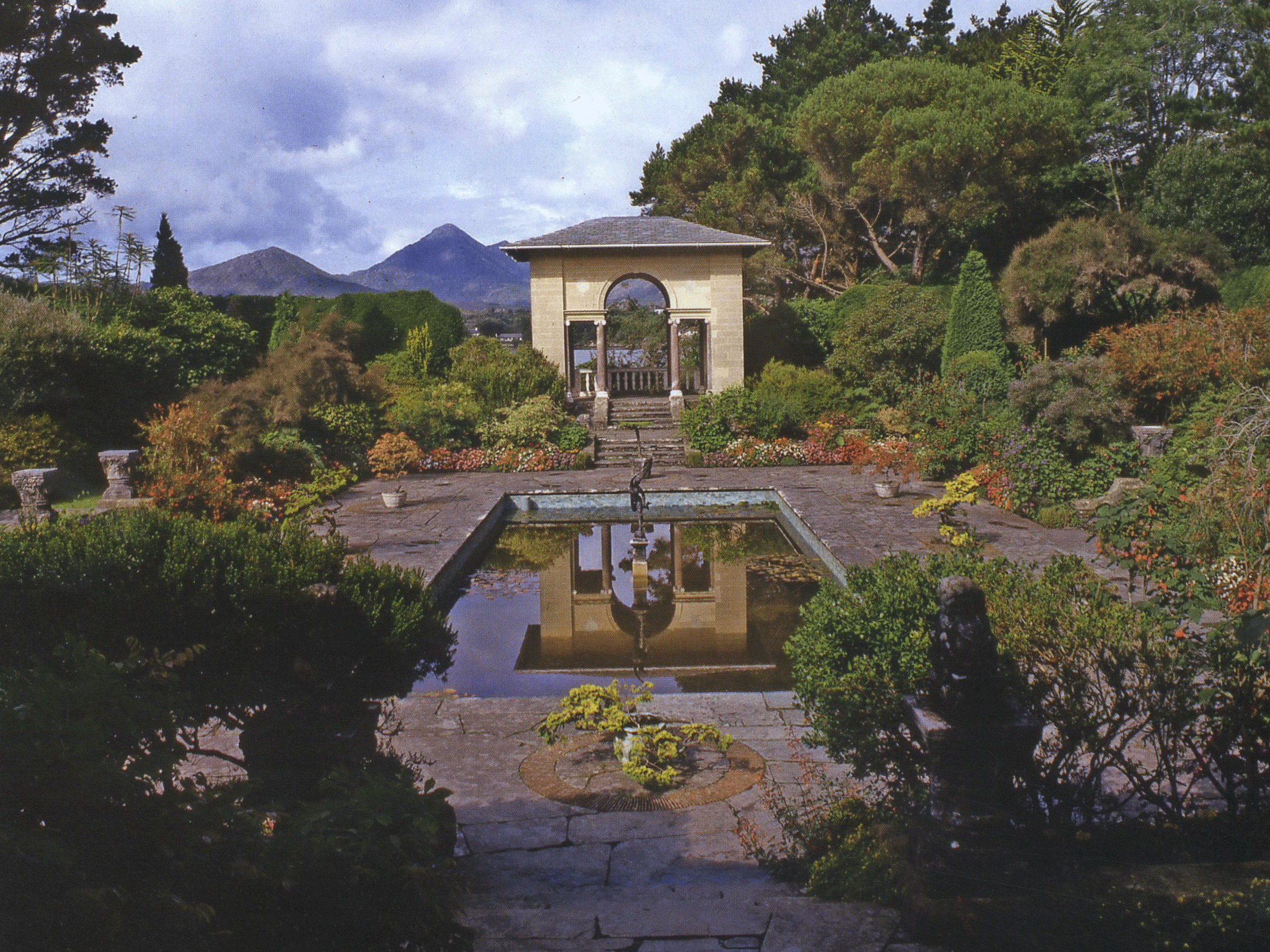
Nigel Everett recounts how John Annan Bryce and his architect Harold Peto transformed Garinish Island into one of the most important gardens in Europe