The realm of faith illustrated in the Book of Kells can be elusive to modern audiences; however, a new study by Bernard Meehan provides valuable insights into this peerless manuscript
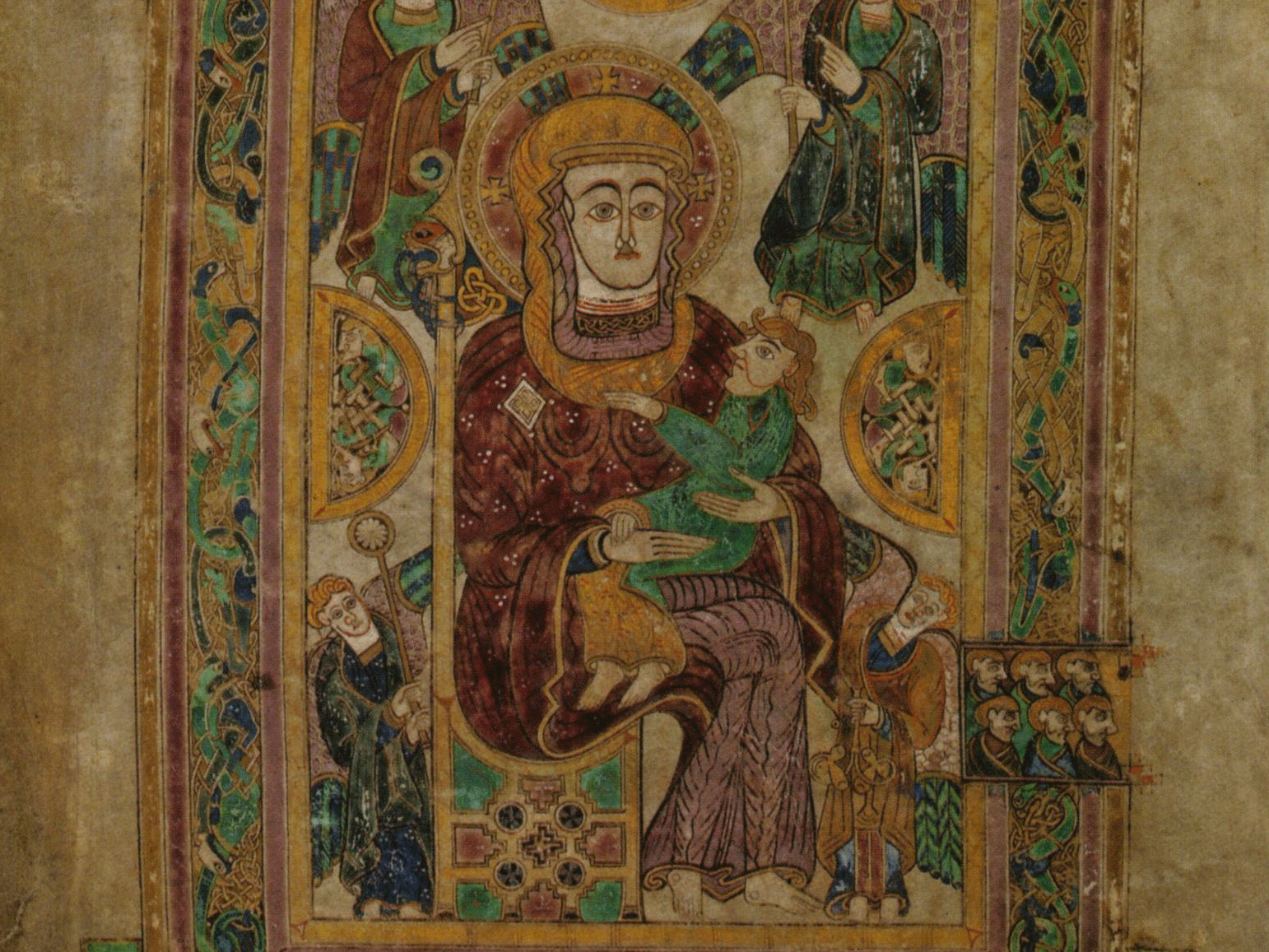
No other medieval manuscript attracts the same level of public interest as the Book of Kells, a copy of the four Gospels produced c.800 AD. Each year, over half a million visitors view it on display in the library of Trinity College Dublin. Most are aware of its reputation for intricate artwork, vivid colouring and expert calligraphy, but for many it is enigmatic, perhaps even incomprehensible, partly because it is written in Latin and partly because its tangled decoration needs careful and experienced examination before it becomes legible. For scholars, the book is constantly open to fresh analysis and reinterpretation, with much to explore, as it is a large manuscript with 340 surviving folios (a further thirty or so are missing from the original) and lacks explicit internal evidence concerning its date or its makers. It is irregular in many respects, being the work of four or five separate scribes and perhaps an equal number of artists. Its production seems to have taken place over a lengthy period, or at least discontinuously, and was not completed. While there is general agreement in academic circles that it was made by followers of St Colum Cille (or Columba, died 597 AD) discussion continues about its origin: was it made on the island of Iona (Argyll) founded by Colum Cille himself, or at Kells in County Meath, by a community established there from Iona in the early 9th century; or was it made partly in both locations?