
As Derry-Londonderry celebrates its year as UK City of Culture, Declan McGonagle recalls 1987, when extreme reaction to Sculpture for Derry Walls demonstrated Antony Gormley and his curator that meaning is created by context.
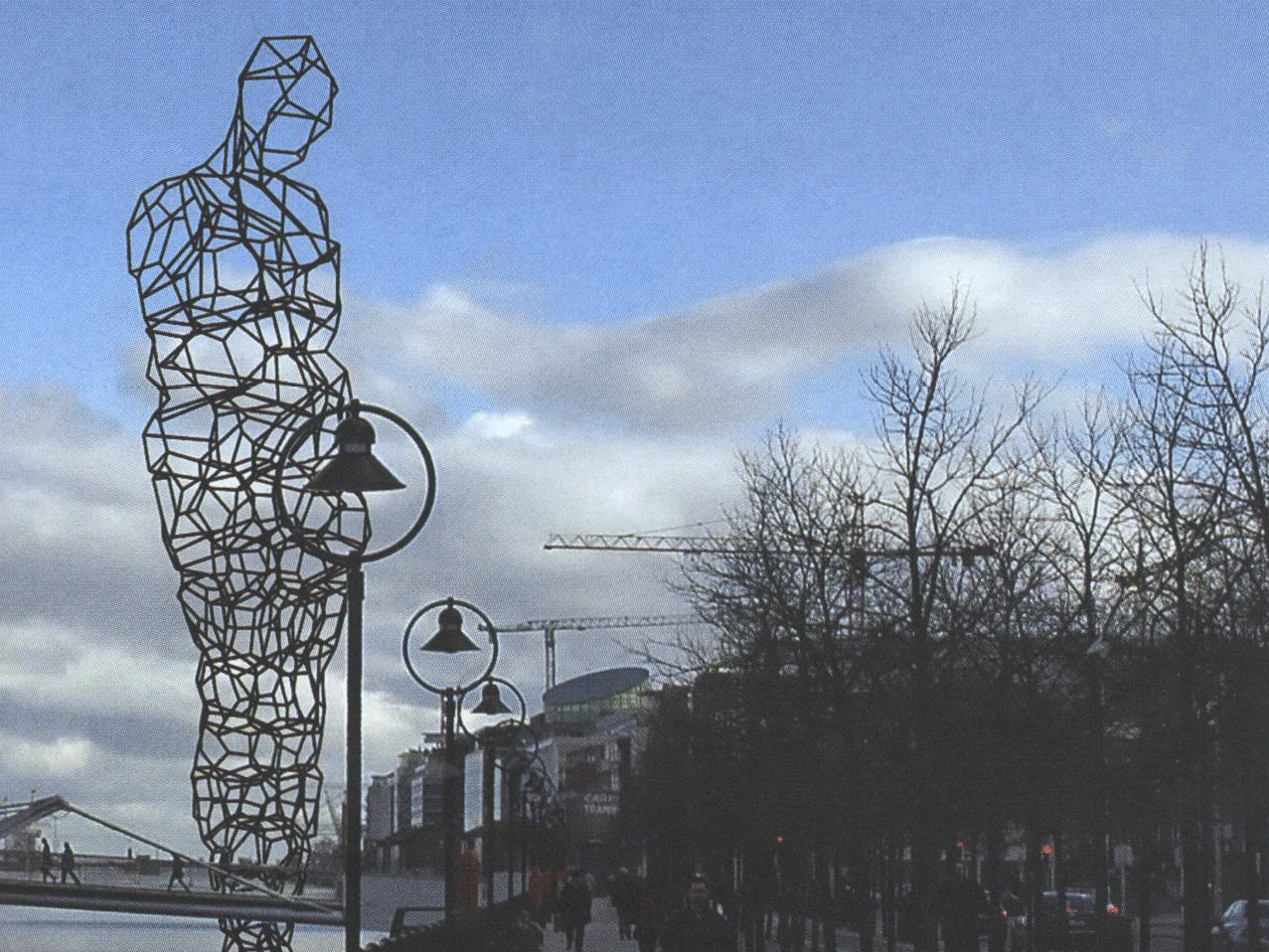
Antony Gormley has long acknowledged that the situation and context of his work and what arises from the relationships between the object, its physical and cultural setting, and the viewer as participant, represent a process by which the meaning and value of art is created and shared. This was first fully explored in his project for the city walls in Derry in 1987, ‘Sculptures for Derry Walls’, which I curated as Director of the City Council’s Orchard Gallery. Gormley’s proposal was selected from a dozen or so fully realized ideas from Irish and British artists, to place three, cast-iron cruciform Janus-like figures on three key locations on Derry’s 17th-century city walls. Derry’s walls are significant, historically and politically. Historically, because Derry is one of the few places in Europe where such complete city walls are extant from that period and, politically, because they represent and embody the survival of the planted Protestant population in north-west Ireland – the Protestant community of the City of Londonderry having survived a lengthy siege in 1689 laid by a native Irish and a French army led by the Stuart King James II against the supporters of William of Orange, which was finally resolved at the Battle of the Boyne in 1690.

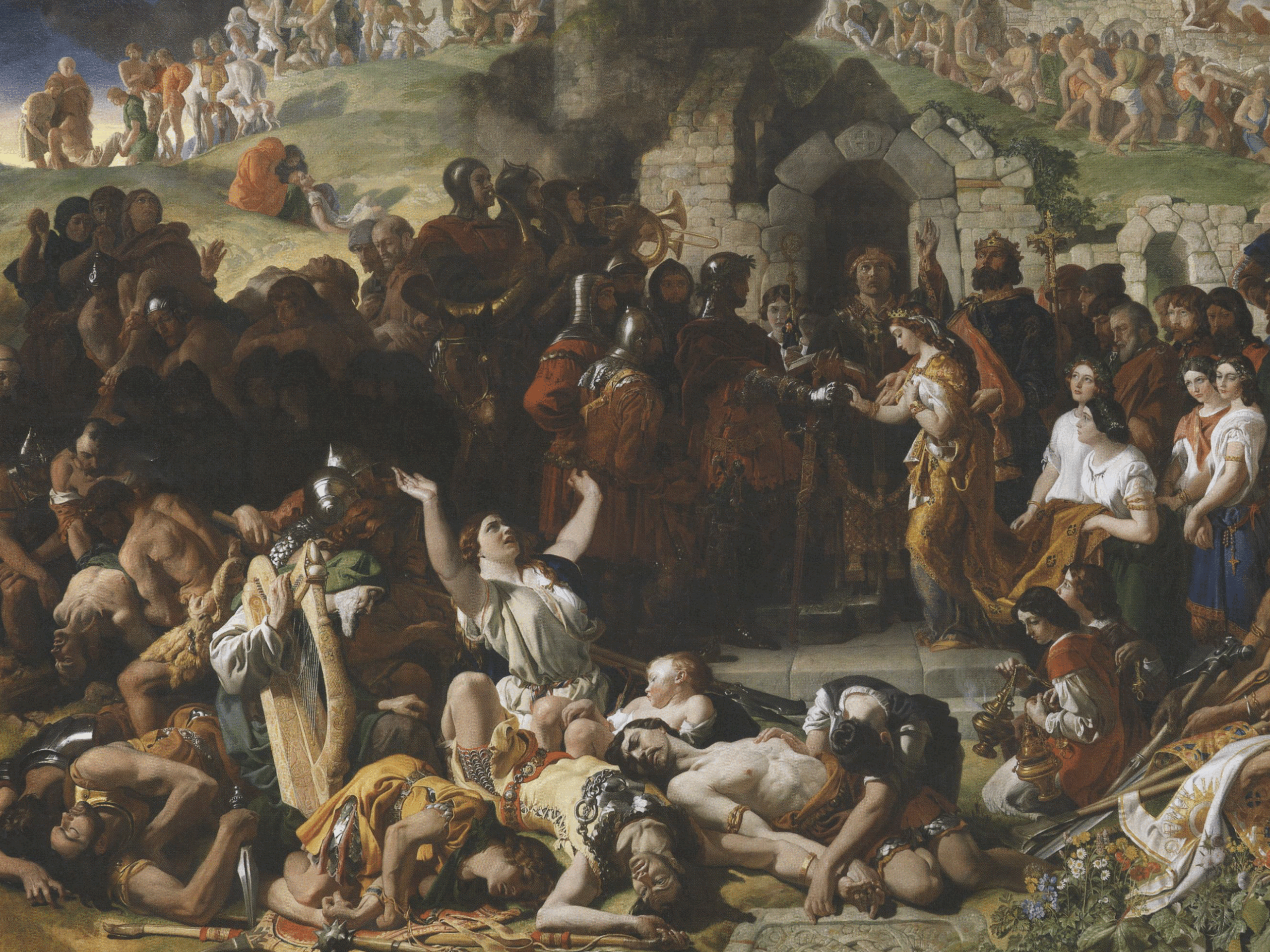
Was Daniel Maclise a proto-Nationalist painter? Peter Murray thinks not, in his assessment of the National Gallery’s recently restored masterpiece.
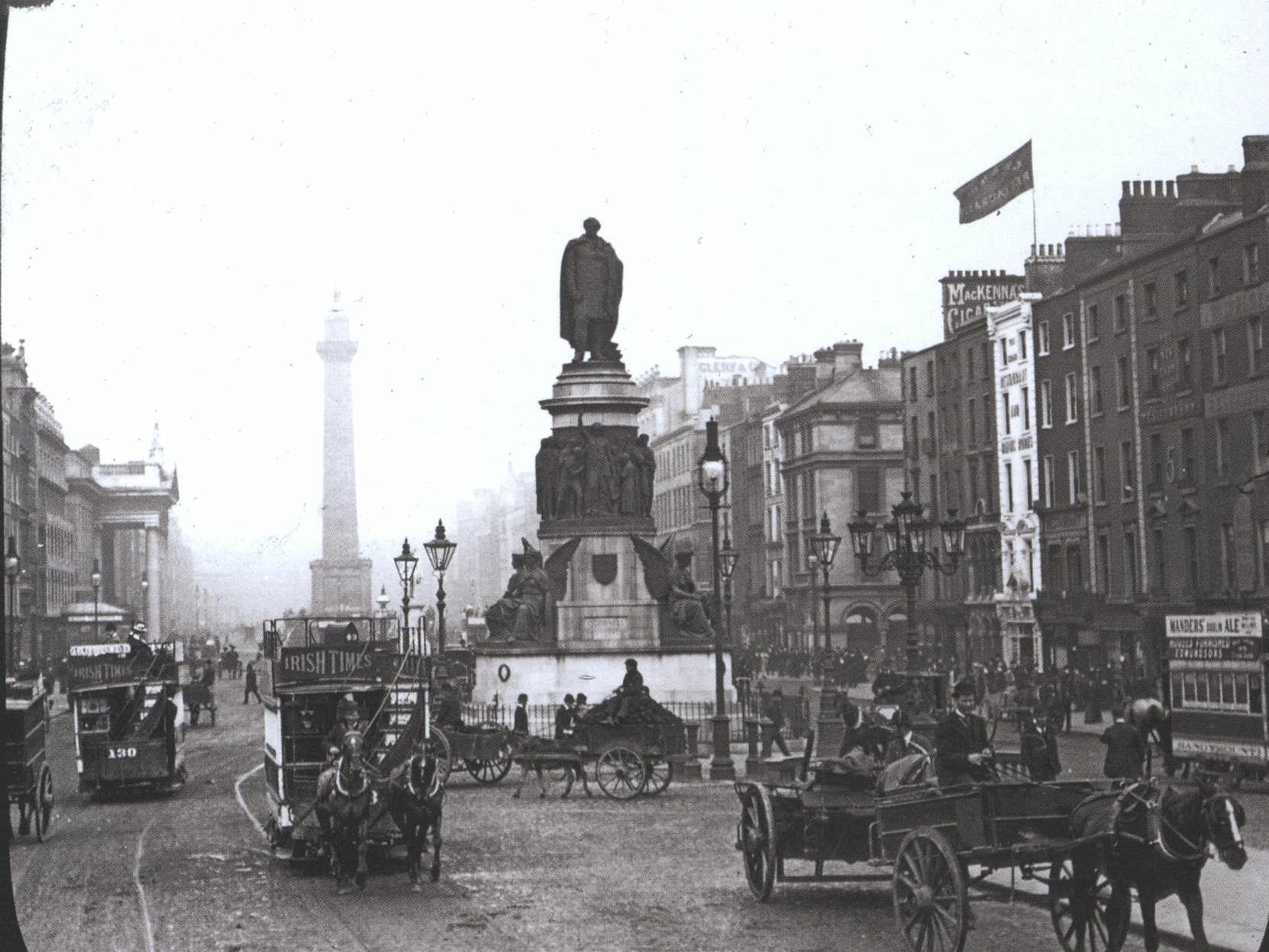
Christiaan Corlett looks at a valuable, but little-known portfolio of photographs taken by Victorian doctor Ephraim MacDowel Cosgrave, now in the collection of the Royal Society of Antiquaries of Ireland
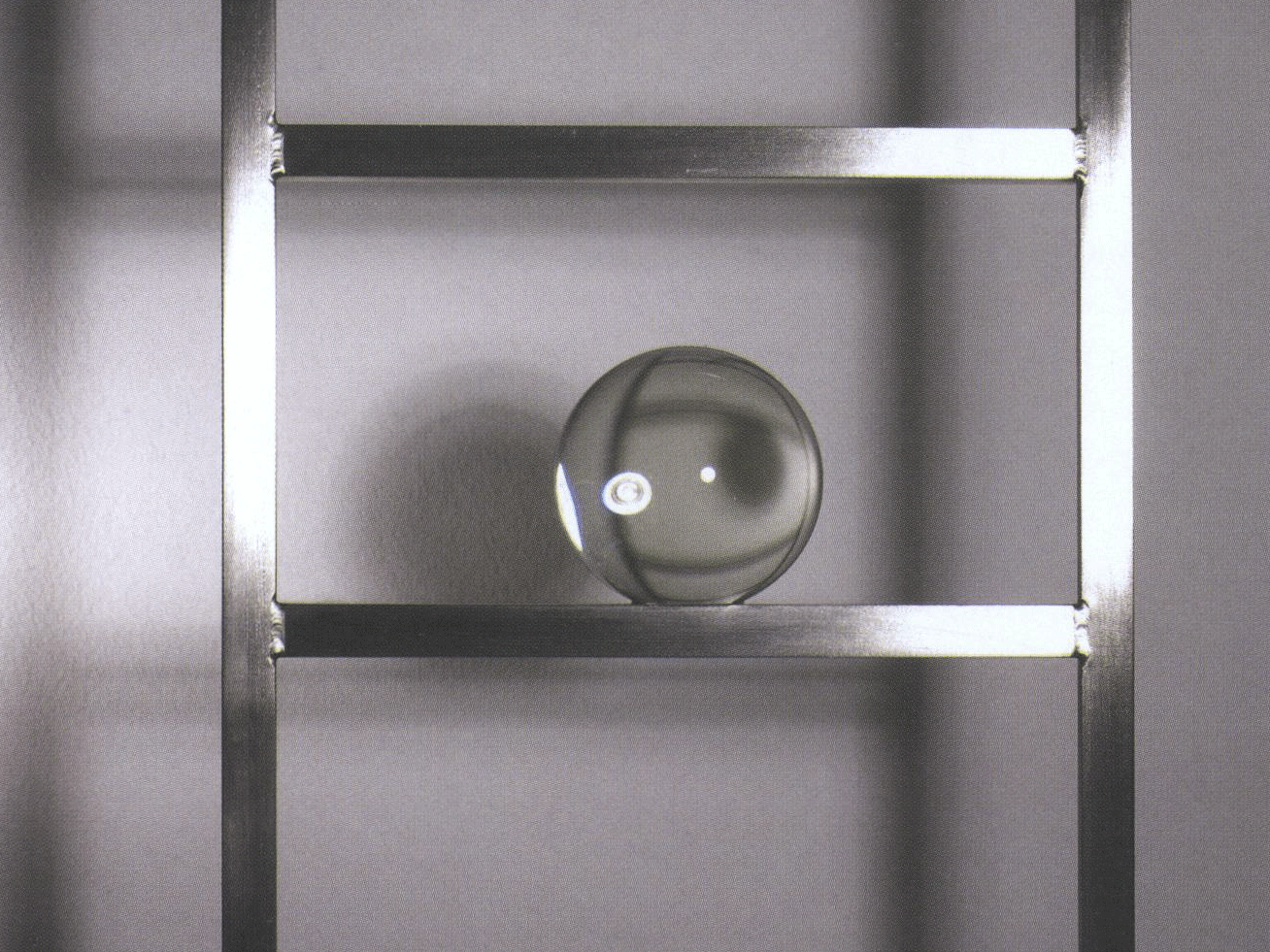
Vivienne Roche belongs to a generation who transformed what sculpture could be. ‘I don’t consider myself an object-maker. I work with place and change’, she tells Brian McAvera while her exhibition continues at the Royal Hibernian Academy