Charles Jervas was feted among the highest echelons of society during his lifetime, but in the centuries following his death he has accrued some very bad press; Caroline Pegum redresses the balance.
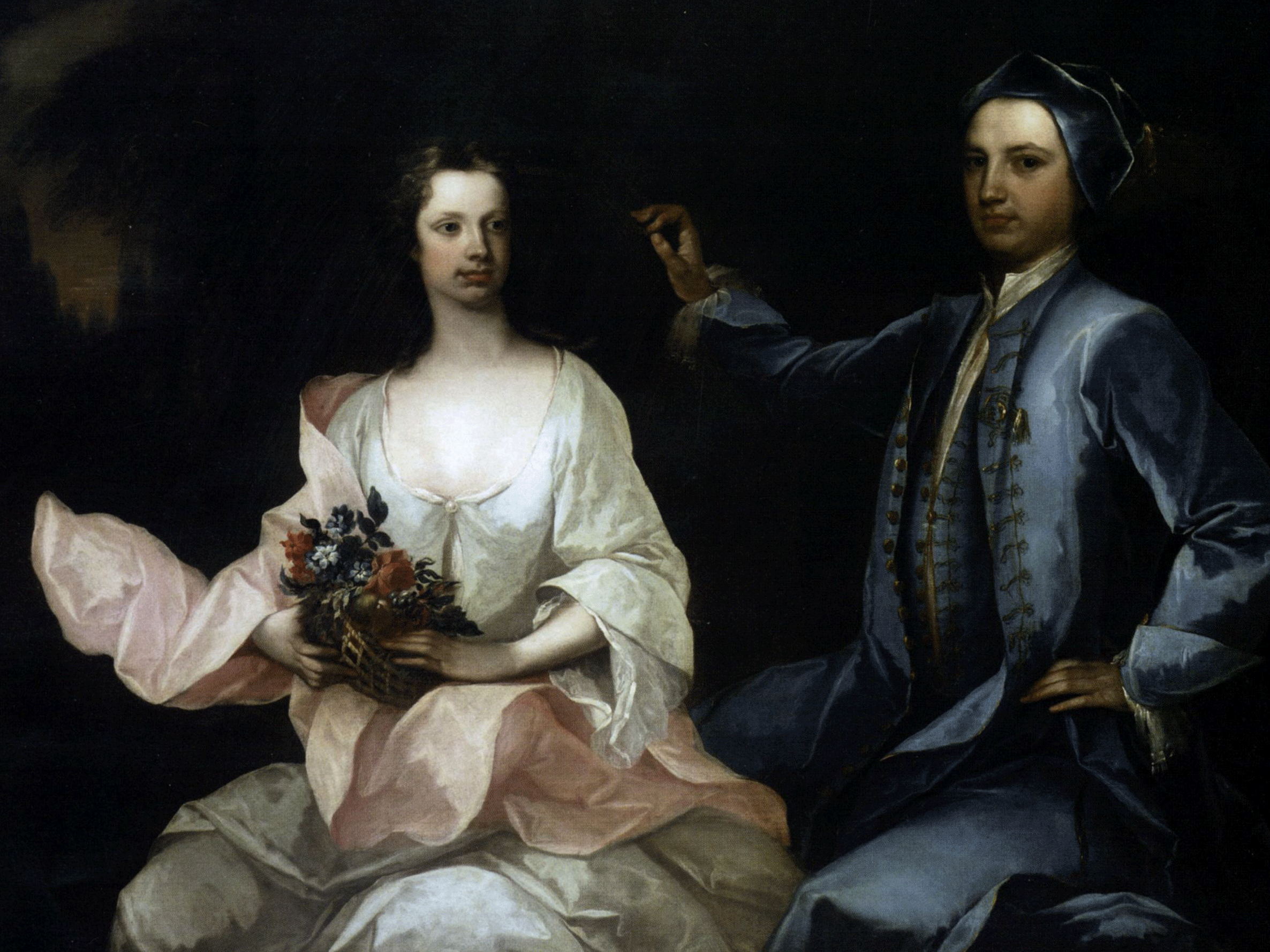
Charles Jervas (c.1675-1739), Principal Painter to Kings George I and II, has long been a maligned contributor to the canon of British and Irish art history. A flawed understanding of his oeuvre and too little research into the throng of contemporary portraitists have caused entirely unconnected paintings to be attributed to him and his supposedly overworked ‘followers’ and ‘circle’. These misattributions are consistently employed to the artist’s discredit, a convenient catch-all label for second- or third-rate portraits of the early 18th century. The influential art critic Horace Walpole (1717-1797) described Jervas’ works as ‘wretched daubings’ in the midst of a passionate diatribe against the artist in Anecdotes of Painting in England (1762-1771). If this was unduly harsh at the time of writing, it has become increasingly accurate in view of the way Jervas’ oeuvre has miraculously continued to grow since his death.