
The wealthy strata of Norman society brought with them to Ireland their elaborate tomb sculpture, a new genre for Irish stonemasons, writes Peter Harbison
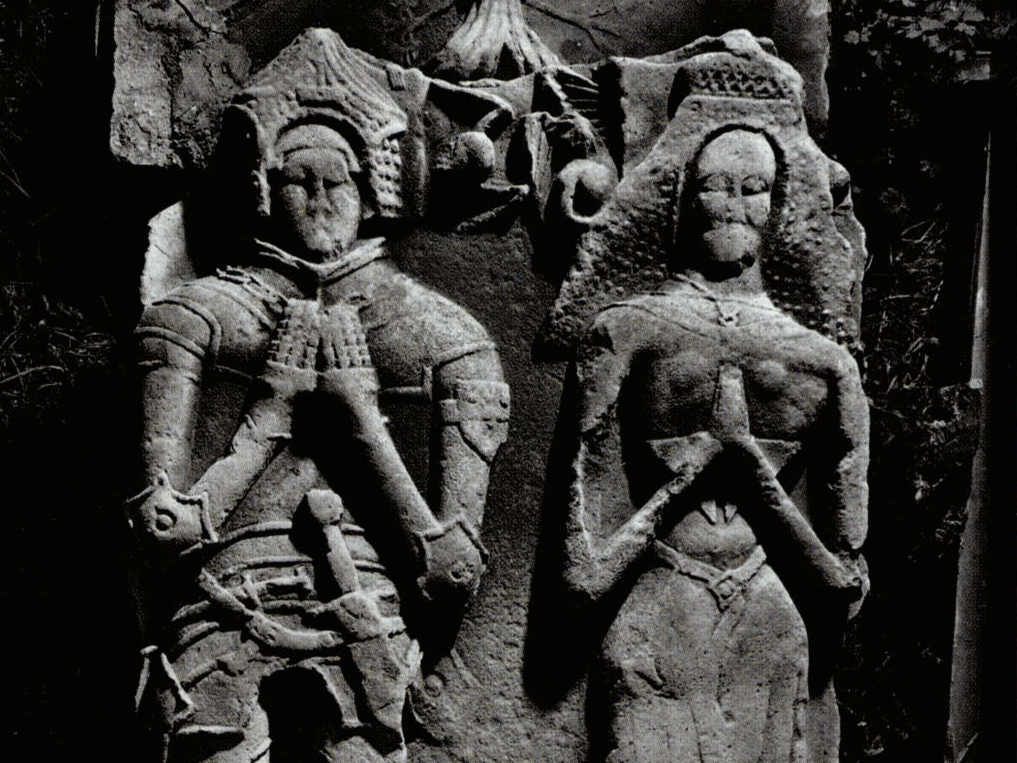
A great change came about in the history of Ireland’s stone carving activity during the course of the 13th century. Throughout the last three quarters of the preceding century, it was largely the doorways, chancel arches and windows of churches, together with High Crosses, that were the object of the mason’s imaginative decoration, as he went about producing Romanesque-style ornament mostly on easily-carved sandstone, a tradition which lasted in the West of Ireland until around 1225. But that all came to an abrupt end after the Normans succeeded in becoming masters of most of Ireland (except the North-west) only ten years later. Thereafter, the use of limestone became the norm and, other than capitals and mouldings, stone-carved decoration of churches was considerably reduced. Instead, a different set of carvers – perhaps initially English or Welsh – turned their attention to creating a kind of monument hitherto unknown in Ireland – the effigy, a genre which had already been practised on the Continent for two hundred years.
Ireland’s most highly regarded architectural émigré is the subject of a new publication and a USA-based exhibition; Ellen Rowley looks at his legacy