
From 1960, when a chance meeting with Cecil King led to his work being included in a show at the Ritchie Hendriks Gallery, Dublin, Michael Kane was a formidable, indomitable presence in Irish cultural life.
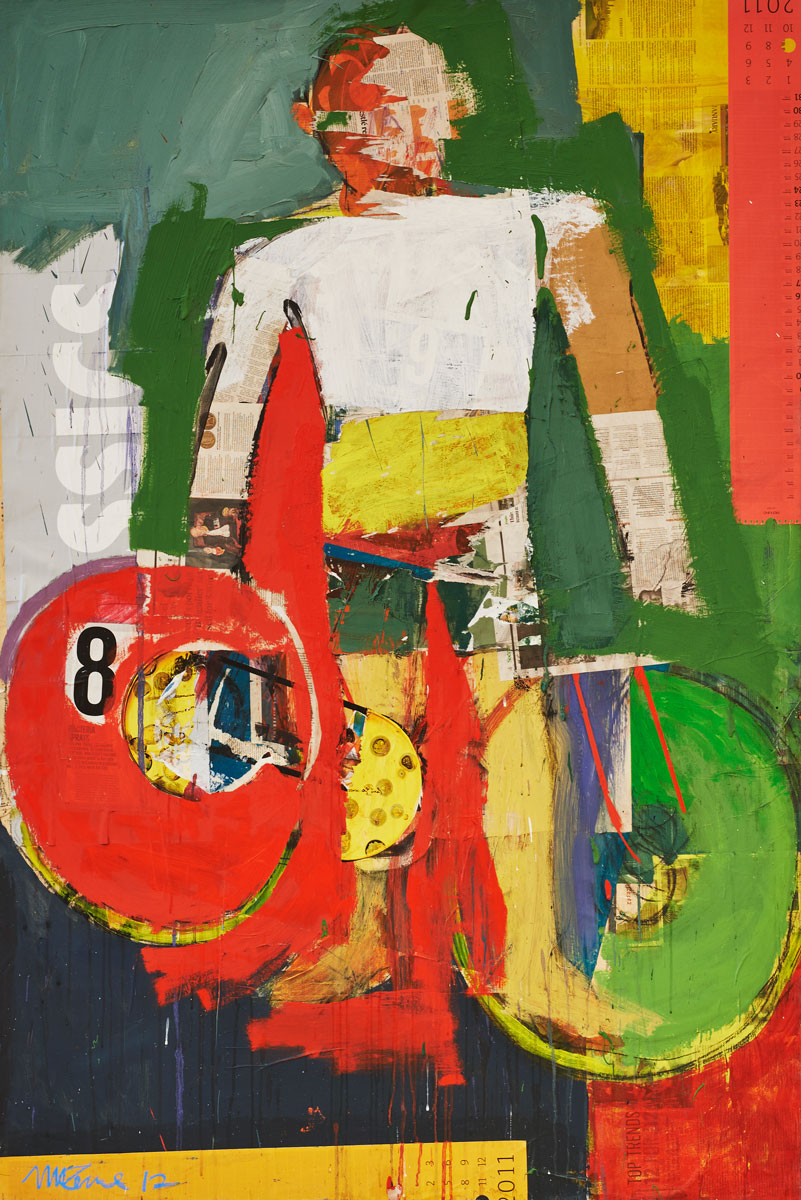
From 1960, when a chance meeting with Cecil King led to his work being included in a show at the Ritchie Hendriks Gallery, Dublin, Michael Kane was a formidable, indomitable presence in Irish cultural life. Born in Dublin, prior to attending the National College of Art (NCA) in the late 1950s, he went to school in Co Wicklow, an experience that did nothing to encourage in him a pastoral view of Irish life and Irish art. Rather, as he later argued, Ireland had been well on the way towards becoming an urbanised society way before the shift had registered culturally, and he knew he belonged in the city. He quickly became, and remained throughout his life, spiritually affiliated to ‘Baggotonia’ and its literary, Bohemian ethos. He thought Patrick Kavanagh exemplary in his unwavering devotion to his art. Ulick O’Connor placed Kane in the lineage of writer-flâneurs memorialised in Anthony Cronin’s Dead as Doornails (1976).
Kane travelled in Europe, to France, Spain and Switzerland, looking and learning, but Dublin remained central to his work. Central both in its local, granular detail and its mythic resonance (Icarus falling from Baggot Street Bridge), both epic and everyday. He lost no time in finding his own artistic territory with such kindred spirits as James McKenna, John Behan, Charlie Cullen, Alice Hanratty and others, in opposition to both the Arts Council, what he saw as the anodyne Modernism it favoured, and the stagnant, hidebound Royal Hibernian Academy.
For a time, coincident with the eruption of the Troubles in Northern Ireland and with echoes of the Paris student revolt of May 1968 in the unrest at NCA, there was a giddy, destabilising energy at play in art and politics in Dublin. There seemed to be an opportunity, in this context, for Kane and the Independent Artists. They had been advocating an alternative, more egalitarian vision of art practice, in line with ‘the authentic impulse of the historical moment’, with a distinct though ambiguous political aspect. As an activist, though, he did not like art politics and a tone of truculent disdain could undercut his undoubted charisma.
It was noticeable even then that there was a slightly retrospective cast to his artistic vision, which recalled an earlier period of ferment, following World War I, firmly rooted in European Expressionism, and some post-World War II developments. That he could revivify the Expressionist tradition became clear with the monumental woodcuts he made in the 1970s, remarkable works centred on lacerating – including self-lacerating – explorations of personal relationships and sexuality, in which men mostly came across as self-regarding, salacious, oblivious and deluded. Women fared better, overall, though an image of a ferocious, voluptuous Judith wielding a dagger implies a defensive, threatened masculinity.
The Expressionist impulse is still entirely and usefully relevant in his fine subsequent paintings of heads and figures focused on heroically ordinary, rough-hewn city dwellers. His strong creative affiliation with a number of artists, notably including the great sculptor Hans Josephsohn, and painters Oskar Kokoschka, Marc Chagall, Max Beckmann and, less obviously but avowedly, Henri Matisse, became clear over time. Locally, he had no hesitation in identifying himself with a tradition that extended back to George Moore and the Dublin Metropolitan School of Art, and encompassed such writers and poets as Paul Durcan, John Banville and Aidan Higgins, and such painters as Harry Kernoff and Gerard Dillon.
Fiercely opinionated, Kane was rashly inclined to dismiss out of hand what he disapproved of, which for a long time was an awful lot: broad swathes of 20th-century artistic possibility and practice. Rather later on, his views unmistakably tempered as his own work evolved and broadened. In this he was undoubtedly led by the work, which was always made with uncompromising honesty. With him, the style was the man. As early as the 1980s, his observation of the ragged textures of the urban fabric and the figures within it produced gable blocks of startling, vivid colour in compositions that are overtly representational but also step beyond representation. He painted atmosphere, as he noted, rather than architecture. While he did not shy away from abstraction, he said that he found certain kinds of abstraction too easy, that it was ‘less rigorous’ for not being anchored to representational content. But he always maintained that form matters centrally to him. In the later, urban compositions, the fabric of the city provides as rich a source of inspiration for him as it ever did. All of Kane’s life’s experience is fully present in these recent works.
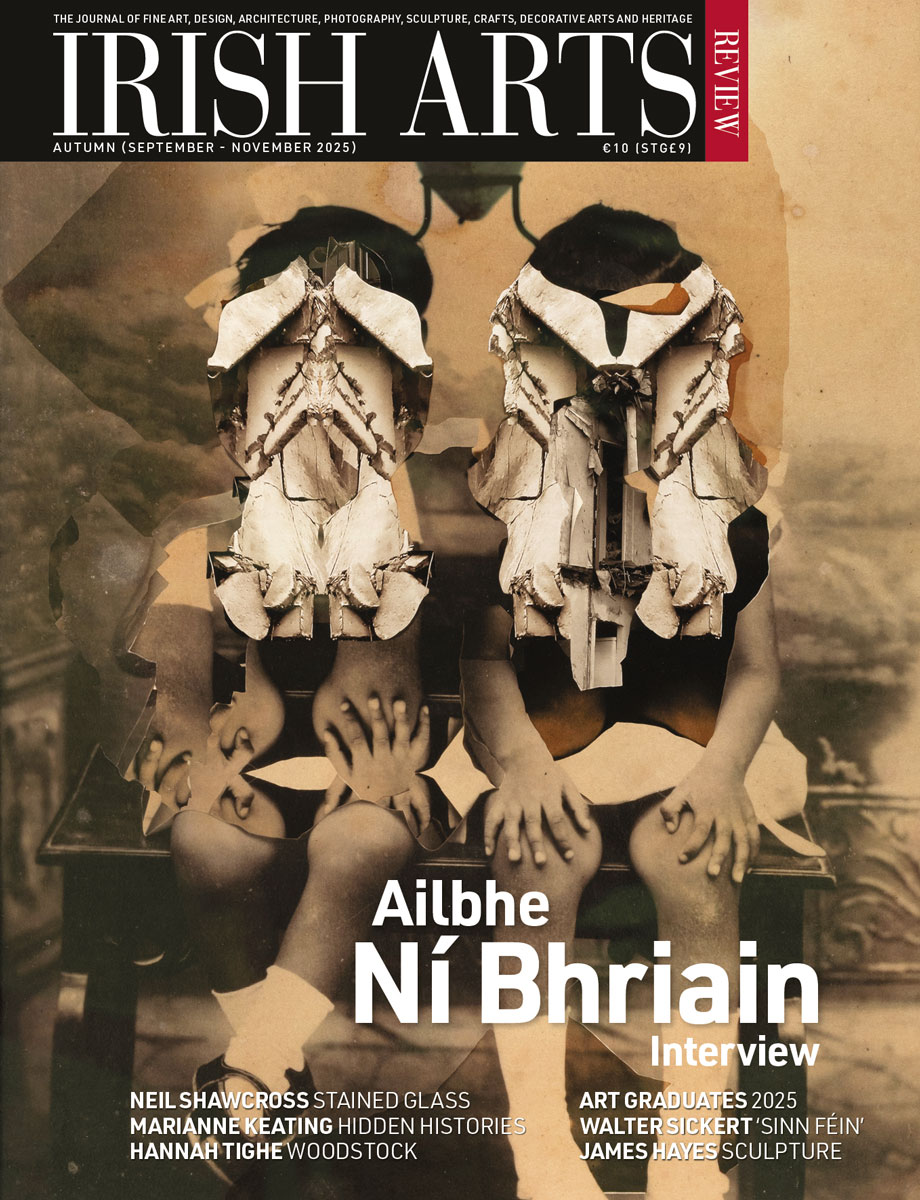

Emer McGarry considers the work of Marianne Keating, which brings to light overlooked stories of Irish migration, labour and resistance
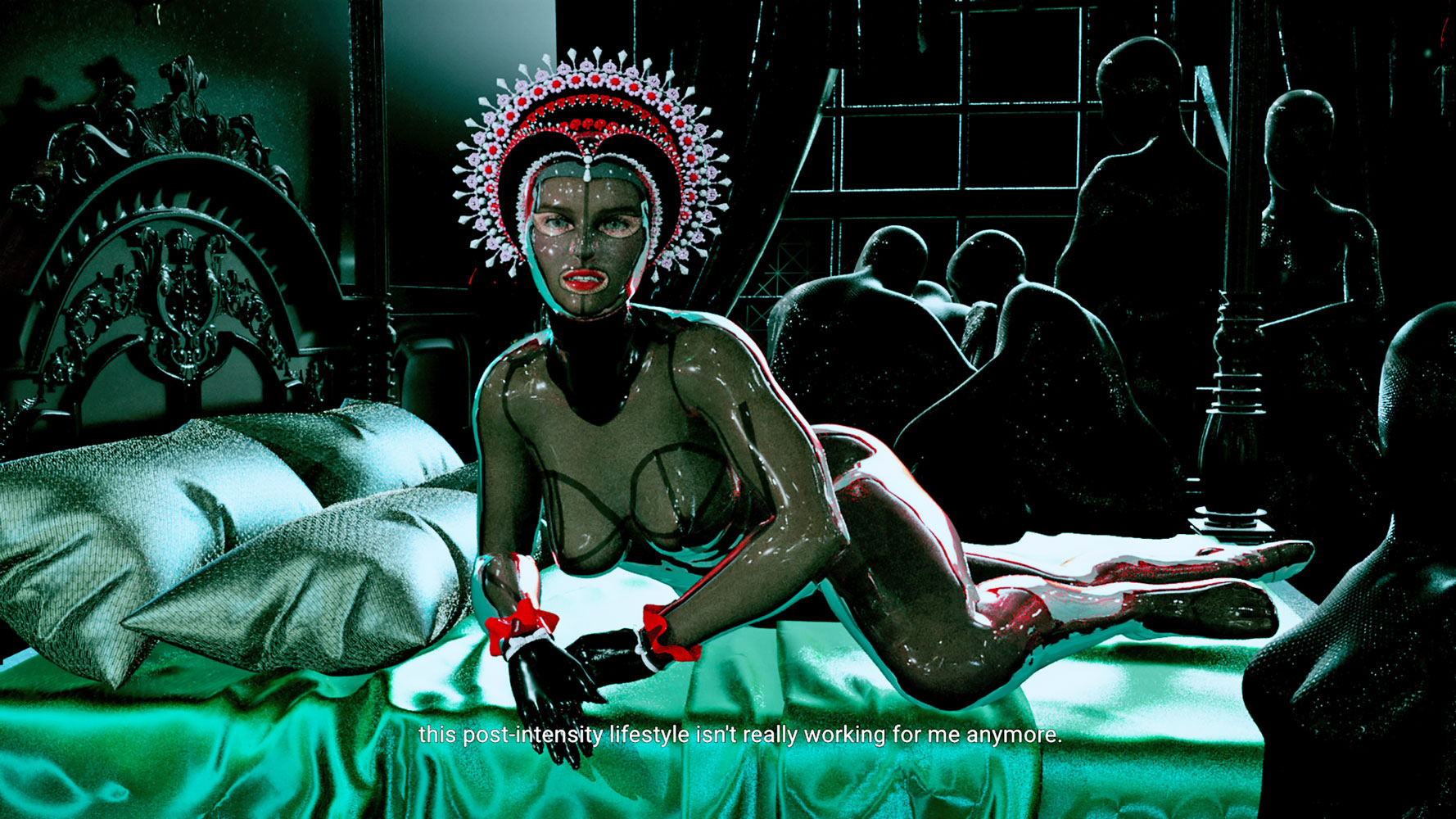
The exhibition treats the archive as a tool for building new futures, writes Seán Kissane
Cristín Leach considers Catherine Barron’s mid-career retrospective, which draws on the artist’s life experience