
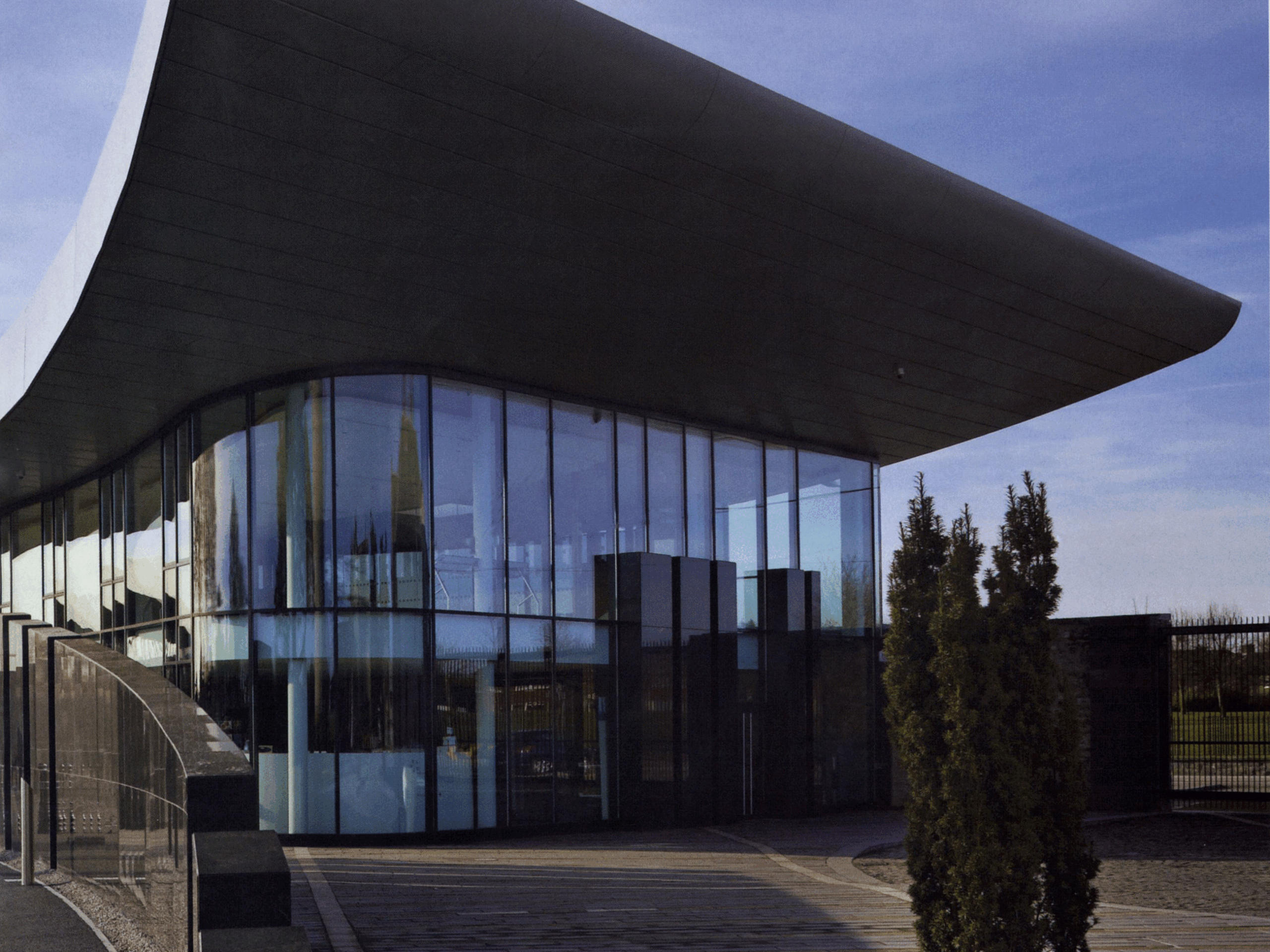
Richard Hurley views the newly opened Glasnevin National Heritage Visitors Centre which operates as a gateway to Dublin’s historic cemetery.
In 1970, when architecture was undergoing a lot of soul-searching, Carlo Scarpa designed the magical Brion-Vega Cemetery at San Vito d’Altivole, Italy. It had rectilinear stepping and curved sculptural elements on a grassy place, a complex and moving walled memorial. In the words of Scarpa himself:
“I would like to explain the Tomba Brion… I consider this work, if you permit me, to be rather good and which will get better over time. I have tried to put some poetic imagination into it, though not in order to create poetic architecture but to make a certain kind of architecture that could emanate a sense of formal poetry… The place for the dead in a garden… I wanted to show some ways in which you could approach death in a social and civic way; and further what meaning there was in death, in the ephemeralities of life.”
Janet Mullarney’s sculptures perform as metaphors, not portraits, writes Cliodhna Shaffrey