
Michael Warren has been consistent in his desire to marry the contemplative and the concrete: here he tells Brian McAvera, ‘to make is, for me, to make matter, matter’
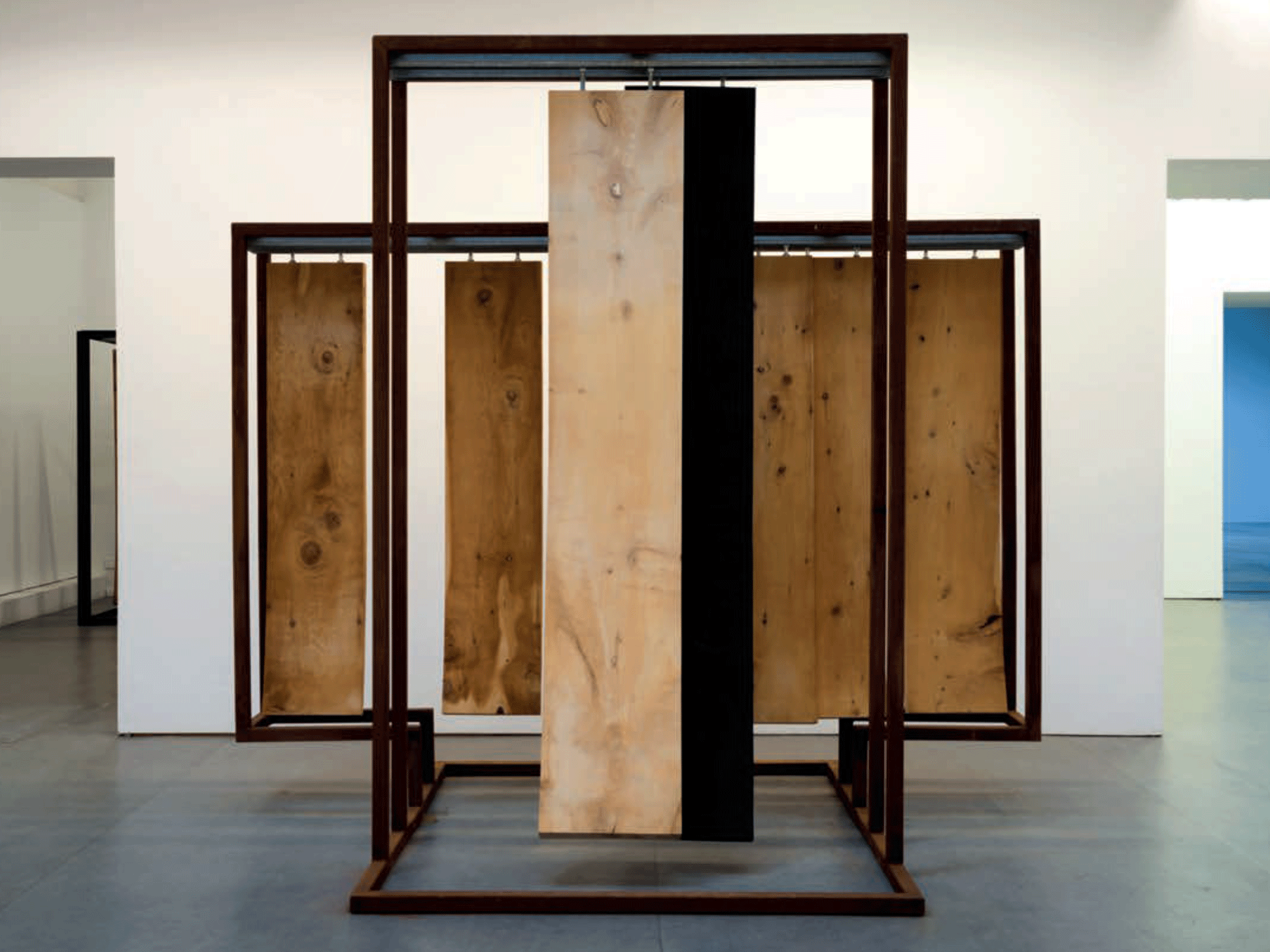
Brian McAvera: You have often been linked to Minimalism in terms of its reductive forms, and you believe that form, no matter how abstract, never sheds its power of association, a comment by Klee that could be equally applied to Sol Le Witt’s bricks or Donald Judd’s industrial units. How do you see yourself in relation to late 20th and early 21st century sculpture?
Michael Warren: Last year I participated in a group exhibition at Hillsboro Fine Art in Dublin. I felt my sculpture stood comfortably alongside two prominent artists of the Transa vanguardia movement – Sandro Chia and Enzo Cucchi. Recently I found myself in Portugal at an art conference. I took time to again seek out buildings designed by architects Eduardo Souto de Moura, Álvaro Siza and Rafael Moneo all of whose work I greatly admire. Over the past few years I have taken holidays in Italy making extensive studies of Renaissance art, notably of the Piero della Francesca frescoes in Arezzo, the Giottos in Assisi, and the architecture of Brunelleschi in Florence. The question of artistic allegiance to specific art movements doesn’t have the currency that it might once have had. The field of artistic connections is vast.

Proving that good design is timeless, Virginia Teehan presents a selection of rare artefacts travelling to Boston College, celebrating Irish design from the Arts and Crafts Movement.
In response to the 1916 centenary, EVA International takes as its theme, the post-colonial legacy on the psyche and imagination of colonized communities, writes Michaele Cutaya.
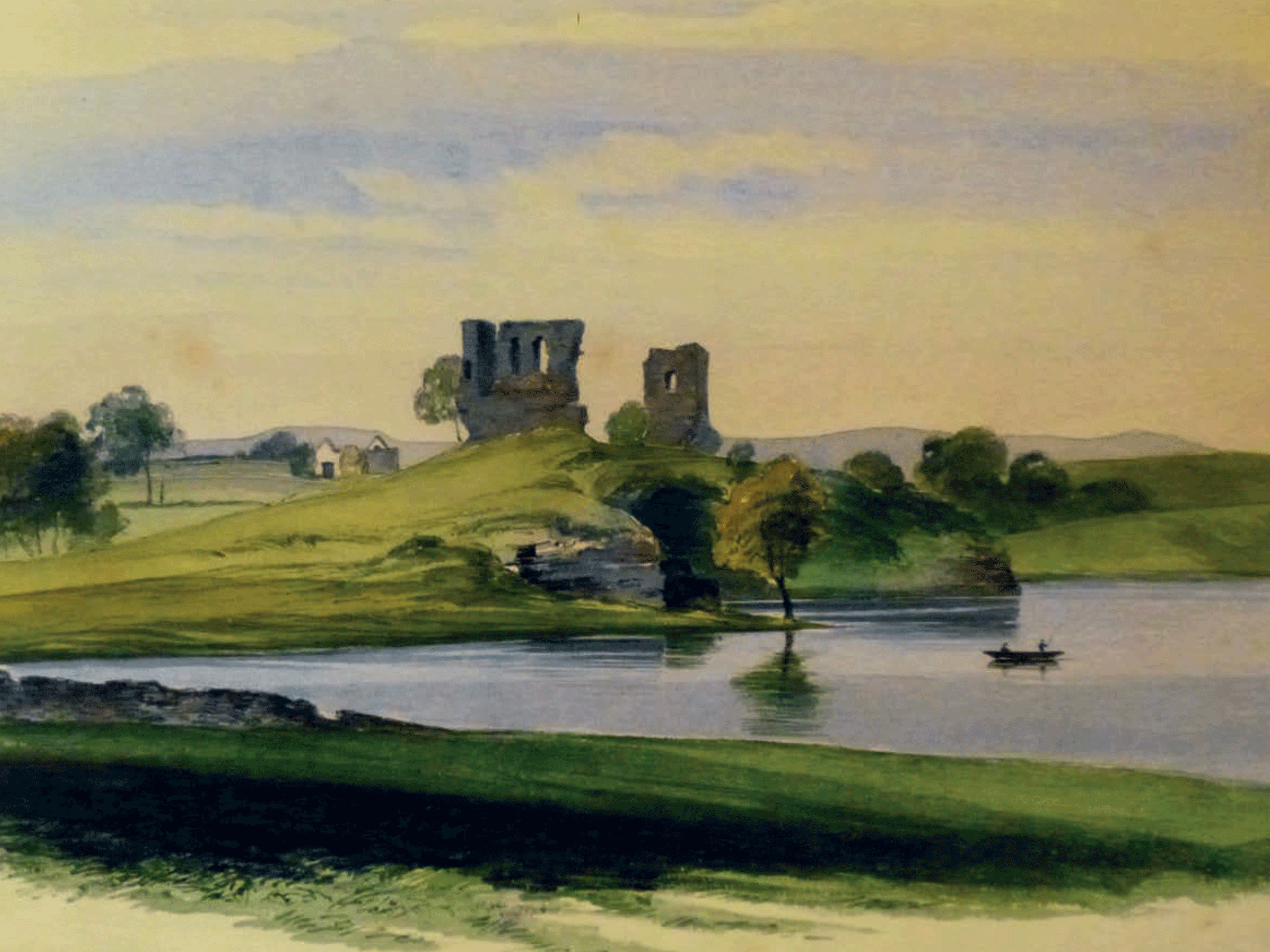
A recent visit to Sligo County Library prompts Peter Harbison to ask, could our national institutions do more to give local communities access to their treasures?