In reviewing a new monograph on Brian Bourke, Ídear O’Connor considers the drama and energy that animates his work.
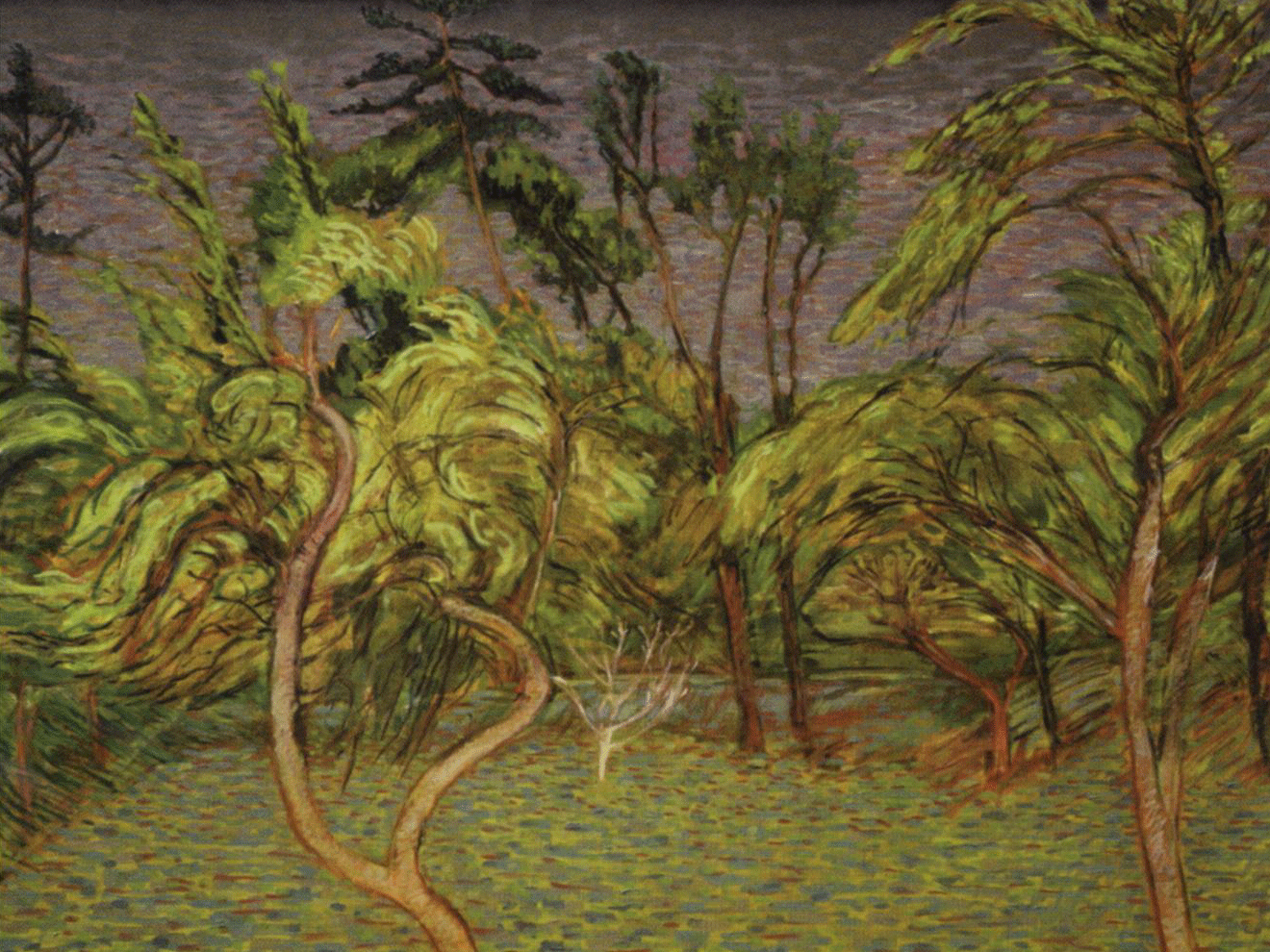
Brian Bourke’s rare and distinctive artistic vision operates through a series of interchangeable themes that span the decades; landscape, still life, literature, myth, portraiture and self-portraiture. Interwoven through his work is an ever-present sense of compelling and portent immediacy that combines to create a visual atmosphere which Bourke himself calls ‘suspended animation.’ The finely tuned reality is made more real because the artist seeks the essence, or, as Walter Benjamin puts it, the trace, of that which might have been left behind by others, mythological or otherwise. Thus, there is a genuine verisimilitude in the poignant atmosphere in, for example, The Day of the Eclipse, one of a series painted in memory of the artist’s brother Fergus, and in whose garden the scene is situated (Fig 5). On the other hand, there is a comical imagination at work in, for example, Sweeny Animated (Fig 3) from the Sweeny Birdman series, the latter of which were completed at the supposed site of his protagonist’s death, St Mullins in Co Carlow. If further proof is needed of a keen sense of comedy, examine, for instance, Don Quixote’s Penance Number Two (Fig 4) from a series based on a translation of Cervantes by Tobias Smollet.