
Seán Kissane finds in Richard Malone’s work a challenge to the idea that cultural authority belongs primarily to museums
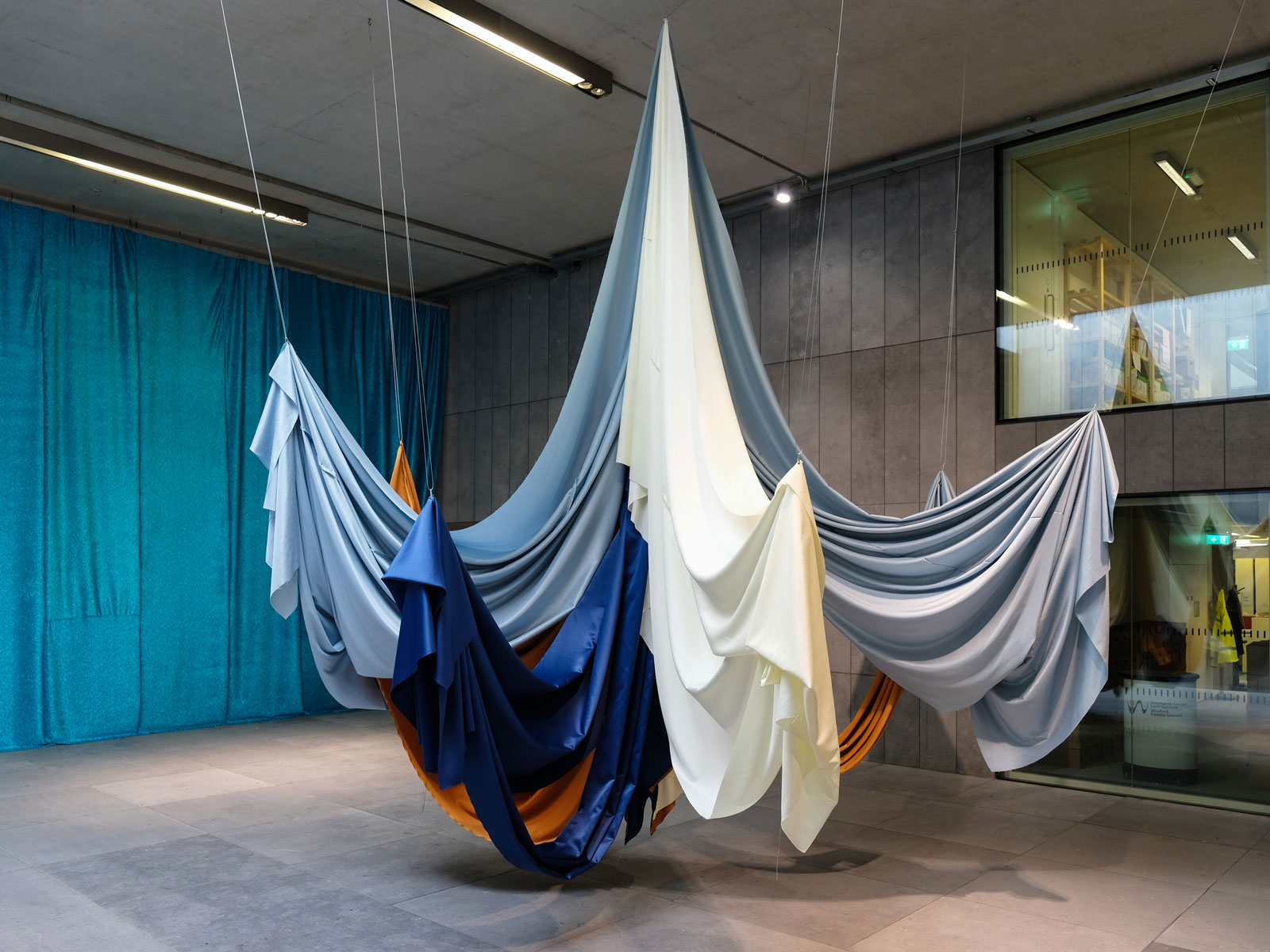
A photograph cannot convey the monumental scale of the site-specific work ribbon and hill (Fig 1) made for ‘Chorus’ at Wexford County Council Headquarters. The building has a central atrium, 85 metres long and 6.3 metres high, in a Minimalist structure of glass and concrete. Curators Catherine Bowe and Karla Sánchez Zepeda used unconventional methods of display to exhibit Richard Malone’s unconventional art in this challenging space. In conversation, Malone suggested that the hang evokes how works might be placed in the studio: not formal or deliberate, but playful, with things mixed up, making unexpected relationships. For example, the assemblage landscape ii (canopies, roofs or high notes) (Fig 5) is placed high, so that its qualities of shape, colour, material and texture become less visible, giving way to evocations of something much larger: a ship with sails billowing on a choppy sea; a mountain peak and clouds over a bay; or, as the title suggests, an urban skyline punctuated by the roofs of buildings.
To read this article in full, subscribe or buy this edition of the Irish Arts Review
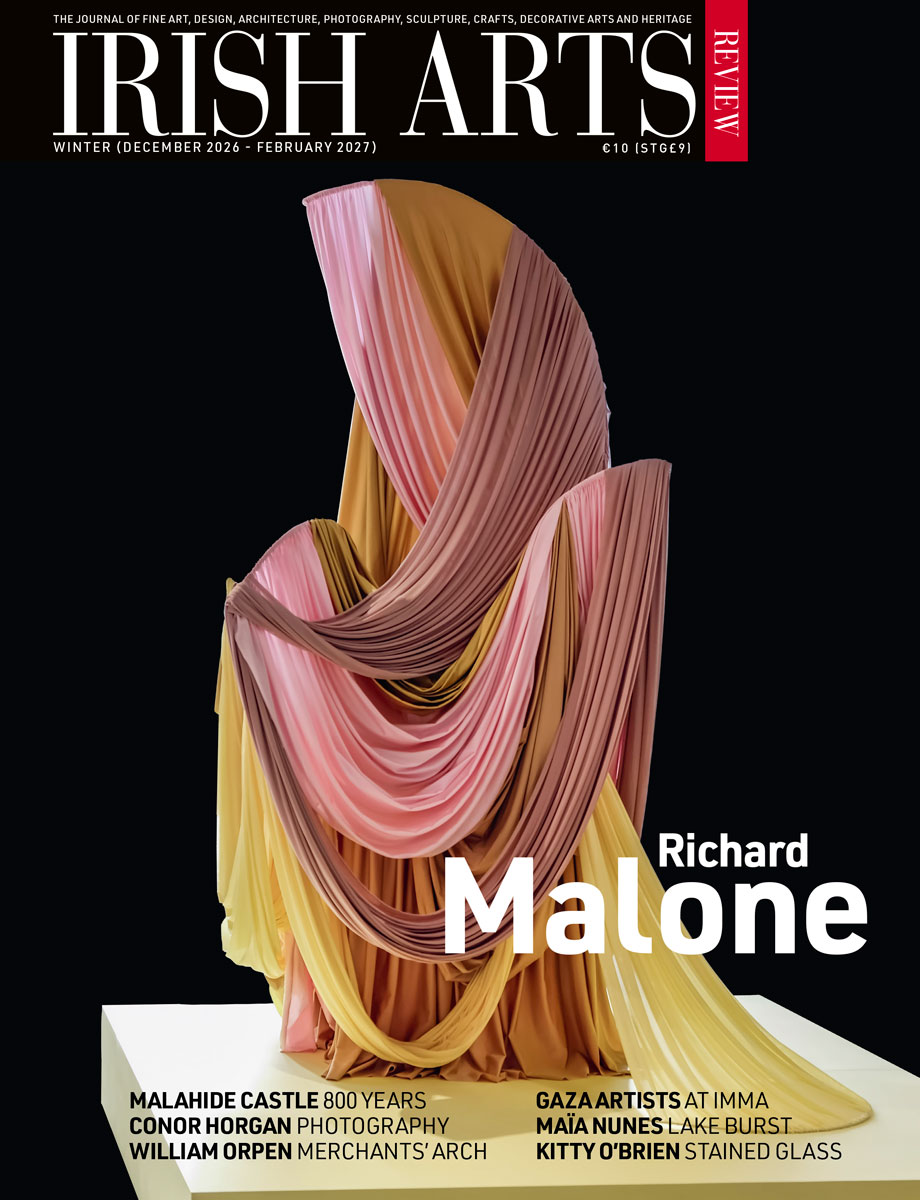
Barbara Dawson selects Lavacourt under Snow by Claude Monet (1840–1926)
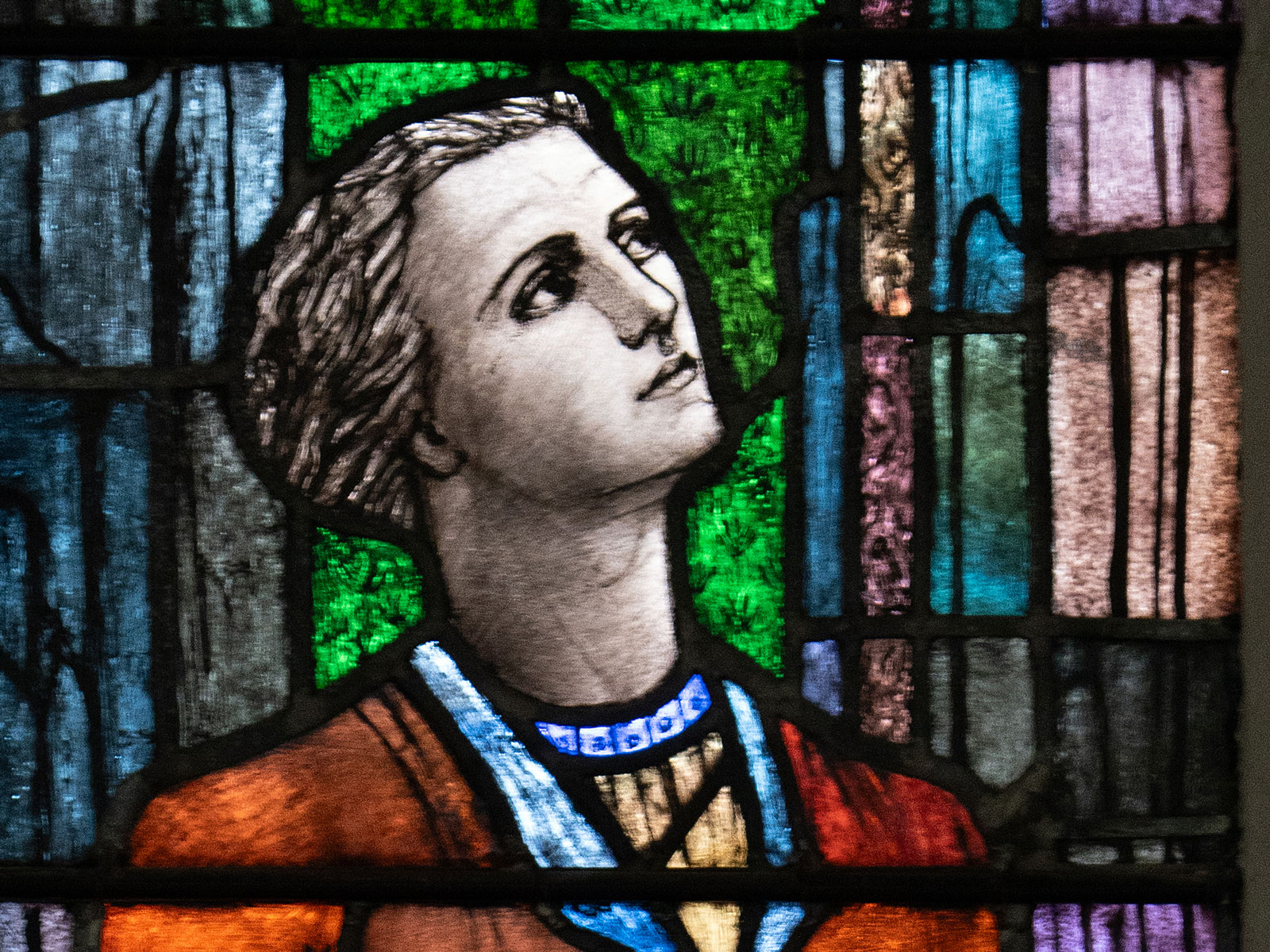
Ann Wilson examines Kitty O’Brien’s Crossing the Bar, a composition in stained glass that functions as a metaphor for hope
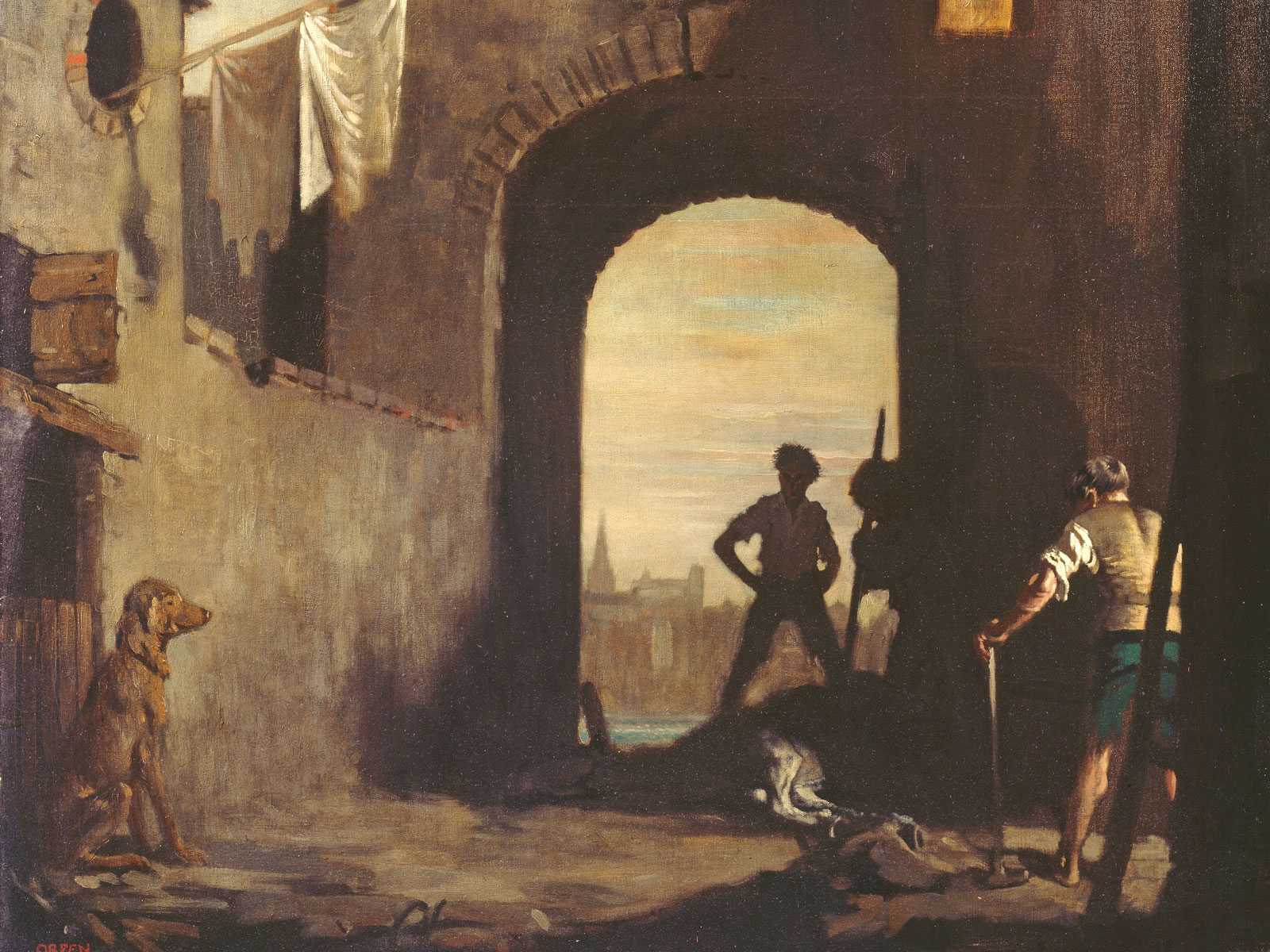
Kenneth McConkey explores the use of archways in mise-en-scène works by artist William Orpen