Kenneth McConkey explores the use of archways in mise-en-scène works by artist William Orpen
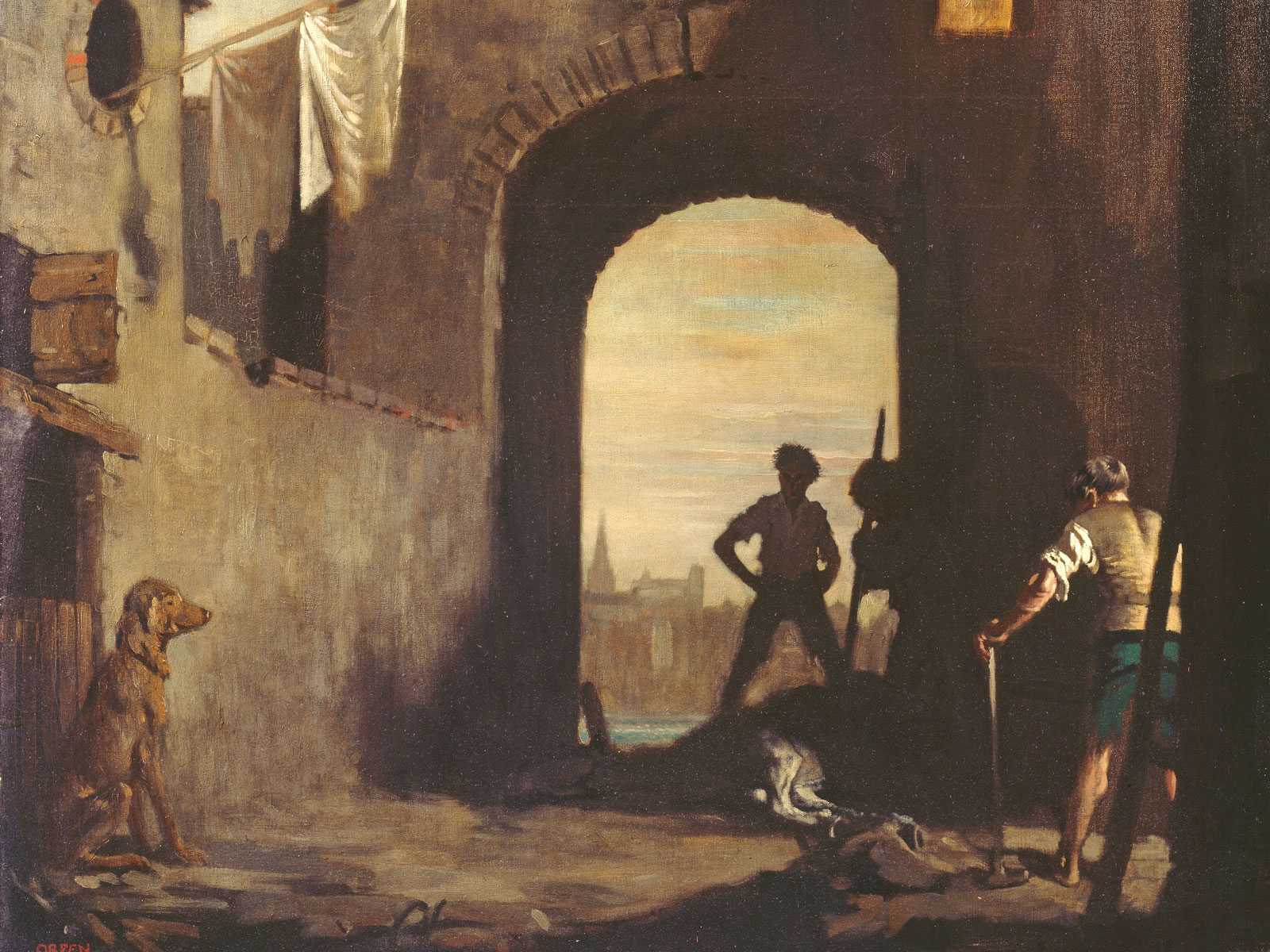
At the hands of a brute with a hammer, an old nag, pulled in from the quays, has met its maker. A couple of fellows, one poking the carcass with a stick, the other with arms and legs akimbo, condone the act. The horror of it all means nothing to the mangy hound that sits regally observing the scene, and which will no doubt be a beneficiary of the carve-up. Above the action, like tattered standards from a long-forgotten war, rags are hanging out to dry under a warehouse gibbet and, over the arch, washed by the weather, is a crude, degraded armorial. This is William Orpen’s The Knacker’s Yard, Dublin – one of his most evocative and carefully conceived paintings (Fig 2). Loosely based on the Merchants’ Arch leading from Dublin’s Temple Bar to the River Liffey, Orpen reduced its height and created a yard from what was and remains a narrow passageway. Although the proportions are much closer to the original in a drawing of two years earlier (Fig 1), Orpen’s introduction of a proscenium or second arch curving the top corners of The Knacker’s Yard makes theatre of the scene and separates it from reportage of the kind we would expect from Walter Osborne, for example. Sarah Purser proposed its purchase from Captain R Langton Douglas on 4 April 1934 for £400. Langton Douglas originally paid the artist £250. Despite the fact that Douglas’ purchase is recorded for 1915, the work was reported sold in 1911.
To read this article in full, subscribe or buy this edition of the Irish Arts Review
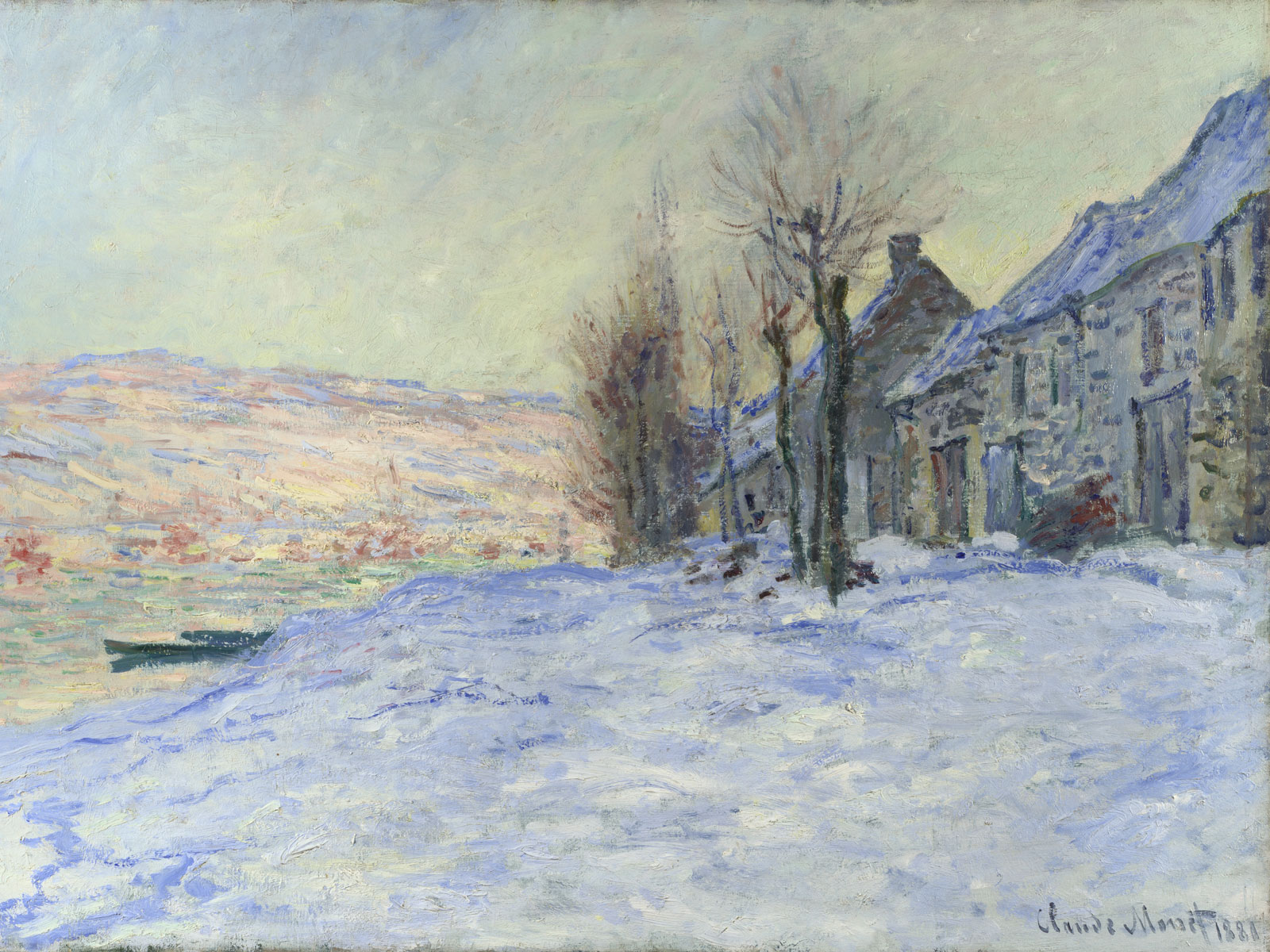
Barbara Dawson selects Lavacourt under Snow by Claude Monet (1840–1926)

Ann Wilson examines Kitty O’Brien’s Crossing the Bar, a composition in stained glass that functions as a metaphor for hope
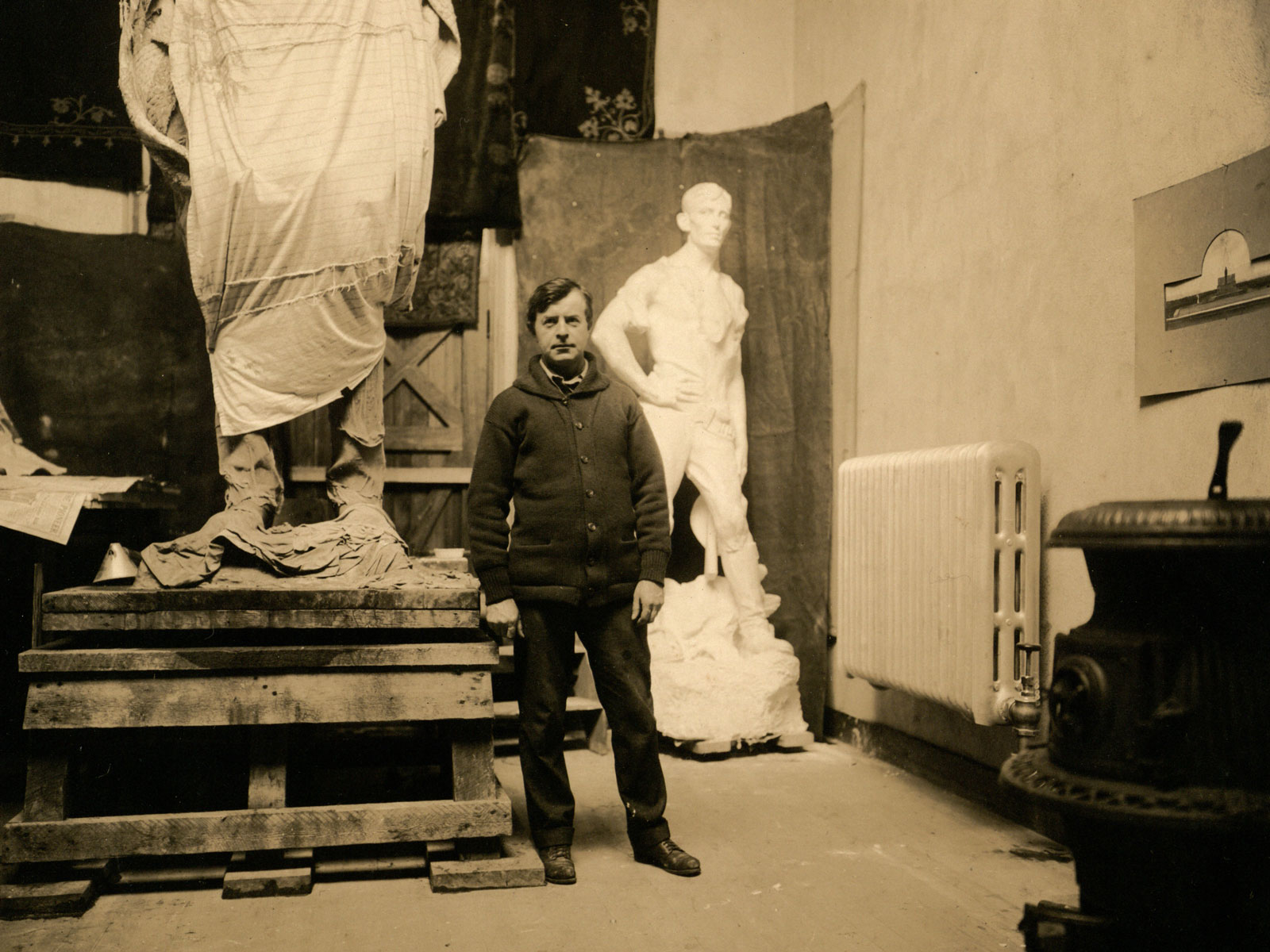
Irish-American sculptor Andrew O’Connor’s public artworks were often too audacious for the people who commissioned them, finds Paula Murphy