
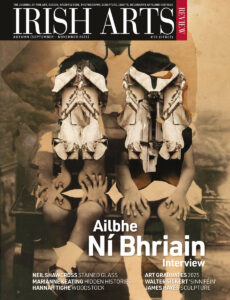
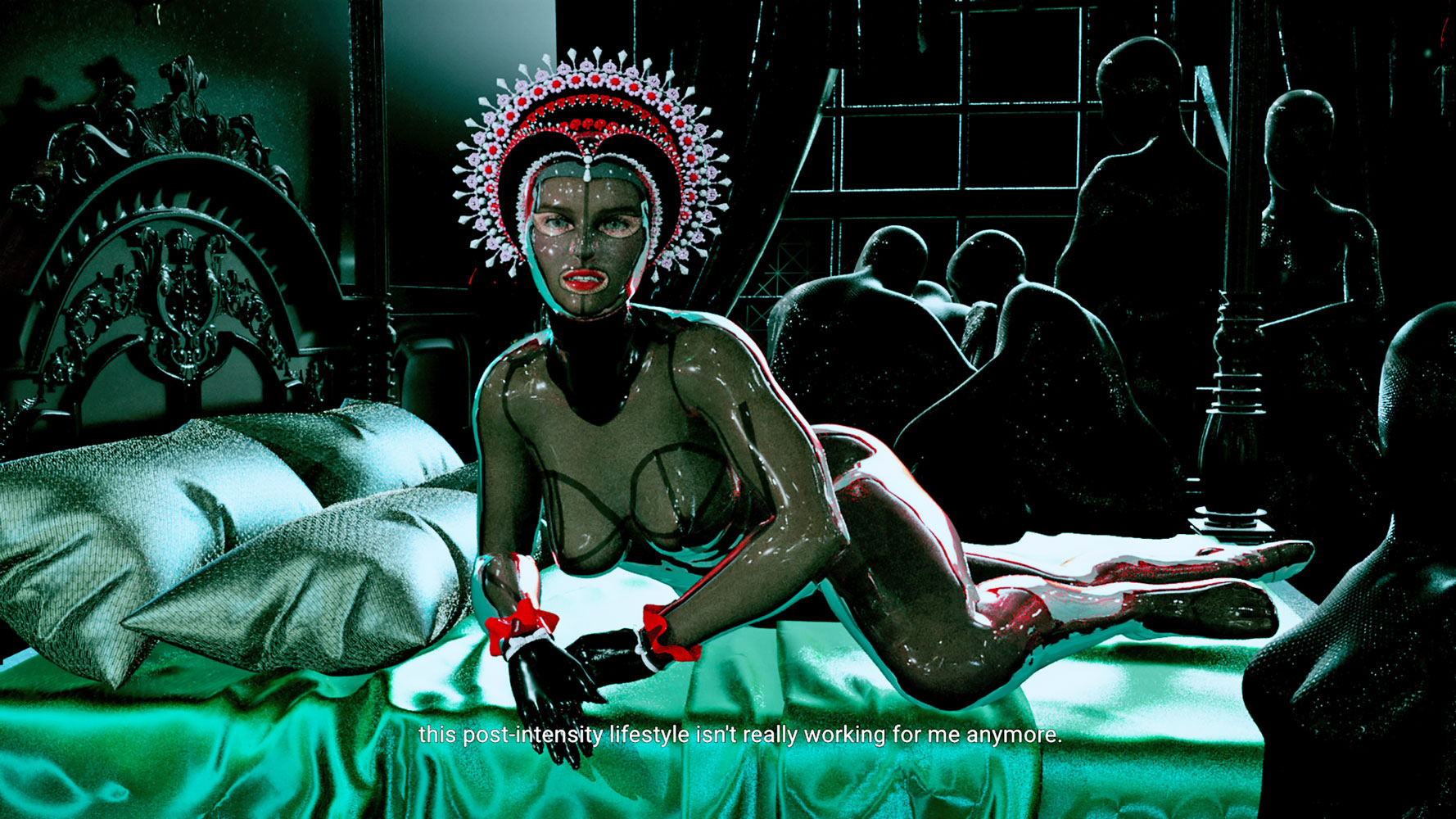
Aidan Dunne talks to Ailbhe Ní Bhriain, in whose new exhibition period images are spliced together in vistas of subterranean worlds
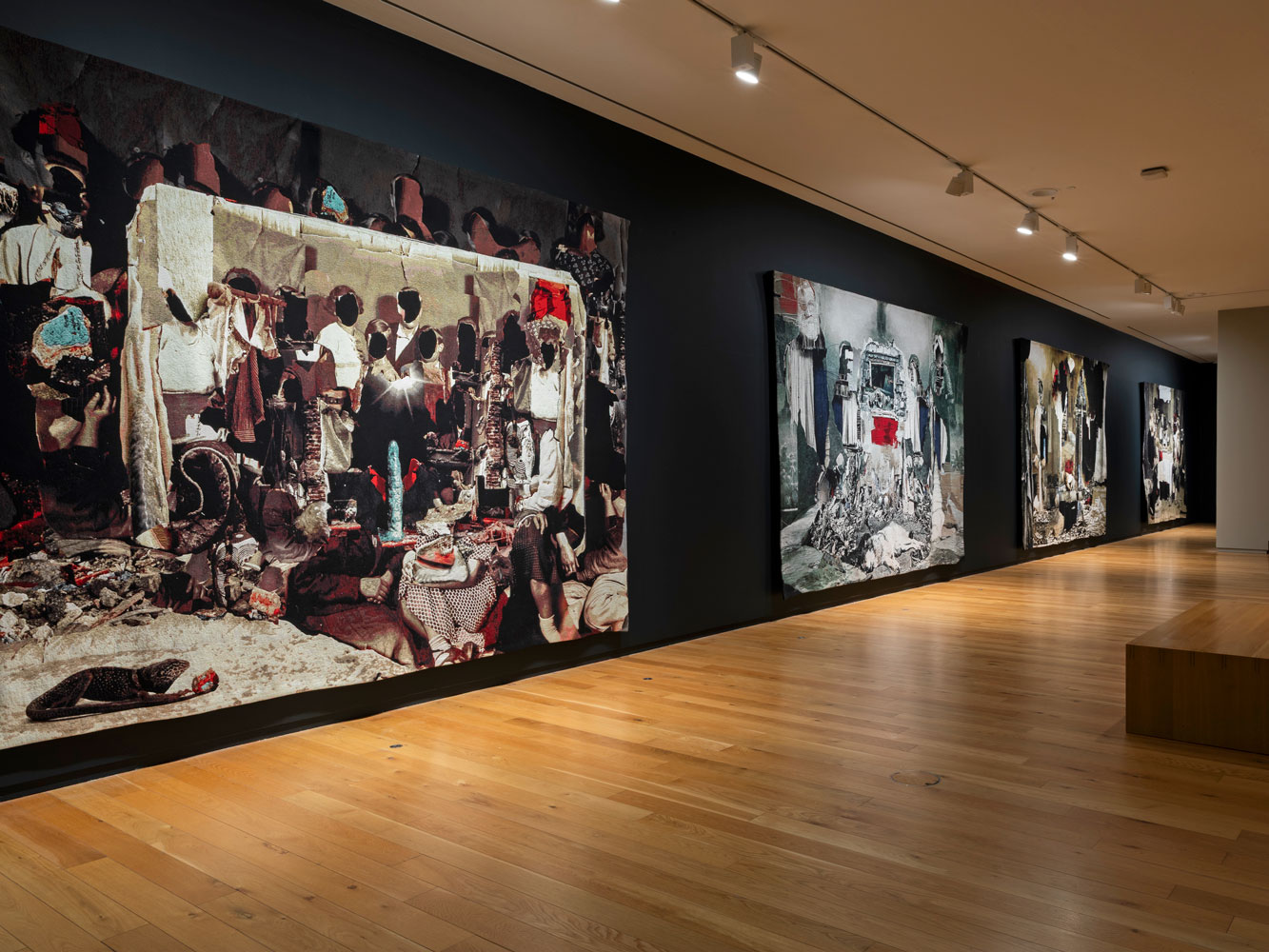
Aidan Dunne: Five large Jacquard tapestries dominate your exhibition ‘The Dream Pool Intervals’. Your works with video and film are in a way the opposite of tapestry, in that, with those, you press a switch and it captures images, whereas tapestry is slow and cumulative.
Ailbhe Ní Bhriain: It’s funny you say they are opposite in that way. In my experience, putting together a film is excruciatingly slow, so slow that you can doubt ever reaching the end point. And, when you’re working with CGI (computer-generated imagery), it’s all intangible. You trust that it’s all there somewhere, but it could go ‘puff!’ and you’ve nothing. Whereas tapestry has this physical reality to it, which I like. So, for me, it’s not a temporal contrast so much as a contrast in levels of materiality. I have a yearning for materiality – I think all the more so when I’m using CGI a lot. You feel so remote from any material presence. I’ve been drawn to several early technologies, including early computer technology, for that reason as well, when it was very physical, mechanical, like the Colossus computer used by the codebreakers at Bletchley Park during World War II, which I’ve used in my work (it appears in Inscriptions IV and elsewhere). And of course, the Jacquard loom itself. That was in a sense one of the first computers, as it was programmed with sets of punch cards in binary code.
To read this article in full, subscribe or buy this edition of the Irish Arts Review
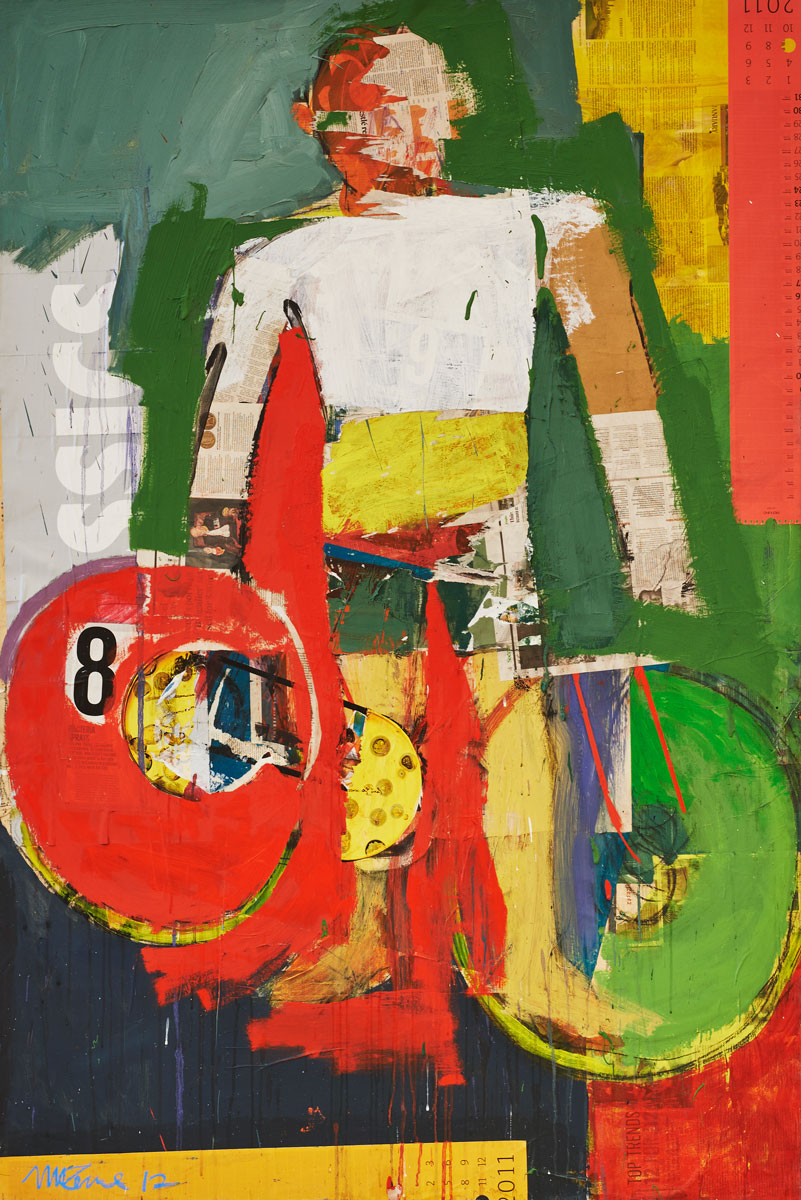
From 1960, when a chance meeting with Cecil King led to his work being included in a show at the Ritchie Hendriks Gallery, Dublin, Michael Kane was a formidable, indomitable presence in Irish cultural life.

Emer McGarry considers the work of Marianne Keating, which brings to light overlooked stories of Irish migration, labour and resistance
The exhibition treats the archive as a tool for building new futures, writes Seán Kissane