The most ambitious exhibition of Paul Henry’s work to be seen in Dublin is currently on view at the National Gallery’s Millennium Wing; in this essay, guest curator, S B Kennedy shows how the artist imbued his interpretation of the Irish landscape with a timeless yet emphatic cultural identity
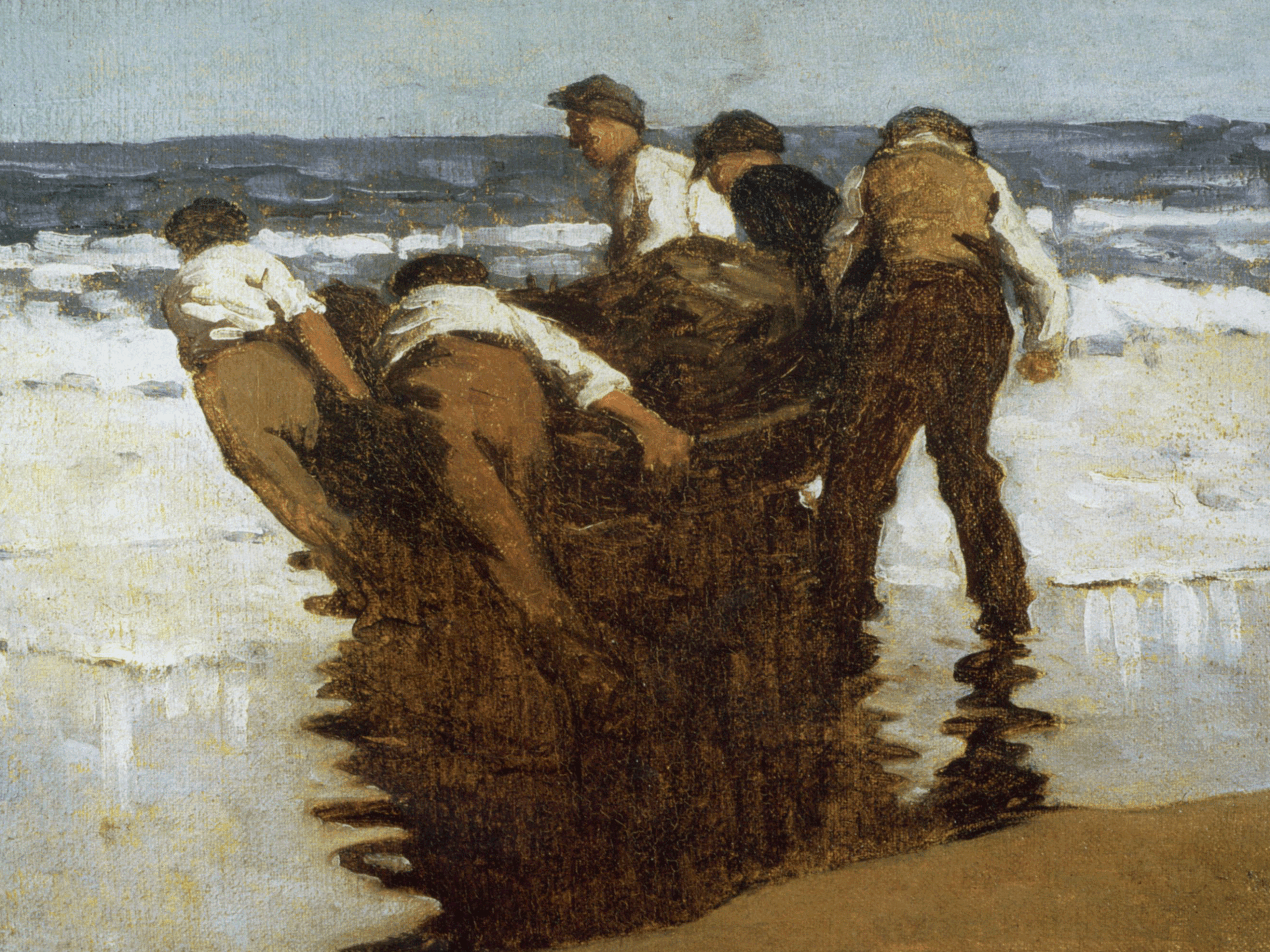
Paul Henry (1876-1958) was the most influential landscape painter working in Ireland in the 20th century. His fame, both during his lifetime and since, is based on his interpretation of the landscape, particularly that of the West. When Henry died in 1958 the critic James White went so far as to suggest that he was ‘probably the most important Irish painter of his generation’. His canvases, he said, having become the ‘prototype of Irish scenery in the imagination of the world’.¹ Since then it has become almost a cliché to assert that it is virtually impossible to see the West of Ireland other than through Henry’s eyes