
Hughie O’Donoghue’s commission for the Lady Chapel at Westminster Abbey by Peter Murray
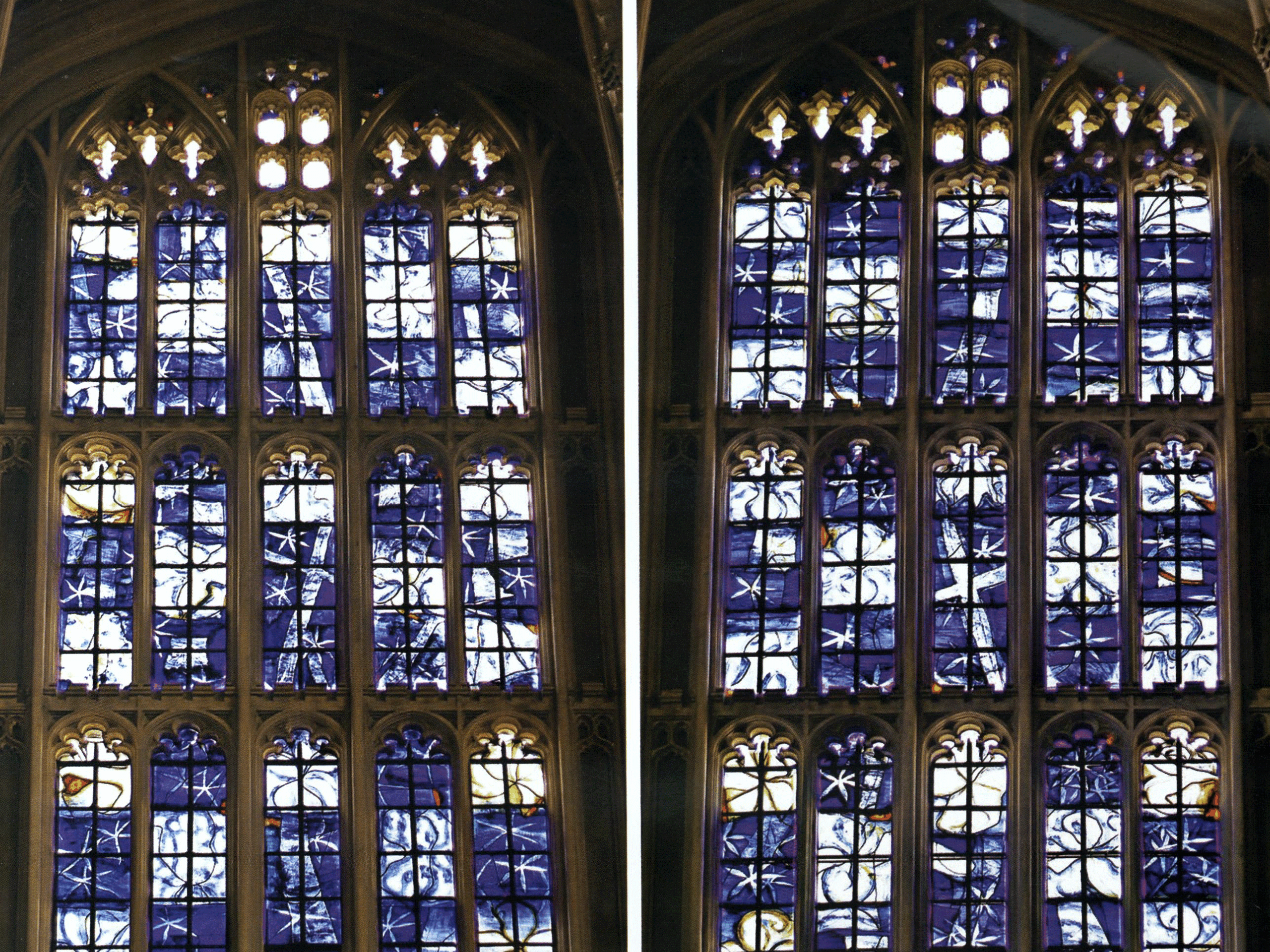
The installation of a new set of stained-glass windows in the Lady Chapel at Westminster Abbey, a notable event in the history of British art, is important also in an Irish context, as the artist who designed the new windows, Hughie O’Donoghue, has close associations with both countries. Dating from the first decade of the 16th century, the Lady Chapel, commissioned by Henry VII, was described by his biographer Francis Bacon, as one of the Statlyest and Daintiest monuments of Europe, both for the Chappell, and for the Sepulcher.· With its vaulted ceilings fanning out into complex geometric patterns, the Lady Chapel is one of the finest examples of late Perpendicular Gothic. Queen Elizabeth I was buried there in 1603, and some four centuries later, to celebrate the 60th anniversary of the coronation of Queen Elizabeth, O’Donoghue was commissioned to design a set of windows to replace originals destroyed in World War II. On the night of 10 May 1941, during the heaviest German air raid of the Blitz, as the House of Commons burned and the medieval roof timbers of Westminster Hall caught alight, fire crews succeeded in saving the nearby Abbey, although it suffered considerable damage. Restoration has taken many years, and the installation of O’Donoghue’s windows represents one of the final pieces of the jigsaw being put into place.
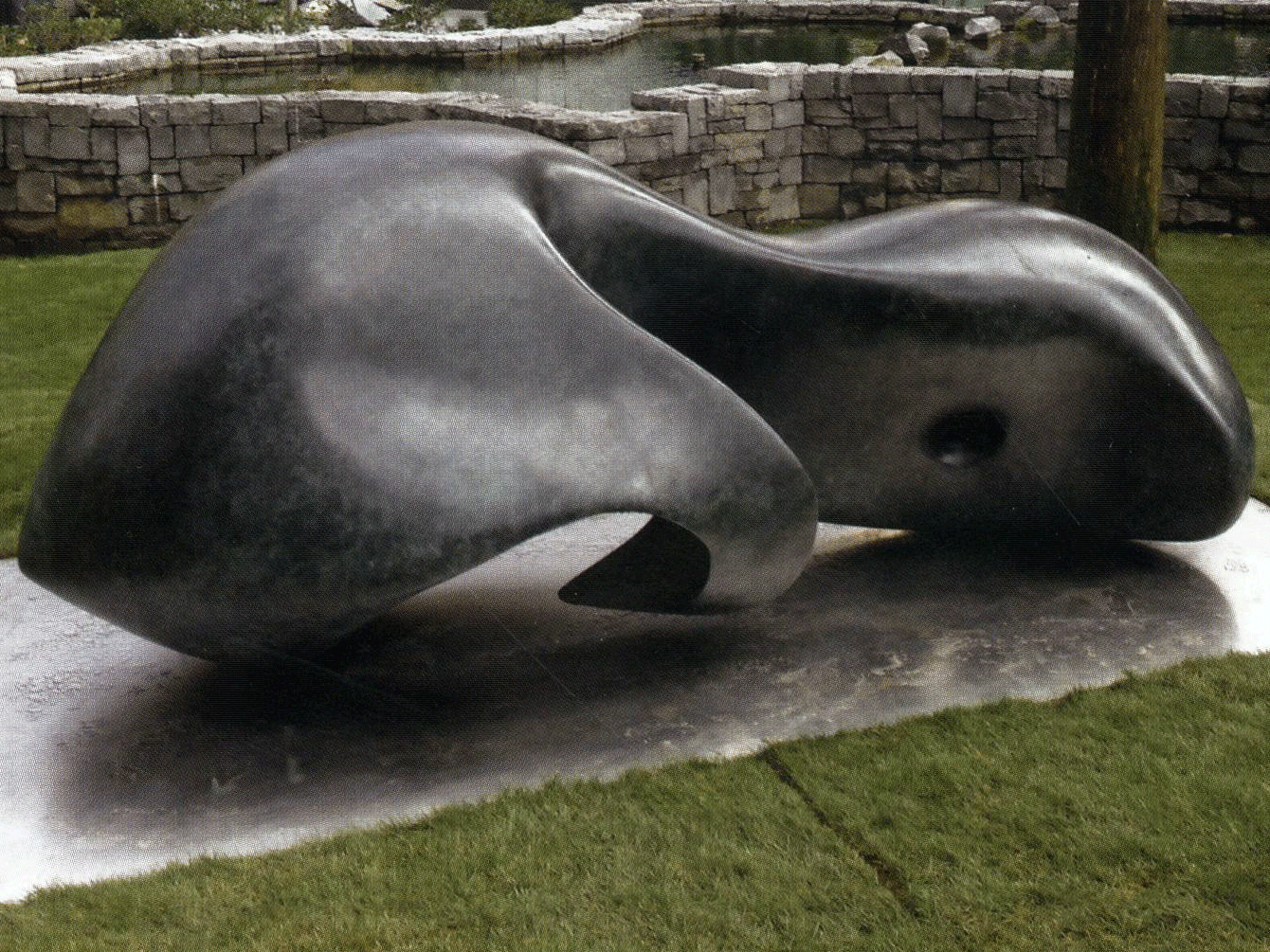
What is it about the work of the Irish sculptor Eilís O’Connell that has led to her having created, in this most difficult and masculine medium, over thirty permanent site-specific installations in Britain and Europe, including the sensual, orchid-like Unfurl (Fig 1), a bronze commissioned by Kensington Borough Council and the residents of Kensington Gate, to celebrate the Millennium?
O’Connell subtly combines a number of different elements that give her work both a sense of physical vitality and poetic metaphor. It is monumental yet intimate, atavistic yet contemporary. From discarded agricultural tools to birds’ nests and whale bones she appropriates the quotidian and the natural to create dynamic forms in stone, steel, resin, plaster and bronze. Like her poetic compatriot, Seamus Heaney, O’Connell looks to the archaeology and topography of her Irish homeland for inspiration but the ideas she finds there are filtered through a considered relationship to architecture and geometry. The work is never soft: emotion is always tempered by intellect and painstaking technique to combine something of the muscularity of Richard Serra with the female sensibility of Barbara Hepworth. Science and mathematics meet the natural world within her organic and biomorphic forms. Inside and outside coalesce. In the layered and slippery space of contemporary culture she has created objects that generate a unifying narrative and suggest a philosophy of interdependence rather than of confrontation, an openness and desire for contact and inclusivity, rather than a brittle postmodern autonomy, which unapologetically recalls the timeless resonances of Brancusi.
Anne Hodge and Peter Harbison examine the visual evidence of Daniel O’Connell’s unusual conditions of imprisonment in the Richmond Bridewell, Dublin
Ursula Burke, Emma Donaldson and Deirdre McKenna explore the mutable topic of time at the F E McWilliam Gallery, Banbridge. Claire Dalton looks at their responses