
Hilary Pyle remembers Maria Taylor, a painter interested in people, in their occupations and ways of life
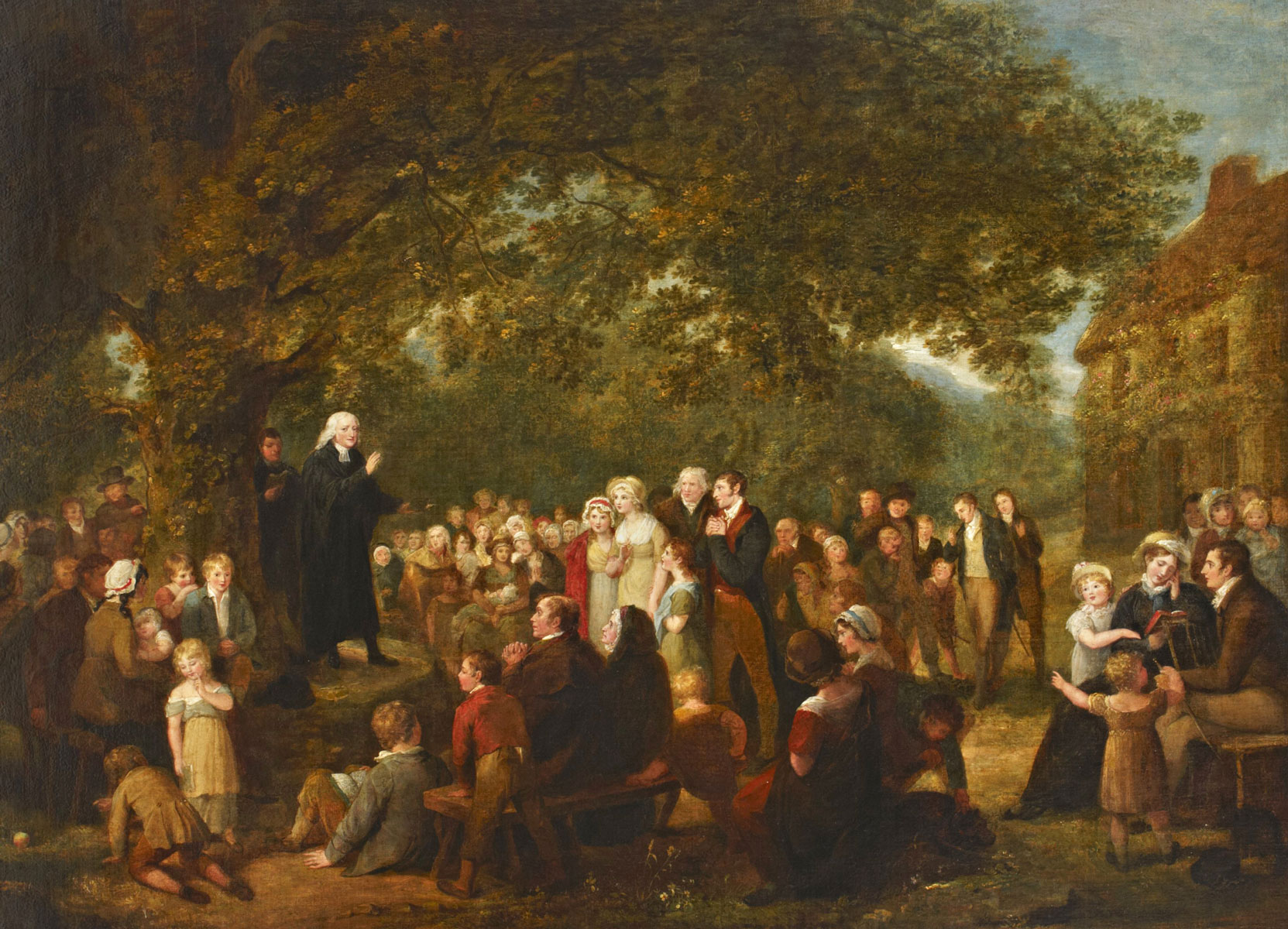
This year marks the 250th anniversary of the birth of the British painter Maria Taylor (Fig 2), who spent perhaps the most significant years of her career in Ireland. She had visited as a child, but when she came again as an adult she was so taken by the landscape and the people that she planned to remain here. Some of her most striking paintings were made in Co Wicklow.
Maria Spilsbury was favoured at birth. Born in London in October 1776, she quickly showed her talent as an artist and she shared her mother Rebecca’s gift for music. Her father, Jonathan Spilsbury (1737–1812), well known for his mezzotints of major contemporary portraits, had established his engraving business in St George’s Row, overlooking London’s Hyde Park, an area that attracted artists. His devotion to the Moravian faith, and the new Wesleyan version that was rapidly developing in England as Methodism, brought him many friends and he built up a network of influential contacts, which included royalty. Rebecca did not agree with the Moravians, whom she found fanatical. Both she and Maria were expelled from the church for nonattendance at worship. Methodism, with its emphasis on love without discrimination, was what appealed to them.
To read this article in full, subscribe or buy this edition of the Irish Arts Review
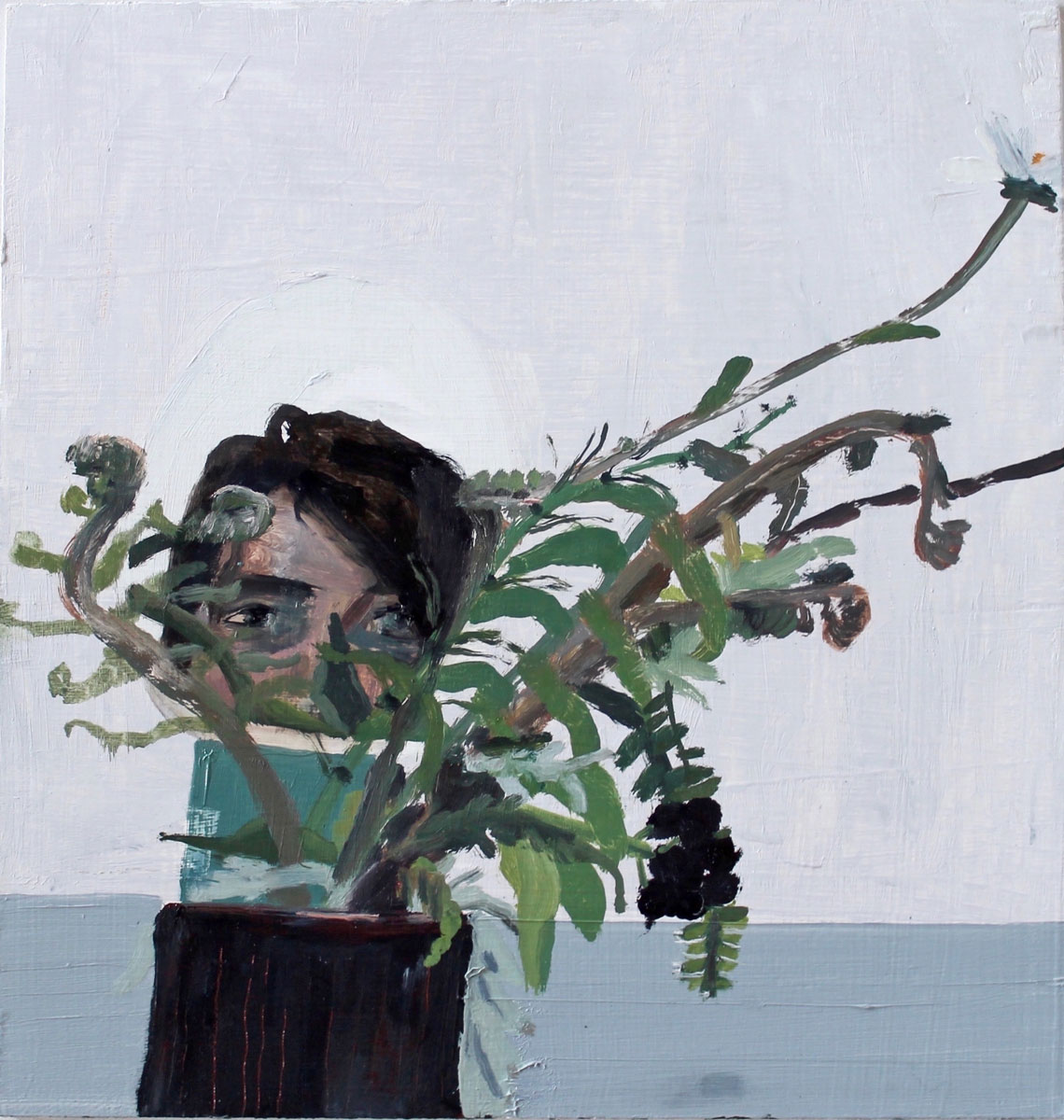
Úna Forde selects a painting by Aubrey Levinthal in the collection of the Ballinglen Arts Foundation in County Mayo
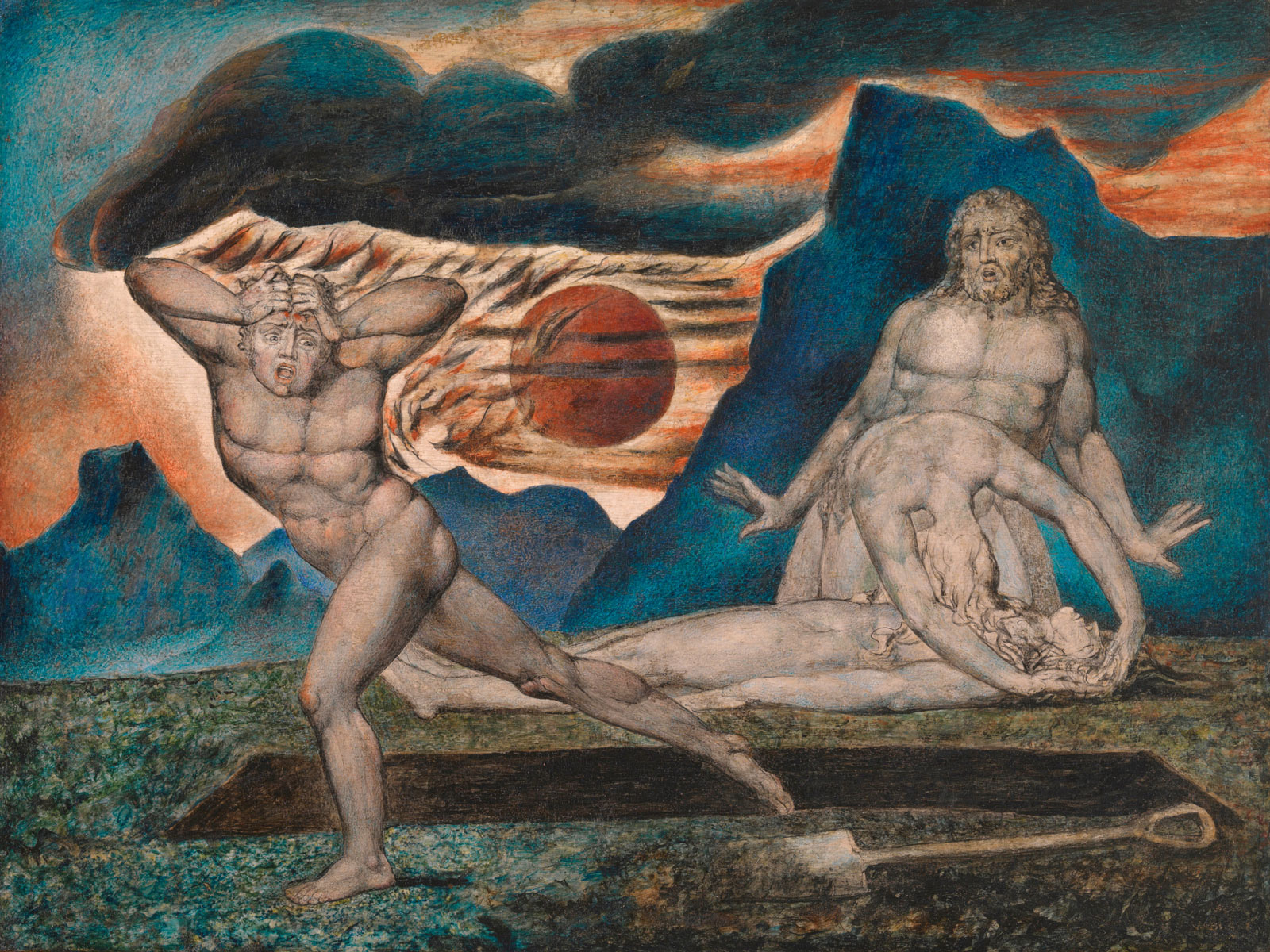
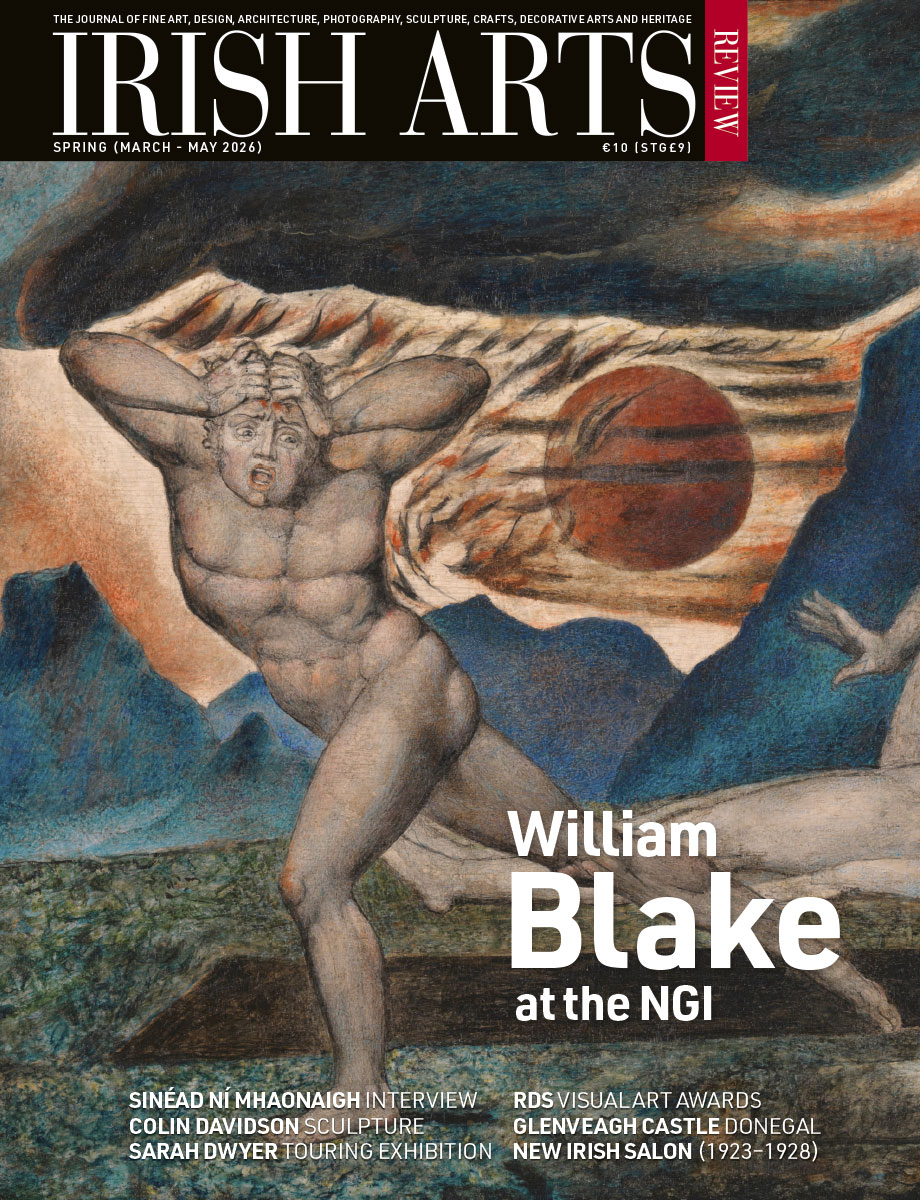
John Hutchinson considers the work of artist William Blake who was drawn to transcendence but spoke out for social freedom
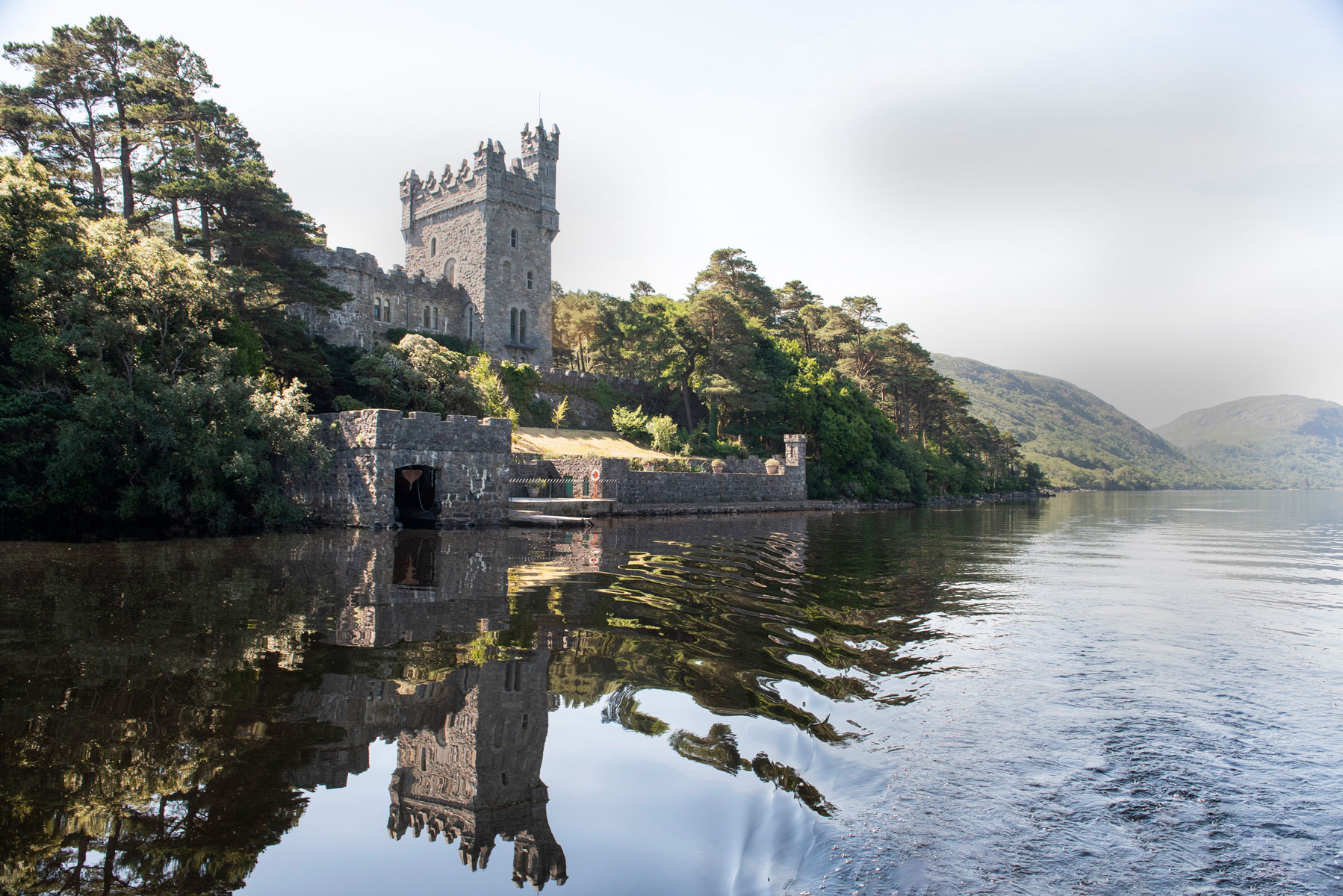
Terence Reeves-Smyth visits the castle and gardens of Glenveagh in County Donegal and charts the history of this romantic hideaway