‘We’d been brought up with the notion that society progressed, from the Mayans and the Incas up to us, but we are still as superstitious, we still create false gods and we are still suspicious of people who are different from us,’ Jack Pakenham tells Brian McAvera ahead of his exhibition in Dublin
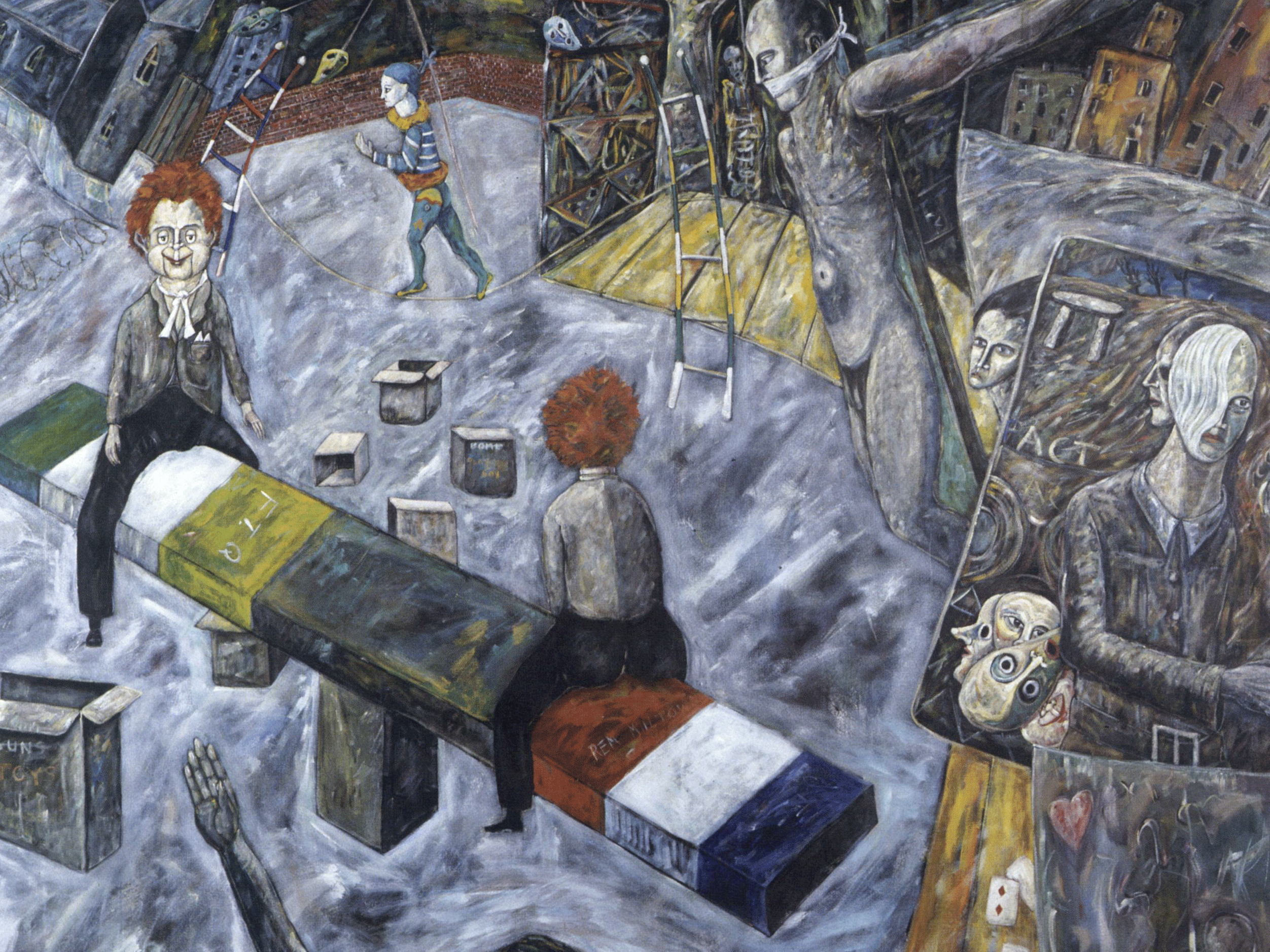

Brian McAvera: Your very early work (in the 1960s the mask-like faces, the emaciated figures, the existentialist atmosphere – the Naked Ape really) seems to me to contain the seeds of your future work – the masks reappear in the Doll series for example. How far do you think that your basic concerns, both stylistically and thematically, were in place before the onset of the Troubles?
Jack Pakenham: I think art is a matter of temperament. You carry that with you, no matter where you are. Early on, during that period in the 1960s when everyone was talking about a nuclear war, I was very pessimistic. It seemed to me that we were an incredibly foolish animal, intent on self-destruction. Some of that generalised feeling became more concrete when the Troubles arrived: they reinforced what I had been feeling about humanity.
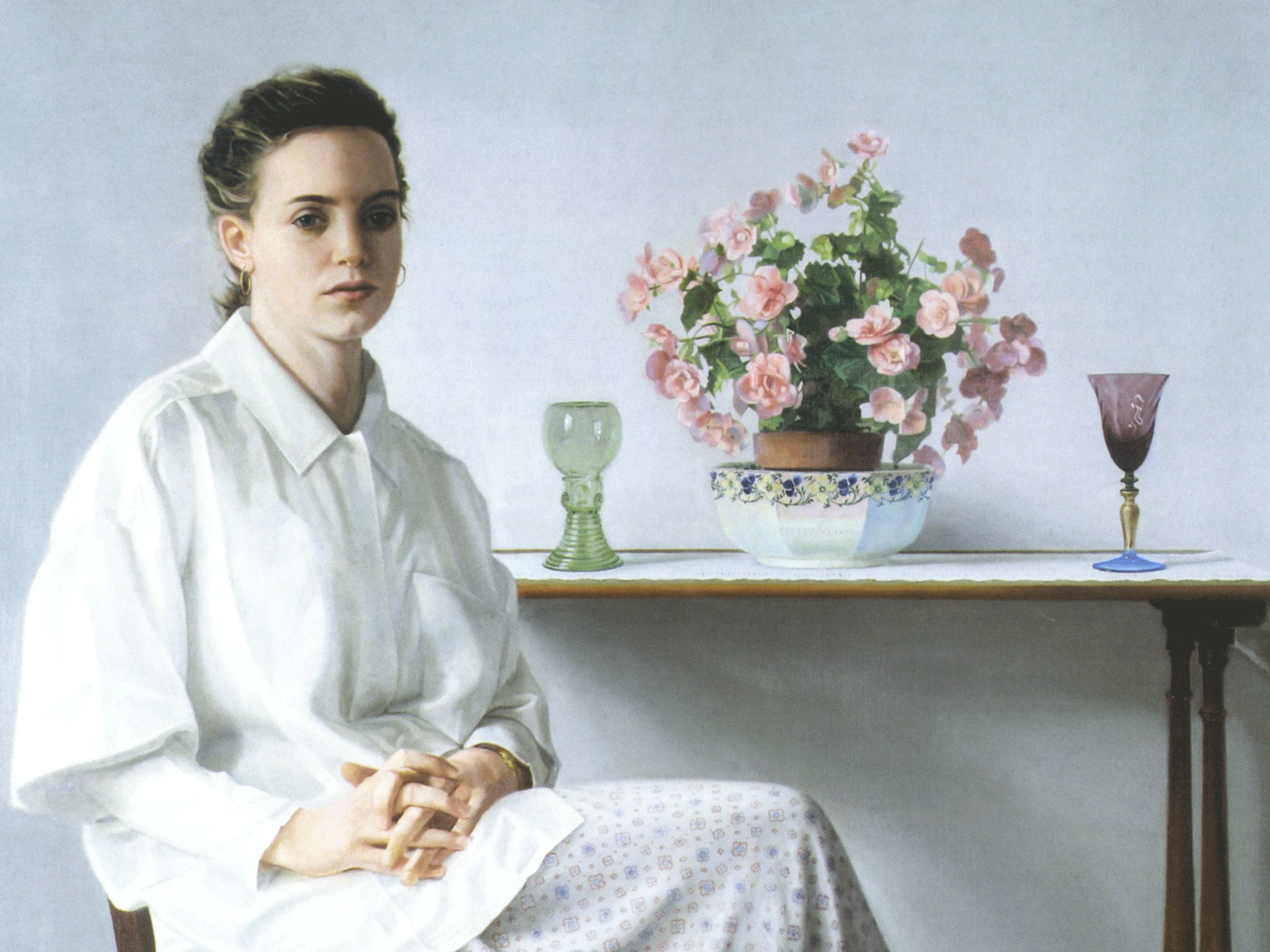
Róisín Kennedy discusses Carey Clarke’s Portrait of My Daughter, Michelle, the winner of the Ireland-US Council Portrait Prize at the 178th RHA Annual Exhibition
Riann Coulter finds a personal compendium collated with daring and vigour, in Basil Blackshaw’s work