Brian McAvera talks to Martin Gale about his approach to painting, his influences and his relationship with the Irish landscape
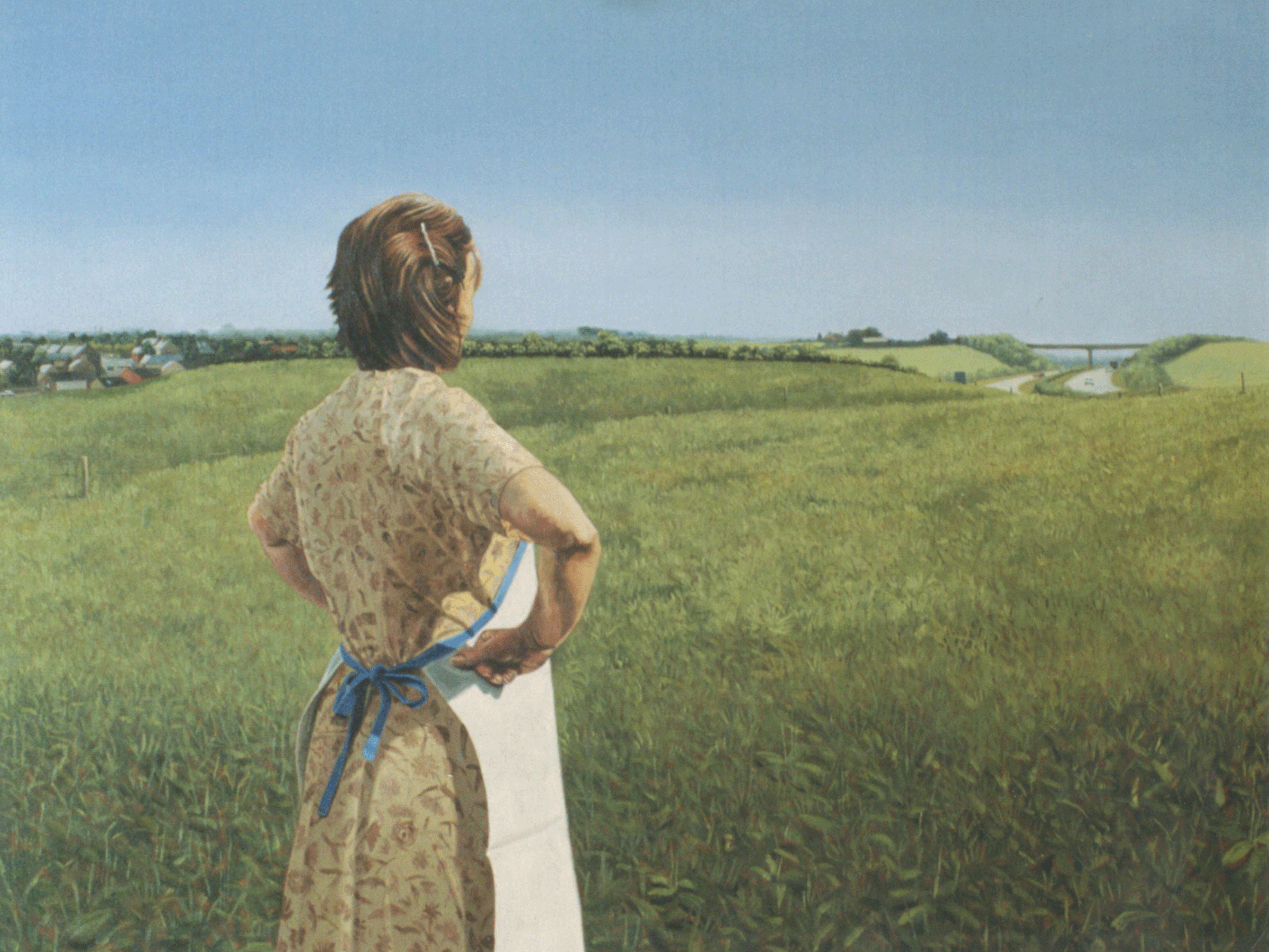
Brian McAvera: In At The Landing (Fig 9), the prow of a small dingy almost splits the bottom of the picture frame as its rear-end dips into a limpid pool which reflects the sky. Behind that, rows of forestry-planted trees – like a railing encasing the dark penumbra – look down on a parked car whose door is wide open. Two children have wandered out; no adult is in sight. Like Robert Frost’s poem Stopping by Woods an uneasy quietude is conveyed: the possibility of innocence contaminated by experience. Here, the virtuoso technique reaches out to metaphor. Is this your specific and general intention?
Martin Gale: More often than not, it is really. Nearly all my paintings contain the ingredients from which one or more possible narratives can be drawn. In this case we have a forest, a dark stretch of water, a boat, two children and a car. So several readings of the situation are possible. Also, I think having no visible sky adds a sense of claustrophobia and unease. The aim is to try and involve the viewer and allow room for them to bring something to the painting. Most of my paintings from that era, the early to mid 1980s, had an autobiographical basis. That was a difficult period as my wife and I had just parted and there was a lot of anxiety in the air. Inevitably that situation informed the paintings of that time. In one sense the painting was a contrivance, in that the actual scenario was set-up, but the situation was part of a real-life, lived experience.