
Kim Haughton’s portraits, on view now at the National Museum Collins Barracks, reflect on Ireland’s multi-layered society at the end of the first century of this nation state, writes Stephanie McBride


Award-winning photojournalist Kim Haughton is noted for her work with NGOs on issues of developing countries (Fig 2). Originally from Dublin and a graduate of Dublin Institute of Technology and London’s University of the Arts, she is now based in New York. Her work has appeared in such diverse international publications as Time, Vanity Fair, The Financial Times and Business Week. The Guardian featured an image of horses outside an empty house on a ghost estate from her ‘Shadowlands’ documentary series as emblematic of the Celtic Tiger’s collapse in 2007.
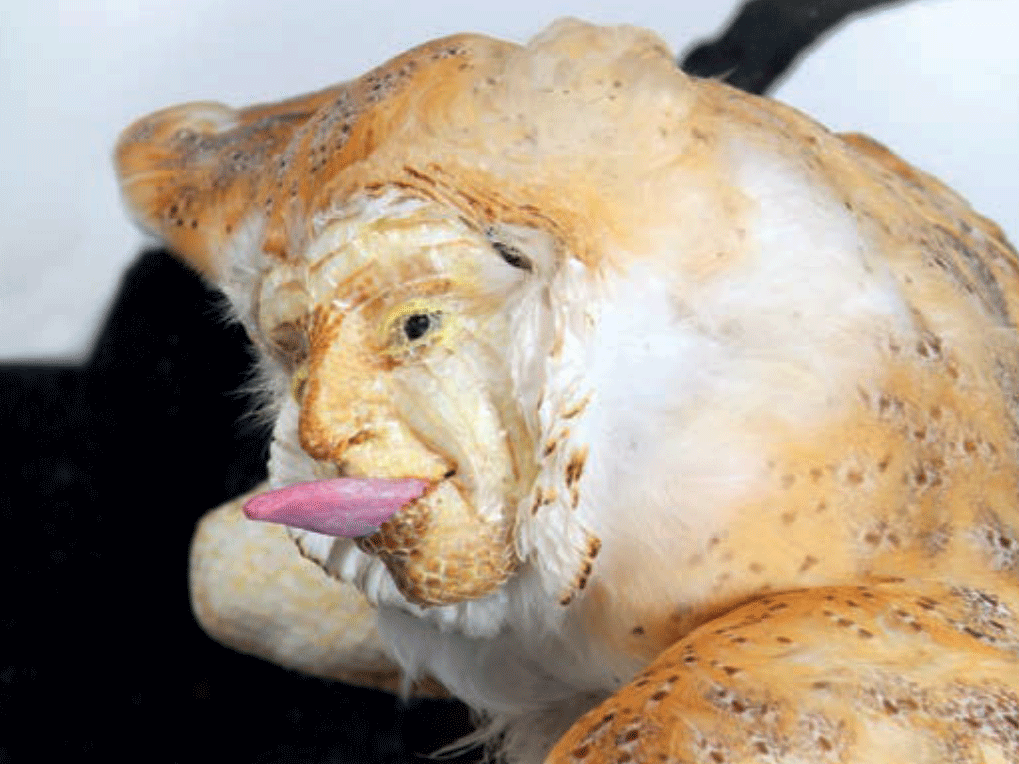
Mark Ewart visits the studio of Allihies-based artist Rachel Parry who transforms natural matter into mesmerizing art.

In terms of conception and achievement, historic demesnes as designed landscapes constitute the most inventive, monumental, and certainly the most complex of all artistic creations. The break up of estates through the concerted campaigns of the Land Commission, the commercially driven monocultural policies of the state forestry and latterly the incompatible demands of industrialized agriculture and stealthy spread of sterile golfing resorts means that these fragile and beautiful landscapes have come to represent the rarest and most endangered art forms. The 20th-century decline of the Dartrey demesne on the Monaghan – Cavan border might stand as one of the most egregious examples of the impacts of dispassionate and poorly conceived polices that conspired, wittingly or otherwise, to erase these creations, either in a heartbeat or with a slow and painful demise. It seems unlikely therefore that the same landscape should in recent years have become the focus of two major building restoration projects by a voluntary local community group working with state bodies, which has not only achieved the physical redemption of two exceptional works of classical architecture, but has also brought about greater awareness of the historical and cultural significance of Dartrey as a designed landscape of exceptional quality, and one worth preserving in spite of its degradation.