
Janet Mullarney’s belief in the power of materials to give life to ideas is seen in the art she has curated for Farmleigh Gallery, Dublin, on view this summer, writes Carissa Farrell
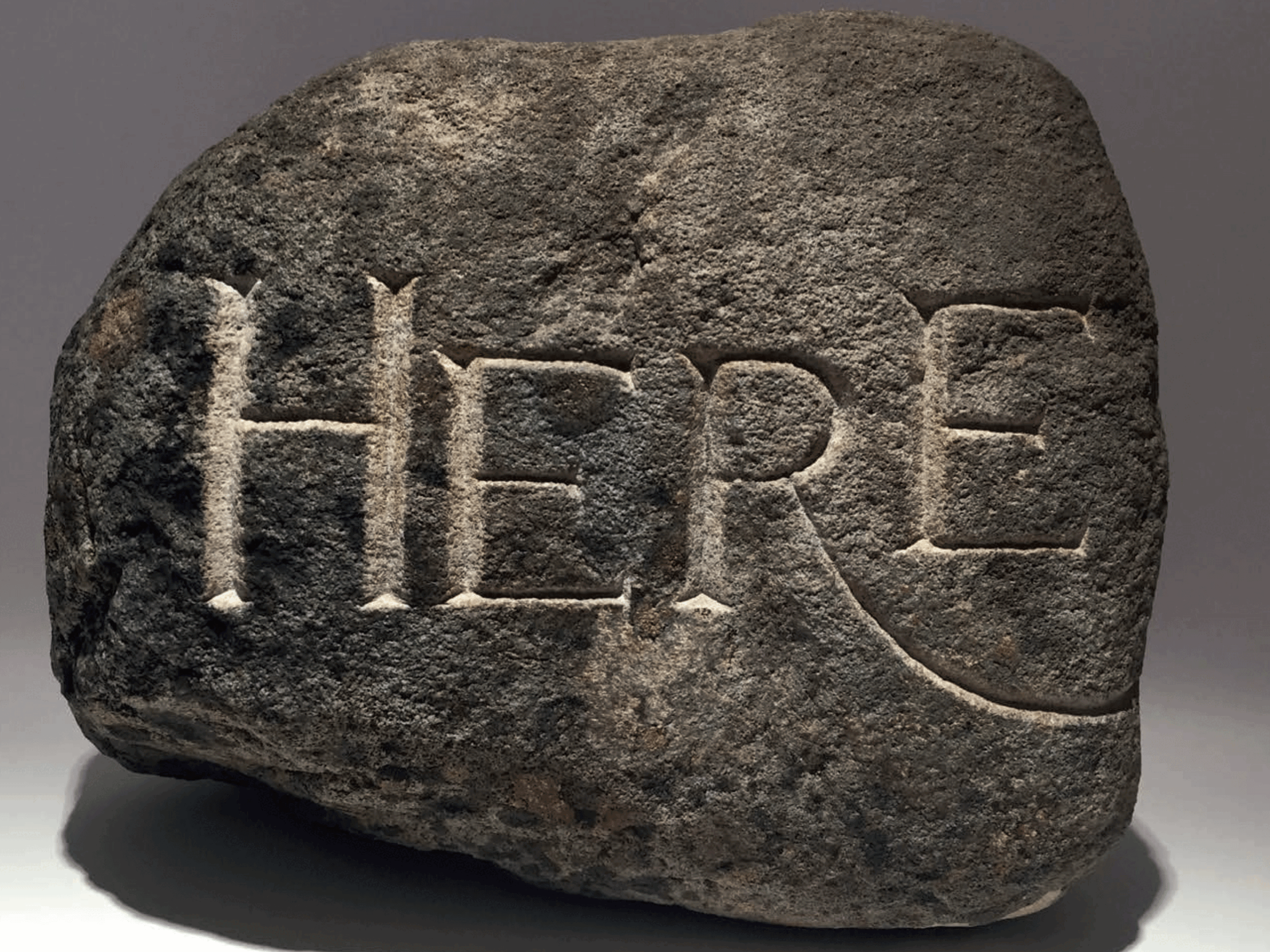
The phrase ‘two birds, one stone’ indicates the possibility of accomplishing two tasks with one action. The srone – or in this case, the art object achieves its artistic value not only by means of its physical condition but by the particular relationship between its material and 2 conceptual existence. Curator Janet Mullarney has brought together a selection of modest-sized works from twenty-three artists whose practice covers a three hundred-and-sixty degree spectrum of material and conceptual starting points. By arguing that ‘the material chosen is imperative to the final reading of the work’ she dispenses with any attempt at traditional thematic coherence in favour of a kind of museulogical (sic) study. It spans widely, from the rural mysticism of Alice Maher’s Staircase of Thorns to the early feminist practice of Dorothy Cross in Bedding, to John Gibbon’s obsessively compulsive compression andbinding of stainless steel in Africa, all the way through co more lofty explorations of material and form by artists such as Aleana Egan, Helen O’Leary and Maud Cotter, amongst others. Mullarney’s eclectic selection and forensic approach brings into focus how materials distinguish the best artworks.
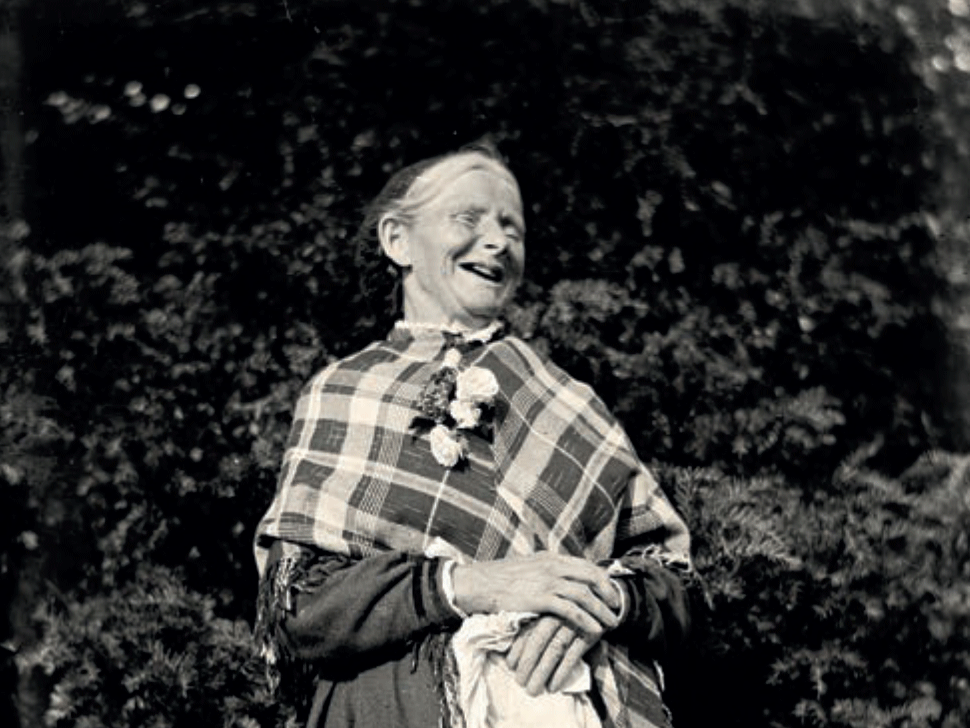
In recording the traditional attire of female estate workers, Augusta Caroline Dillon of Clonbrock House, Co Galway, seemed presciently aware that her images would become historical document, writes Christiaan Corlett.

George Berkeley is famous for his contribution to philosophical thought, but less well known for his observations on art, some of which Peter Murray examines here.

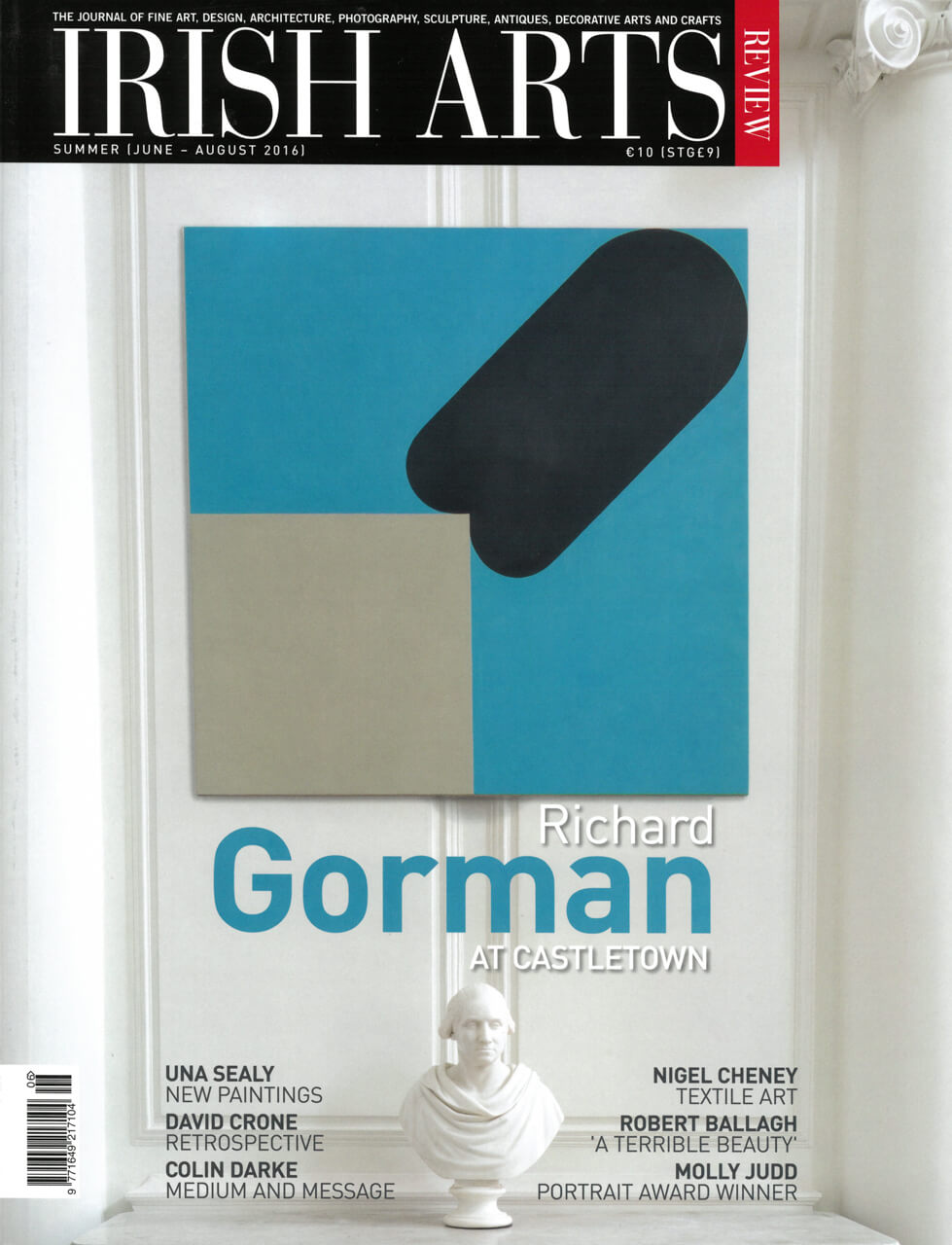
Richard Gorman is marking his 70th year with an exhibition at Castletown, Co Kildare where his colourful abstracts animate the walls of its classical interior, writes Jennifer Goff.