
New information on the woman in John Lavery’s portrait enables Margarita Cappock to reveal La Dame aux Perles

The latter half of the 1890s marked the beginning of a significant period in John Lavery’s (1856-1941) career with his reputation becoming firmly established. He exhibited regularly at all the major European salons and secessions. Lavery’s regular contributions to the Munich Glaspalast led to commissions from German collectors and although his permanent residence was in London, he rented a winter studio in Berlin. Kenneth McConkey notes that Lavery’s years in Berlin still remain obscure. Further confirmation of this is the mystery that has surrounded the sitter of one of Lavery’s most intriguing Berlin portraits, La Dame aux Perles of 1901, a work the artist himself considered so important that he produced a copy of it in the 1920s. The painting was exhibited at the Salon in Paris in 1901, at the Secession, Berlin under the title Rose und Perle in 1902, at the Scottish Royal Academy in 1904, and the inaugural exhibition of the Municipal Gallery of Modern Art in 1908 before Hugh Lane presented the work to the collection in 1910. This three-quarter length portrait depicts a woman wearing a magnificent gown with a low, plunging neckline. The string of pearls around the woman’s long neck and the rose in the fingers of her right hand gave the painting its onetime title Rose und Perle.
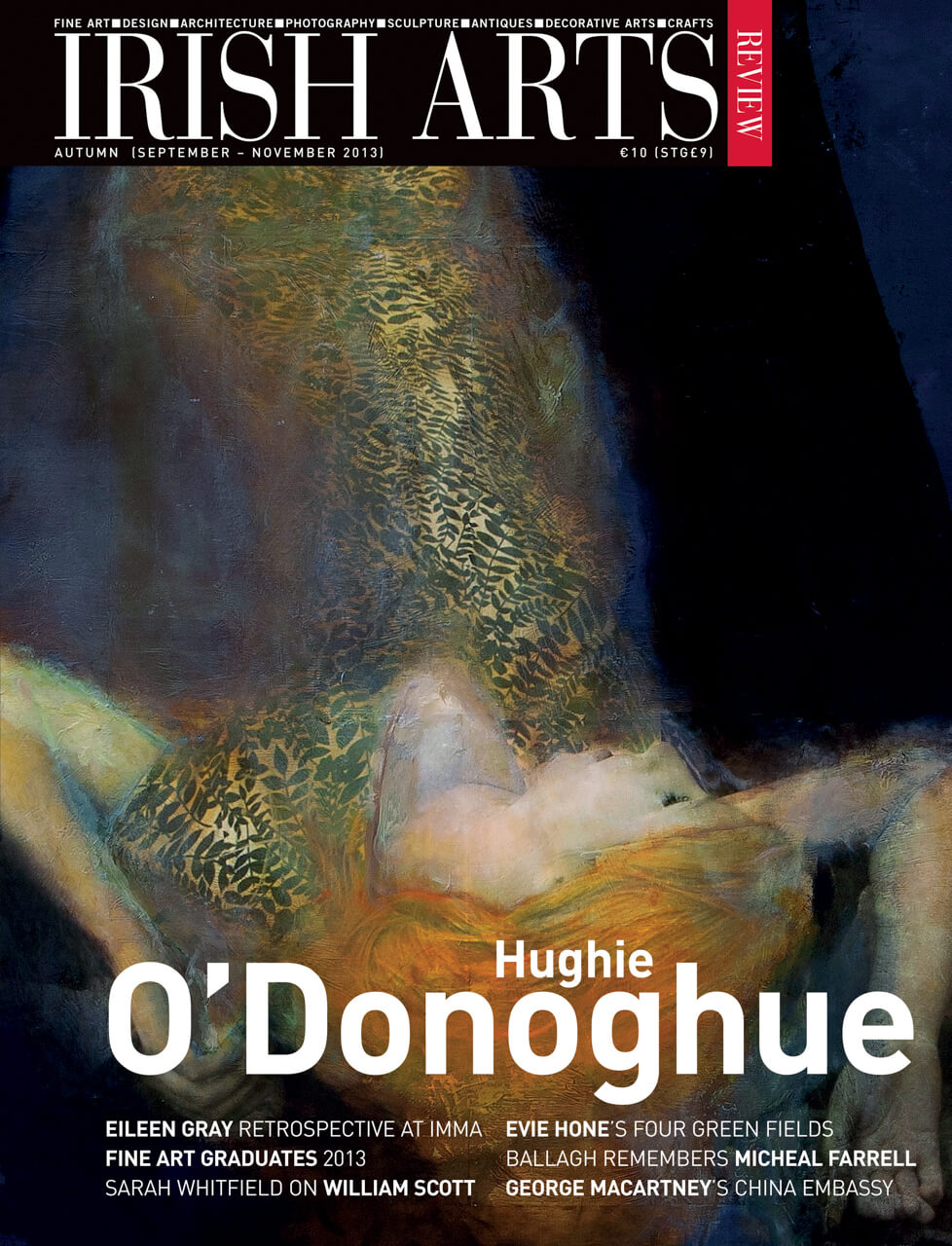
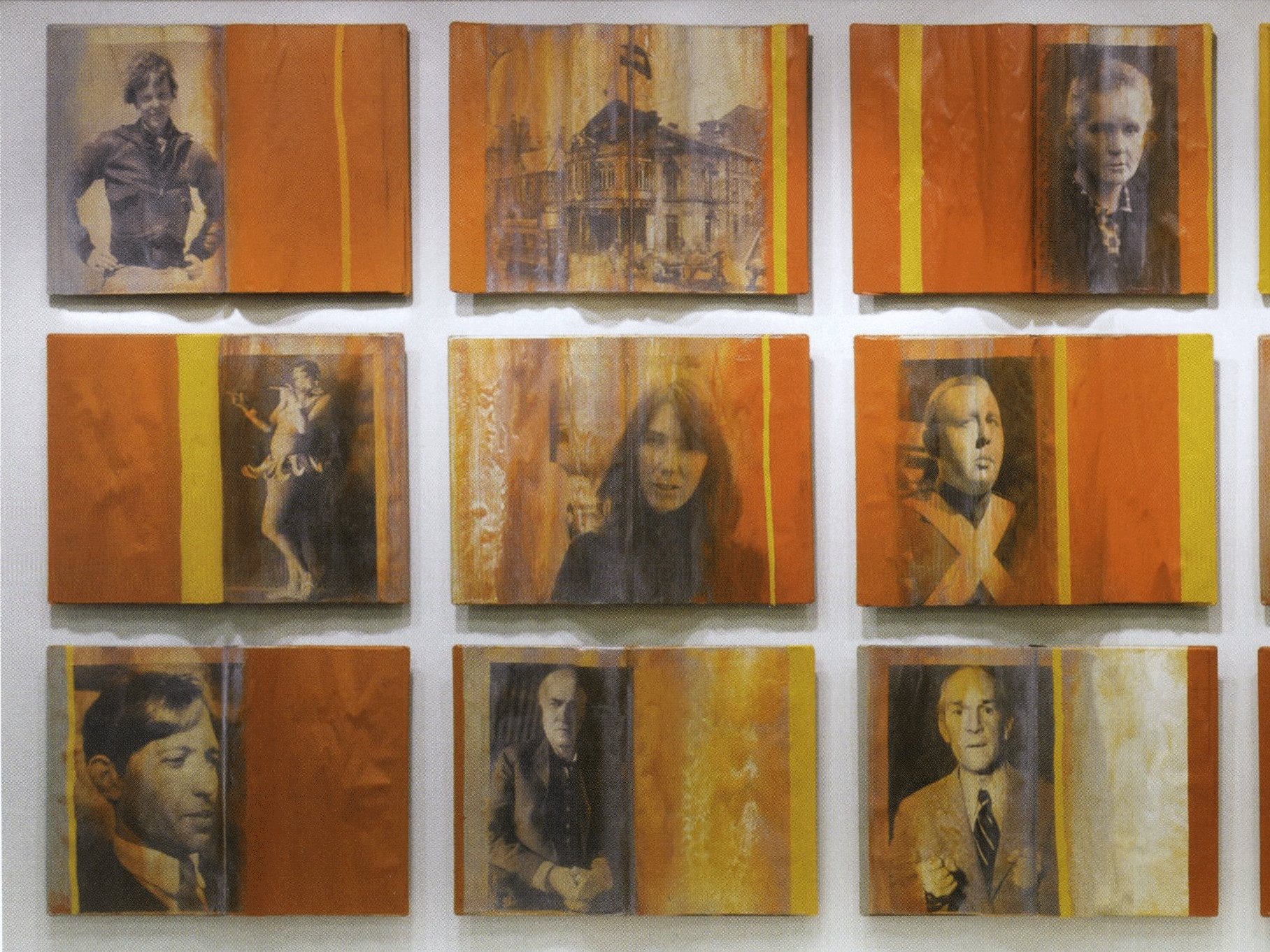
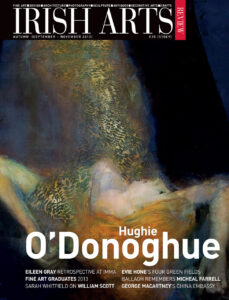
‘Culture is about sharing; Nationalism is about ownership.’ Hughie O’Donoghue encapsulates the chasm between the two concepts, in conversation with Brian McAvera
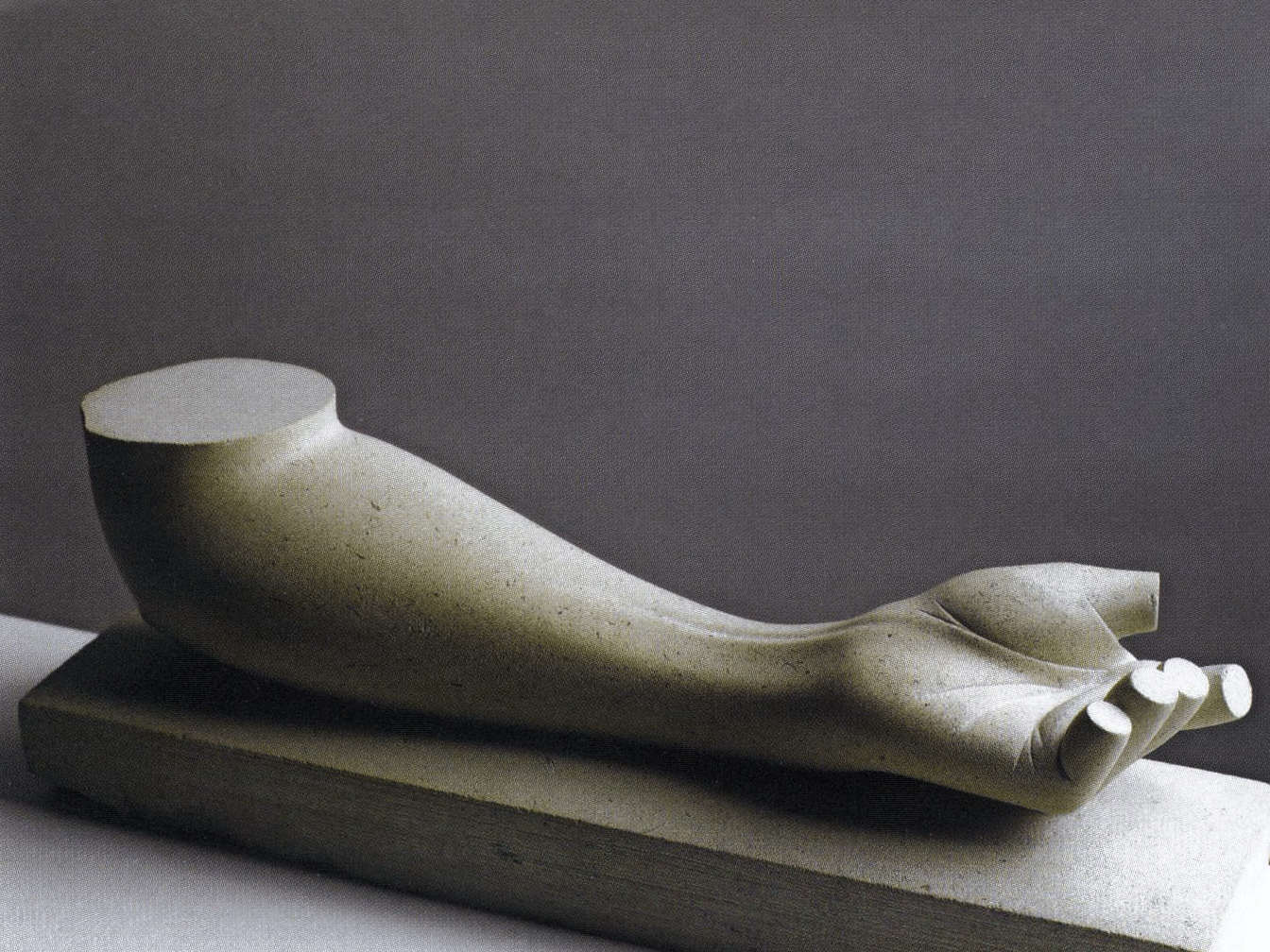
The study of fragments is second nature to Jason Ellis, writes Paula Murphy of the sculptor’s collection from last year.
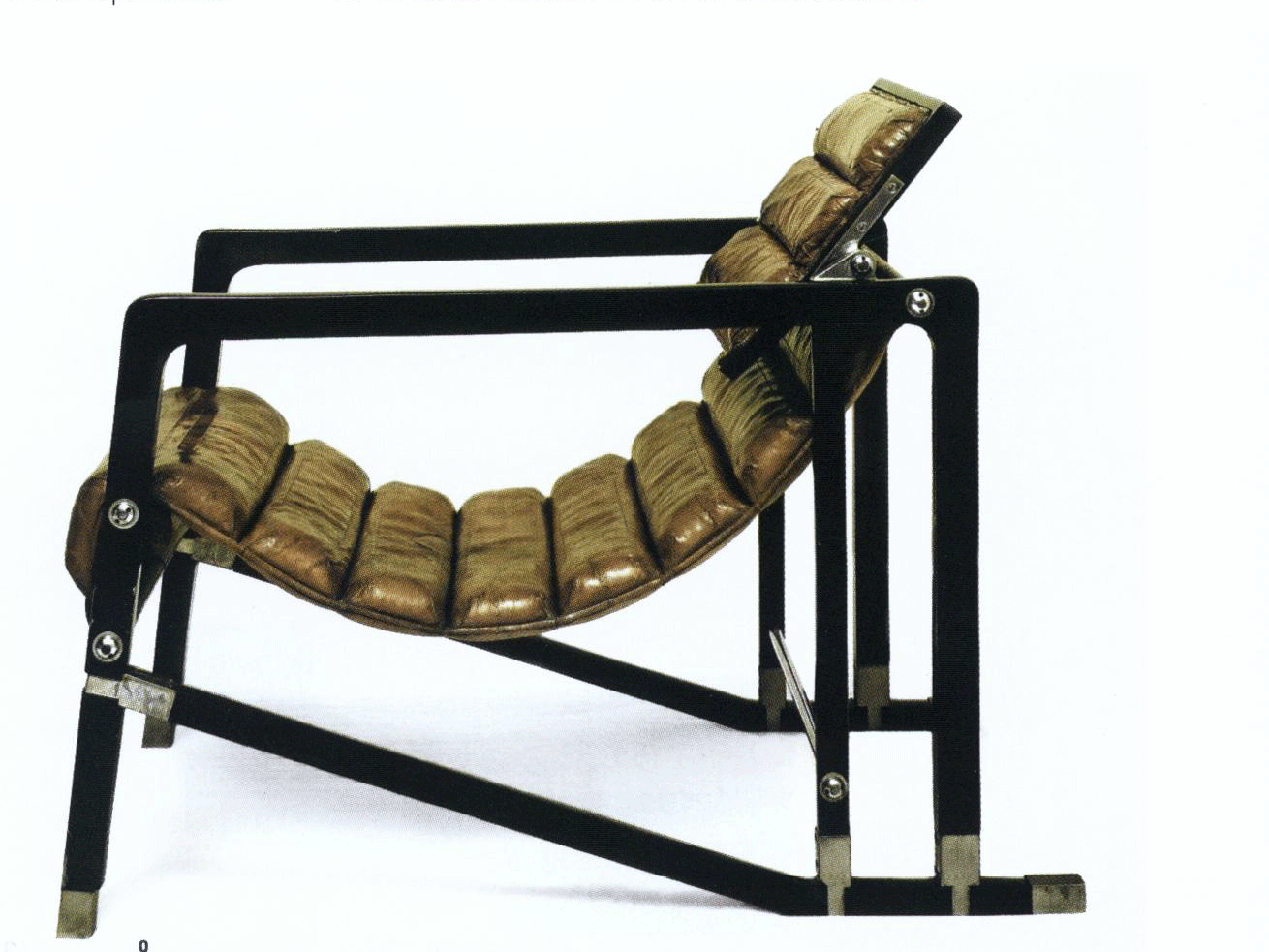
As Irish Design 2015 is launched worldwide, we republish here Jennifer Goff’s assessment of the legacy of internationally acclaimed arch Modernist Eileen Gray